A 2021 systematic review published in Sports Medicine analyzed 54 distinct studies and found zero significant difference in fat loss between high-intensity and moderate-intensity cardio when total daily calories are equated. The debate over hiit vs liss for fat loss dominates fitness media, but most arguments miss the fundamental variable: physiological recovery. Chasing maximum calorie burn in a single 20-minute window completely ignores the long-term cost to your central nervous system. This breakdown moves past the traditional calorie-counting arguments to analyze how each modality impacts your energy, appetite, and 12-week adherence.
Key Takeaways
- Recovery tax dictates frequency: High-intensity intervals demand 48-72 hours of nervous system recovery, severely limiting sustainable weekly volume.
- EPOC is highly exaggerated: The post-workout "afterburn" effect accounts for less than 15% of total exercise energy expenditure, adding a negligible 30-50 calories per session.
- Key Insight: Pure fat oxidation occurs at lower heart rates (60-70% of max), making steady-state cardio more efficient for utilizing stored fat without aggressively depleting muscle glycogen.
- Adherence wins over intensity: A hybrid schedule tailored to daily recovery scores produces significantly higher 12-week completion rates than rigid, extreme programming.
Table of Contents
- The Core Difference: High Intensity vs Steady State
- Debunking the EPOC Myth: HIIT for Fat Burning
- LISS Cardio Benefits: The Central Nervous System Advantage
- The Interference Effect: Cardio vs Resistance Training
- The 12-Week Reality Check: Best Cardio for Weight Loss
- How to Combine Both for Optimal Fat Loss
- Practical Tool: 7-Day Hybrid Cardio Schedule
- Frequently Asked Questions
The Core Difference: High Intensity vs Steady State
Understanding the physiological demands of high intensity vs steady state exercise requires looking at heart rate zones and energy systems. Your body uses different primary fuel sources depending on the immediate demand for ATP (cellular energy). The higher the heart rate spikes, the more your body shifts away from utilizing fat toward burning readily available muscle glycogen.
What is HIIT?
High-Intensity Interval Training (HIIT) involves short, repeated bursts of near-maximal effort (85-95% of maximum heart rate) followed by brief periods of rest. A standard protocol might include 30 seconds of all-out sprinting followed by 60 seconds of walking, repeated for 15 to 20 minutes. Because the intensity is so high, the body relies almost entirely on anaerobic glycolysis, burning carbohydrates rather than fat during the actual execution of the movement.
What is LISS?
Low-Intensity Steady State (LISS) cardio requires maintaining a consistent, moderate pace (60-70% of maximum heart rate) for an extended duration, typically 30 to 60 minutes. Examples include brisk walking, light cycling, or a relaxed pace on the elliptical. At this aerobic threshold, your body has ample oxygen to fuel the aerobic energy system, which preferentially oxidizes stored fat for energy.
Debunking the EPOC Myth: HIIT for Fat Burning
The fitness industry aggressively markets hiit for fat burning based almost entirely on Excess Post-exercise Oxygen Consumption (EPOC), commonly known as the "afterburn" effect. The theory suggests that brutal interval sessions elevate your resting metabolism for 24 to 48 hours, burning massive amounts of passive calories. The actual clinical data tells a much less dramatic story.
A landmark 2006 meta-analysis published in the Journal of Sports Sciences demonstrated that EPOC accounts for only 6-15% of the total oxygen consumed during the exercise session itself. If you burn 300 calories during a grueling 20-minute HIIT workout, the famous afterburn effect yields a maximum of 45 additional calories over the next day. That equates to half an apple, drastically underperforming the marketing hype.
Furthermore, chasing EPOC often leads to compensatory eating. The intense spike in cortisol and catecholamines from near-maximal effort heavily stimulates the appetite in many individuals. Consuming a 400-calorie "recovery smoothie" to offset the fatigue of a 300-calorie workout instantly negates the entire fat loss protocol.
LISS Cardio Benefits: The Central Nervous System Advantage
The most significant liss cardio benefits are completely invisible on a calorie tracker. Low-intensity steady state work requires virtually zero recovery from the Central Nervous System (CNS). You can walk briskly for 45 minutes on a Tuesday and wake up on Wednesday fully primed for heavy squats or another cardio session, experiencing no systemic fatigue.
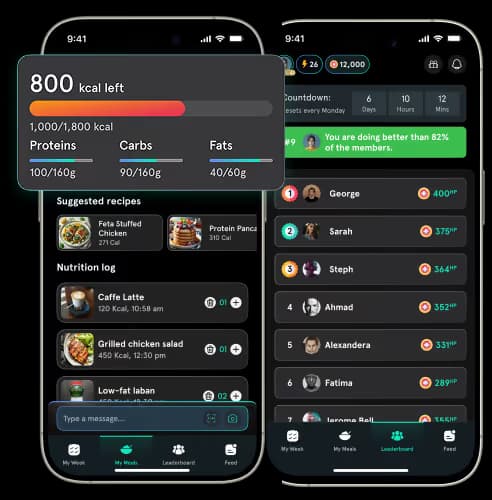
Research published in Sports Medicine in 2018 confirms that high-intensity interval training causes profound acute CNS fatigue, characterized by a temporary inability to recruit high-threshold motor units. Tracking your morning resting heart rate and perceived exertion helps quantify this fatigue. Trainmate's step tracking does this automatically, seamlessly integrating your daily movement data to ensure you only push into high-intensity zones when your nervous system is actually recovered.
Because LISS keeps cortisol levels stable, it serves as an active recovery tool rather than an additional stressor. Blood flow increases to damaged muscle tissues, clearing metabolic waste from previous workouts without inducing further microtears. This allows for significantly higher weekly volume, leading to greater total fat oxidation over a 7-day period.
The Interference Effect: Cardio vs Resistance Training
Fat loss should never come at the expense of lean muscle mass. The concurrent training effect, also known as the "interference effect," occurs when cardiovascular adaptations compete directly with strength adaptations. HIIT mimics resistance training in its recruitment of fast-twitch muscle fibers and reliance on glycogen, creating direct competition for recovery resources.
If you perform heavy interval sprints, your legs require identical cellular repair mechanisms as they would after heavy barbell lunges. Failing to prioritize sleep for muscle repair after overlapping high-intensity stressors almost guarantees muscle catabolism. LISS, operating strictly through the aerobic pathway, triggers entirely different molecular signaling (AMPK activation) that rarely interferes with strength gains when kept to moderate durations.
The 12-Week Reality Check: Best Cardio for Weight Loss
The best cardio for weight loss is universally the protocol you can execute consistently for 12 straight weeks without burning out, getting injured, or dramatically overeating. Short-term studies lasting 4 weeks often show HIIT outperforming LISS slightly in visceral fat reduction. However, when observation periods extend to 12 weeks, adherence rates for pure HIIT programs plummet by over 40%.
Mental dread is a quantifiable metric in fitness adherence. Facing an intense, lung-burning interval session after a grueling 9-hour workday requires immense willpower. Conversely, walking on an inclined treadmill while listening to an audiobook requires minimal mental friction. Learning how to stay consistent with working out via habit stacking works exceptionally well with LISS, as the barrier to entry is extremely low.
The American Heart Association guidelines recommend 150 minutes of moderate-intensity aerobic exercise per week. Reaching this threshold exclusively through moderate walking burns roughly 750-1000 calories weekly for a 180-pound adult, establishing a reliable, easily maintained energy deficit over a 12-week cycle.
How to Combine Both for Optimal Fat Loss
You do not have to choose a permanent side in the hiit vs liss for fat loss debate. The most scientifically sound approach involves polarizing your training: doing one very hard session to improve VO2 max and insulin sensitivity, supported by several very easy sessions to burn fat and maintain blood flow. The exact ratio depends entirely on your daily recovery metrics.
Balancing high-intensity work with your recovery capacity is where many people fail, pushing when they should rest. Trainmate's intelligent scheduling automatically adjusts your daily recommendations, swapping a planned HIIT session for a low-intensity recovery walk if your logged sleep score drops below baseline. This is exactly how AI is revolutionizing personal fitness workout plans by removing the guesswork from recovery management.
Practical Tool: 7-Day Hybrid Cardio Schedule
Use this template to structure a sustainable week that prioritizes fat oxidation while managing central nervous system fatigue.
- Assess your morning resting heart rate on Monday; if elevated by 5+ BPM, skip HIIT and perform LISS.
- Execute one true HIIT session on Tuesday (e.g., 6 rounds of 30-second max effort sprints on a stationary bike, 90 seconds active rest).
- Recover on Wednesday with a mandatory 45-minute brisk walk at a 130 BPM heart rate ceiling.
- Lift weights on Thursday without any cardiovascular interference, focusing on progressive overload.
- Stack a 30-minute inclined treadmill walk immediately after your Friday lifting session.
- Accumulate unstructured movement on the weekend by following a daily 10k steps beginner guide.
- Rest entirely on Sunday, allowing your nervous system to fully reset for the coming week.
Frequently Asked Questions
Can I do HIIT every day for faster fat loss?
No. Performing true high-intensity intervals daily rapidly leads to overtraining, elevated cortisol, and severe central nervous system fatigue. Your body needs 48 to 72 hours to recover from maximal sprint efforts. Daily HIIT actually stalls fat loss by increasing water retention and driving up systemic inflammation.
How long should a LISS cardio session last?
An effective LISS session should last between 30 and 60 minutes. Because the intensity is low, you need sufficient duration to oxidize a meaningful amount of fat and burn enough total calories to contribute to a weekly energy deficit. Anything under 20 minutes provides minimal metabolic benefit.
Does HIIT burn muscle instead of fat?
HIIT prioritizes muscle glycogen (stored carbohydrates) for rapid energy, not muscle tissue itself. However, if you perform HIIT in a deeply fasted state or severely restrict calories without adequate protein intake, the resulting extreme fatigue can indirectly cause muscle catabolism due to poor recovery and heightened cortisol.
Is walking enough cardio to lose belly fat?
Yes, brisk walking is an exceptional tool for fat loss. Belly fat reduction requires a sustained calorie deficit over time. Walking 10,000 steps a day burns approximately 300-400 calories without spiking hunger hormones, making it highly effective for long-term visceral fat reduction when combined with proper nutrition.
Should I do cardio before or after lifting weights?
Always lift weights first. Resistance training requires peak nervous system recruitment and full glycogen stores to safely handle heavy loads. Performing cardio beforehand depletes your energy and compromises lifting form. Save LISS for immediately after lifting or perform it on a completely separate active recovery day.
Conclusion: Securing Long-Term Fat Loss Results
The science clearly shows that hiit vs liss for fat loss is a false dichotomy. Both energy systems play vital roles in human performance, but relying exclusively on exhaustive intervals inevitably crashes your nervous system. By prioritizing moderate-intensity steady state work for the bulk of your weekly calorie expenditure, you protect your muscle mass, control your appetite, and dramatically increase your 12-week adherence rate. Your immediate next step is to accurately measure your current baseline resting heart rate tomorrow morning to determine which intensity zone your body is prepared to handle.
Ready to stop guessing with your routine? Trainmate combines advanced step tracking, personalized workout plans, and daily recovery logging to build a cardio protocol that actually adapts to your physiological state. Download Trainmate today to start automatically adjusting your training intensity based on real science.