How Does L-Carnitine L-Tartrate Increase Skeletal Muscle Androgen Receptor Density?
L-carnitine L-tartrate (LCLT) protects skeletal muscle tissue from post-exercise hypoxia and cell membrane degradation during high-volume training. By blunting structural damage to the sarcolemma, LCLT prevents the acute downregulation of androgen receptors that typically follows heavy resistance exercise. This structural preservation leaves a higher pool of functional receptors available to bind circulating endogenous testosterone.
Resistance exercise induces mechanical disruption across the muscle sarcolemma and alters cell membrane fluid dynamics. A 2006 clinical trial published in Medicine & Science in Sports & Exercise demonstrated that daily oral ingestion of 2 g LCLT over 21 days significantly increased baseline and post-exercise muscle androgen receptor content in trained men. Biopsy analyses showed that while heavy lifting typically degrades androgen receptors immediately post-workout, LCLT feeding suppresses cytosolic enzyme leakage and retains intact functional receptor proteins.
Androgen receptors operate as nuclear transcription factors within skeletal muscle fibers. When free testosterone binds to an androgen receptor, the complex translocates into the cell nucleus to signal mRNA transcription of contractile proteins. Athletes who maintain adequate systemic hormone levels above the minimum dietary fat limit to protect testosterone in lifters maximize this pathway because circulating hormone molecules encounter an expanded population of functional binding sites.
The transport loop operates continuously across recovery microcycles. LCLT does not increase basal endocrine secretion; instead, it modifies tissue-level hormone uptake kinetics. By increasing receptor density within muscle tissue, hormone clearance from systemic circulation into target myofibers rises significantly post-exercise.
What Is the Optimal L-Carnitine L-Tartrate Dosing Protocol for Advanced Lifters?
Achieving muscle carnitine saturation requires a daily intake of 2 g of L-carnitine L-tartrate, which yields roughly 1.36 g of bioactive L-carnitine. Dosages beyond 3 g/day provide no additional receptor upregulation in clinical trials. Intakes under 1 g/day fail to raise intramuscular carnitine content due to poor basal bioavailability.
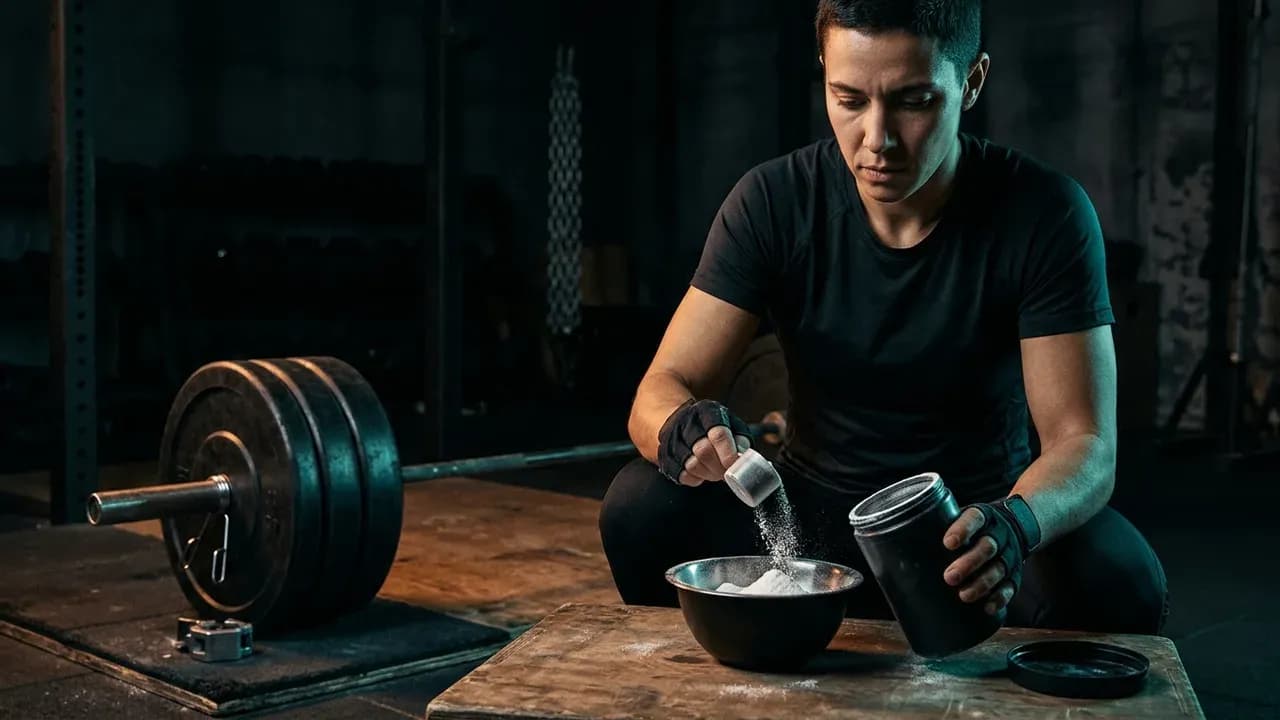
Intramuscular transport depends heavily on insulin-mediated signaling mechanisms. Transport across the sarcolemma requires the sodium-dependent carnitine transporter OCTN2, which relies on Na+/K+-ATPase pump activity driven by insulin. Co-ingesting 2 g of LCLT alongside 50 g to 80 g of fast-digesting carbohydrates—or 40 g of carbohydrate paired with 20 g of rapid-acting protein—raises serum insulin sufficiently to drive carnitine into muscle cells.
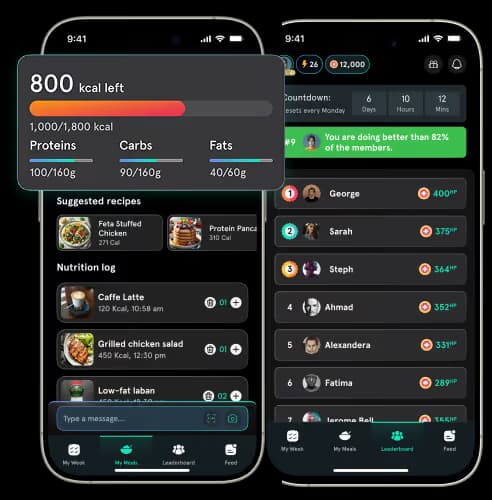
Timing supplement intake with post-workout carbohydrate feeds maximizes transport efficiency. Integrating LCLT alongside intra-workout carbohydrates during high-volume sessions maintains cellular glycogen while driving carnitine accumulation. Advanced athletes tracking precise macronutrient targets use meal logging by photo, chat or manual entry to verify that carbohydrate thresholds are met whenever LCLT is ingested.
Split dosing offers equal cellular uptake efficiency while optimizing gastrointestinal tolerance. Splitting the daily requirement into 1 g with a morning meal containing 0.4 g/kg of protein and 1 g with a post-workout recovery shake maintains plasma carnitine concentrations while leveraging post-exercise insulin sensitivity windows.
How Does LCLT Androgen Receptor Density Expansion Accelerate Recovery?
LCLT accelerates post-exercise muscle recovery primarily by preserving microvascular perfusion and cell membrane structural integrity. High-intensity resistance sets cause endothelial capillary damage, triggering localized tissue hypoxia and purine breakdown. LCLT protects endothelial function, maintaining microvascular blood flow during heavy training sessions.
According to a research review on androgenic responses by Spiering and Kraemer, LCLT ingestion reduces post-workout serum markers of muscle disruption, including creatine kinase, myoglobin, and hypoxanthine. Attenuating purine catabolism preserves high-energy phosphate stores like adenosine triphosphate (ATP). When muscle cell membranes remain intact, structural androgen receptors avoid denaturation.
Reducing membrane disruption increases testosterone uptake from systemic circulation into targeted muscle groups. Following heavy lifting, serum testosterone levels briefly drop as damaged target tissues absorb available hormones. In LCLT-supplemented athletes, this serum decrease indicates accelerated cellular uptake by expanded androgen receptors rather than hypogonadism or fatigue.
To capitalize on expanded receptor availability, training programs must generate high mechanical tension without causing excessive structural breakdown. Managing set fatigue through velocity loss threshold resistance training keeps mechanical damage within the recovery capacity provided by LCLT supplementation.

How Long Does LCLT Supplementation Take to Upregulate Androgen Receptors?
Muscle carnitine accumulation occurs slowly over weeks due to low basal activity of the OCTN2 transporter. Evidence published in a 2023 review in Nutrients confirms that LCLT requires 21 days of continuous daily dosing at 2 g/day to produce statistically significant increases in androgen receptor density.
A single acute dose of 2 g taken immediately before a workout yields no measurable change in muscle carnitine content or androgen receptor density. Intramuscular carnitine stores require three continuous weeks of daily loading to reach saturation. Once saturated, increased receptor expression persists as long as daily administration continues.
Cessation of daily supplementation leads to a gradual decline in muscle carnitine levels, returning androgen receptor density to baseline within 2 to 4 weeks. Maintain daily 2 g/day dosing continuously throughout both hypertrophy and cutting phases. Lifters maintaining a targeted caloric environment through an optimal energy surplus size for muscle hypertrophy rely on constant receptor density to drive protein synthesis across multi-week training blocks.
Organizing progressive overload requires precise tracking across multi-week saturation windows. Athletes structuring multi-week mesocycles use guided gym workouts with set-by-set logging of reps, weight and assisted-machine loads to align peak muscle carnitine saturation with progressive volume phases.
How Does LCLT Reduce Post-Exercise Muscle Tissue Damage?
LCLT preserves muscle cell integrity by integrating directly into cell membrane phospholipid bilayers and attenuating reactive oxygen species (ROS) during heavy eccentric loading. Clinical research from Victoria University established that carnitine esterification into membrane structures maintains sarcolemmal fluidity and structural stability under high mechanical stress.
Severe mechanical loading causes micro-tears in the sarcolemma, allowing cytosolic enzymes like creatine kinase to leak out while extracellular calcium floods the intracellular matrix. This intracellular calcium surge activates proteolytic calpains that digest structural proteins and androgen receptors. LCLT blunts membrane disruption by over 40% based on post-exercise serum creatine kinase markers, preventing excessive calpain activation.
Preserving membrane architecture retains a dense population of active, undamaged androgen receptors on the sarcolemma. Circulating endogenous testosterone binds directly to these intact sites, initiating intracellular signaling cascades that direct amino acids into myofibrillar protein synthesis.
Frequently Asked Questions
How does L-carnitine L-tartrate increase skeletal muscle androgen receptor density?
LCLT increases skeletal muscle androgen receptor density by preserving cell membrane structural integrity and suppressing post-exercise microvascular hypoxia. By preventing mechanical damage and cytosolic enzyme leakage during heavy loading, LCLT limits receptor denaturation. This leaves a higher concentration of functional androgen receptors available to clear circulating testosterone into skeletal muscle tissue.
What is the optimal daily dosage and timing for L-carnitine L-tartrate?
The optimal dose is 2 g of L-carnitine L-tartrate daily, delivering roughly 1.36 g of elemental carnitine. To drive intramuscular transport via insulin-stimulated OCTN2 transporters, ingest this dose with 50 g to 80 g of fast-digesting carbohydrates, or split it into two 1 g doses taken alongside carbohydrate-containing meals.
Why does L-carnitine L-tartrate require 21 days of continuous daily dosing?
Intramuscular carnitine uptake is bottlenecked by the slow baseline kinetics of the OCTN2 transporter. Acute pre-workout dosing cannot raise muscle carnitine levels. Continuous daily supplementation for 21 days is required to fully saturate muscle carnitine stores, establishing the baseline concentration needed to upregulate androgen receptor density.
Does L-carnitine L-tartrate increase natural testosterone production?
No, LCLT does not increase basal endocrine secretion or total circulating testosterone levels. Instead, it enhances tissue sensitivity by increasing androgen receptor density at the skeletal muscle site. This allows existing circulating testosterone to be cleared more efficiently into targeted muscle cells to trigger myofibrillar protein synthesis.
Optimizing androgen receptor density requires precise coordination between supplement protocols, progressive overload, and energy availability. Athletes seeking to manage these training variables can utilize personalized training plans that adapt to you to ensure training volume, progressive tension, and recovery blocks align with cellular adaptation windows.