What Is the Minimum Daily Dietary Fat Floor for Lifters During a Cut?
Lifters in a caloric deficit must keep dietary fat at or above 0.5 g/kg of total body weight per day, or 15% to 20% of total daily calories. Dropping below this baseline severely depresses total and free serum testosterone, impairs testicular androgen synthesis, and accelerates lean mass loss during fat loss phases.
Dietary fat delivers cholesterol directly to Leydig cells in the testes. Cholesterol serves as the required precursor for local enzymatic production of testosterone. When energy intake drops during a cut, cellular signaling downregulates androgen synthesis. Maintaining adequate fat intake protects intramuscular cholesterol pools and sustains endogenously produced hormones.
A systematic review published in the Journal of the International Society of Sports Nutrition tracked natural physique athletes during fat loss phases and established that reducing dietary fat below 15% of total calories caused steep drops in circulating testosterone. These hormone drops occurred regardless of total energy intake. Carbohydrates drive performance during heavy training, but dietary fats preserve the hormonal environment that keeps muscle protein synthesis high.
Cutting calories forces trade-offs between macronutrients. Restricting fat intake too far to make space for extra carbohydrates destroys baseline hormone production. When you calculate protein via fat-free mass to retain lean muscle, establish a hard lower limit for daily fat before allocating remaining calories to carbohydrates.
How Does Low Dietary Fat Suppress Testosterone Production?
Fat restriction impairs the endocrine system along two distinct pathways: central signaling from the brain and direct synthesis inside testicular tissue. When fat intake falls below 15% of daily calories, the pituitary gland secretes luteinizing hormone (LH) in lower amplitude pulses. Reduced LH stimulation signals the testes to reduce local testosterone conversion from baseline cholesterol stores.
At the same time, severe caloric deficits raise sex hormone-binding globulin (SHBG) levels in the liver. High circulating SHBG binds tightly to free testosterone molecules in the blood, making them inactive at androgen receptor sites. As a result, bioavailable free testosterone drops faster than total testosterone when fat intake breaks below 0.5 g/kg per day.
Resistance-trained men shifting from a 40% fat intake down to 20% experience an average decrease of 12% to 25% in circulating total testosterone. Dropping fat below 12% of total calories causes free testosterone to drop by more than 35%. This drop reduces neural drive during multi-joint lifts and suppresses post-workout muscle recovery.
Energy availability dictates whether your metabolism prioritizes endocrine health or immediate energy conservation. Dropping below the 30 kcal energy availability limit for muscle preservation while restricting fat causes a compound hormonal crash. Chronically low fat intake signals starvation to the hypothalamus, increasing baseline cortisol levels. Cortisol directly competes with testosterone by downregulating androgen receptors inside skeletal muscle cells.

How Do You Calculate Your Minimum Daily Fat Intake?
Setting a safe fat floor requires concrete arithmetic based on body composition rather than picking arbitrary macro ratios. Establishing fat targets around lean body mass ensures adequate lipid availability without overeating calories during a contest prep or fat loss phase.
Start by calculating baseline daily energy expenditure using our TDEE Calculator. Apply a calorie deficit of 20% to 25% to establish your cutting energy target. Allocate 2.3 g to 3.1 g of protein per kilogram of fat-free mass. Once protein requirements are set, choose one of three calculation methods to fix your fat floor:
- Total Mass Target: Multiply target body mass in kilograms by 0.5 g. An 80 kg lifter establishes a baseline floor of 40 g of dietary fat per day.
- Lean Mass Target: Multiply fat-free mass (FFM) in kilograms by 0.6 g. An athlete with 75 kg of FFM sets a minimum threshold of 45 g of daily fat.
- Percentage Energy Floor: Multiply total cutting calories by 0.20 and divide by 9. A 2,200 kcal daily deficit target yields a baseline floor of 48.8 g of fat per day.
For athletes managing variable calorie targets across training and rest days, using a weekly nutrition summary and meal history ensures seven-day average fat intake never drops beneath this physiological floor. Tracking weekly trends prevents unexpected single-day fat deficits.
Body Fat Range | Recommended Calculation Basis | Minimum Fat Target (g/kg) | Primary Endocrine Risk Below Floor |
|---|---|---|---|
Sub-8% (Stage Lean) | Fat-Free Mass | 0.65 - 0.75 g/kg FFM | Severe LH pulse suppression and muscle loss |
8% - 15% (Athletic) | Total Body Mass | 0.50 - 0.60 g/kg Mass | Dropping free testosterone and high SHBG |
> 15% (Higher Adipose) | Fat-Free Mass | 0.60 - 0.70 g/kg FFM | Deficit inflation if calculated off total weight |
Fat quality matters as much as total quantity. Saturated fatty acids (SFA) and monounsaturated fatty acids (MUFA) support circulating androgen concentrations better than polyunsaturated fatty acids (PUFA). Aim for saturated fats from whole eggs and lean red meat to comprise 30% to 40% of daily fat intake. Allocate 40% to monounsaturated sources like olive oil and avocado, limiting polyunsaturated fats to 20% or 30%.
You can map these lipid parameters directly into daily meal plans using our Macro Calculator. This ensures calorie targets remain aligned with baseline energy needs.

How Should You Adjust Fat Intake During Carbohydrate Refeeds?
High-carbohydrate refeed days restore hepatic glycogen, boost leptin levels, and reduce training fatigue. Dropping dietary fat down to single-digit grams on high-carb days to maximize carbohydrate room reduces systemic androgen levels. Research in a clinical study published in Medicine & Science in Sports & Exercise confirms that acute nutrient deprivation shifts metabolic hormone kinetics rapidly.
When scheduling a 2-day carb refeed to retain muscle mass, hold fat intake at your absolute minimum floor of 0.5 g/kg. Do not eliminate fat entirely to make space for extra carbohydrates. Maintaining 0.5 g/kg of fat during refeed days preserves testicular cholesterol supply while incoming carbohydrates refuel glycogen stores and lower AMPK activation.
- Deficit Days: Protein at 2.6 g/kg FFM, fat at 0.6 g/kg total mass, remaining calories assigned to carbohydrates.
- Refeed Days: Protein at 2.3 g/kg FFM, fat locked at 0.5 g/kg total mass, carbohydrates increased to 5.0–8.0 g/kg total mass.
Dropping daily fat to 15 g or 20 g on refeeds disrupts hormone synthesis pathways within 24 hours. Hypothalamic regulation relies on continuous lipid oxidation alongside active glucose metabolism. Maintaining 0.5 g/kg of daily fat keeps baseline hormone production stable while carbohydrate intake converts thyroid hormone T4 to active T3 and suppresses baseline muscle breakdown.
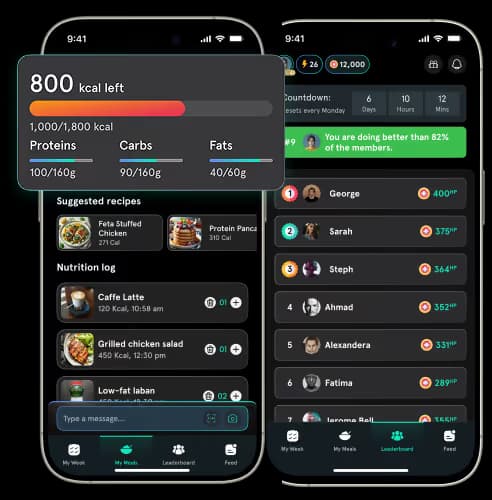
Hitting precise nutrient targets across distinct deficit and refeed days requires simple daily tracking. Athletes use meal logging by photo, chat or manual entry to verify exact macro totals without spending valuable time recalculating food databases by hand.
Keeping dietary fat above 0.5 g/kg preserves daily performance markers. Stable morning basal heart rate, reduced central nervous system fatigue, and consistent rep strength during high-volume training blocks confirm that endocrine function remains intact.
Frequently Asked Questions
Can saturated fat preserve testosterone better than unsaturated fat during a cut?
Yes. Saturated and monounsaturated fatty acids support cholesterol substrate availability for testicular steroidogenesis better than polyunsaturated fats. Saturated fat should make up at least 30% to 40% of total daily fat during a cut, while total dietary fat remains at or above the 0.5 g/kg daily floor.
How long does it take for testosterone to recover after dropping below the fat floor?
Endocrine recovery typically takes two to six weeks after restoring dietary fat above 0.5 g/kg per day and eliminating the calorie deficit. Luteinizing hormone output normalizes first, followed by gradual increases in total and free serum testosterone as cholesterol substrate supply inside testicular Leydig cells stabilizes.
Is 0.5 g/kg of fat enough for competitive natural bodybuilders in extreme deficits?
For bodybuilders under 8% body fat, 0.5 g/kg per day limits severe androgen suppression but cannot eliminate it entirely. Low total fat mass and extended energy deficits independently decrease pituitary output. The 0.5 g/kg target serves as a defensive baseline floor, not a complete guard against deficit-induced hormone drops.
Should fat floor calculations be based on total body weight or fat-free mass?
Calculate fat requirements using total body mass (0.5 g/kg) for lifters between 8% and 15% body fat. Use fat-free mass (0.6–0.7 g/kg FFM) for individuals above 15% body fat. Base calculations on total mass for higher-fat individuals artificially inflates required fat grams, leaving insufficient calorie room for essential performance carbohydrates.
How does low dietary fat affect muscle protein synthesis during a cut?
Low dietary fat depresses bioavailable free testosterone, which directly lowers intramuscular protein synthesis rates over time. A report in the Clinical Nutrition Report highlights that while amino acid availability drives acute muscle protein synthesis, baseline anabolic hormone availability determines overall net protein balance during caloric deficits.
Maintaining test output during aggressive fat loss comes down to structured nutrition and autoregulated training loads. Keep your dietary fat at or above 0.5 g/kg, protect your training intensity, and rely on personalized training plans that adapt to you to ensure continuous strength and muscle retention through every phase of your cut.