What Energy Availability Threshold Triggers Low Energy Availability Muscle Loss?
Low energy availability muscle loss triggers when net daily energy intake falls below 30 kcal per kilogram of fat-free mass (kcal/kg FFM/day). Crossing below this 30 kcal threshold suppresses basal metabolic rate, drops muscle protein synthesis rates by up to 27%, and forces skeletal muscle breakdown to fulfill basic systemic energy requirements.
Energy Availability (EA) measures the remaining dietary energy available to support autonomic physiological functions after subtracting exercise energy expenditure. In resistance-trained lifters, maintaining an EA of 45 kcal/kg FFM/day sustains full metabolic function, hormonal output, and tissue repair. Body fat stores cushion small deficits, but muscle catabolism rapidly accelerates once EA breaches 30 kcal/kg FFM/day.
Dropping below 30 kcal/kg FFM/day triggers a harsh endocrine shutdown. Circulating triiodothyronine (T3), luteinizing hormone (LH), and insulin-like growth factor 1 (IGF-1) crash, while serum cortisol climbs rapidly. A 2021 meta-analysis on energy deficiency and resistance training showed that resistance-trained lifters maintaining energy availability below 30 kcal/kg FFM/day suffer consistent lean mass loss regardless of weekly resistance training volume.
When intake falls below 25 kcal/kg FFM/day, cellular machinery shifts completely into survival mode. Intracellular energy sensor AMPK overrides mTORC1 signaling, turning off muscle protein synthesis to preserve cellular ATP. The body accelerates protein breakdown through the ubiquitin-proteasome pathway, stripping amino acids from contractile muscle to maintain hepatic gluconeogenesis.

How Do You Calculate Energy Availability to Prevent Muscle Loss?
Calculating energy availability requires tracking daily caloric intake, exercise energy expenditure, and total fat-free mass. The formula is EA = (Daily Caloric Intake [kcal] - Exercise Energy Expenditure [kcal]) / Fat-Free Mass [kg]. You can establish your daily energy baseline using our TDEE Calculator.
Take an 80 kg bodybuilder sitting at 10% body fat, giving him 72 kg of fat-free mass. If he consumes 2,400 kcal per day and burns 600 kcal during weightlifting and cardio, his remaining energy intake is 1,800 kcal. Dividing 1,800 kcal by 72 kg FFM yields an EA of 25 kcal/kg FFM/day, placing him directly into rapid muscle catabolism.
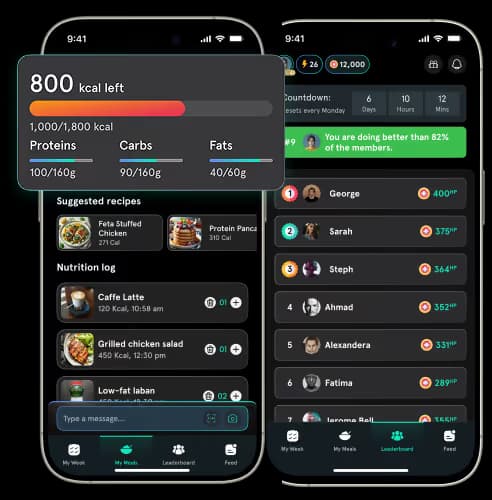
To bring his EA back above the safety boundary of 30 kcal/kg FFM/day, his net available intake must reach at least 2,160 kcal (72 kg FFM × 30 kcal/kg). He must either increase daily caloric intake to 2,760 kcal or lower exercise expenditure to 240 kcal per day. Utilizing meal logging by photo, chat or manual entry prevents uncounted intake errors from dropping energy availability below safe thresholds.

How Much Protein Is Required to Preserve Lean Mass During an Aggressive Cut?
Standard recommendations of 1.6 to 2.2 g/kg of total body weight fail when energy availability falls below 35 kcal/kg FFM/day. Depleted liver glycogen forces high rates of amino acid oxidation to fuel essential metabolic pathways. Protein intake must scale upward as energy availability drops to supply amino acids directly from food rather than skeletal muscle tissue.
A 2024 systematic review in the International Journal of Sport Nutrition and Exercise Metabolism indicates that lean athletes in deep deficits require 2.3 to 3.1 g/kg of fat-free mass daily (roughly 2.0 to 2.6 g/kg of total body mass) to offset catabolic signaling. For a 72 kg FFM athlete, this targets 165 to 223 grams of protein daily. You can calculate your specific target macro ratios using our Macro Calculator.
Protein timing and distribution determine whether daily net nitrogen balance remains positive. Target 0.40 to 0.55 g/kg of FFM per meal across 4 to 5 distinct intake windows spaced 3 to 4 hours apart. Research from Maastricht University showed that larger individual protein doses maintain hyperaminoacidemia and sustain elevated muscle protein synthesis rates for up to 5 hours post-exercise.
Distribute mechanical tension efficiently across the week to maximize target muscle retention. Deciding between full body vs split workouts for building muscle comes down to managing session fatigue while providing enough frequency to keep muscle protein synthesis elevated.
What Weekly Rate of Loss Prevents Lean Mass Catabolism at Sub-10% Body Fat?
Adipose tissue has a physical limit on daily energy mobilization, capped at roughly 60 to 70 kcal per day per kilogram of body fat. As body fat drops below 10% in men or 18% in women, absolute fatty acid availability plummets. When the daily calorie deficit exceeds maximum fat mobilization, the body metabolizes functional muscle tissue to cover the remaining deficit.
Athletes above 15% body fat can safely drop 1.0% of total body weight per week without sacrificing muscle mass. Once body fat enters single digits, the target rate of weight loss must slow to 0.5% of total body weight per week (0.35 to 0.40 kg per week for an 80 kg athlete). Exceeding this rate drives EA below 25 kcal/kg FFM/day and triggers immediate myofibrillar breakdown.
Carbohydrates must center around training sessions to keep intra-muscular glycogen high and preserve output. Findings published in an analysis by Xwerks show that targeted carbohydrate intake around training limits cortisol spikes and reduces muscle breakdown during low-calorie phases. Choosing between HIIT vs LISS cardio for fat loss determines whether your aerobic work supports fat oxidation or burns through recovery capacity needed for heavy lifting.
Tracking performance trends ensures you catch strength losses before muscle mass breaks down completely. Executing guided gym workouts with set-by-set logging of reps, weight and assisted-machine loads gives you accurate performance tracking to ensure mechanical tension stays high throughout your cut.
How Do Refeeds and Diet Breaks Restore Anabolic Signaling?
Extended severe energy restriction depresses basal metabolic rate, thyroid conversion, and circulating leptin within 7 to 14 days. Periodically raising energy availability restores anabolic hormonal signaling and counteracts adaptive thermogenesis. Refeeds and diet breaks serve as programmed interventions to protect muscle tissue during extended fat loss blocks.
A structured 24- to 48-hour refeed involves raising intake back to maintenance energy levels (EA = 40 to 45 kcal/kg FFM/day) using carbohydrates. Increasing carbohydrate intake by 1.5 to 2.0 g/kg FFM refills glycogen stores, elevates serum leptin by up to 28%, and normalizes T3 production. Dietary protein and fat levels should stay constant during these high-carbohydrate windows.
Longer diet breaks lasting 1 to 2 weeks at maintenance energy availability provide complete physiological recovery. A 2022 systematic review in the Journal of Functional Morphology and Kinesiology demonstrated that intermittent energy restriction using 14-day diet breaks preserves resting metabolic rate and lean mass significantly better than continuous calorie deficits. Implementing a two-week diet break every 4 to 6 weeks halts severe metabolic adaptation in lean athletes.
Monitoring weekly caloric averages ensures these maintenance phases do not compromise your total fat loss timeline. Checking a weekly nutrition summary and meal history keeps intake trends objective across every phase of your diet plan.
Frequently Asked Questions
How do you preserve muscle mass during an aggressive mini-cut?
Limit the mini-cut to 2–3 weeks, maintain protein at 2.6–3.0 g/kg of fat-free mass, and cap weekly weight loss at 1% of total body weight. Keep training intensity high on key lifts, but reduce total set volume by 30–50% to prevent recovery failure while energy availability is low.
Does performing cardio in a fasted state accelerate muscle catabolism?
Fasted cardio increases intramuscular amino acid oxidation if daily energy availability falls below 30 kcal/kg FFM/day. Consuming 20–30 grams of protein before training preserves muscle tissue, though total daily caloric availability remains the primary factor governing lean mass retention over time.
Should resistance training volume be reduced when energy availability drops?
Yes. High volume combined with low energy availability accelerates cortisol release and muscle breakdown. Reduce training volume by 30–40% while keeping load on the bar high. Preserving mechanical tension signals tissue retention, while lower volume prevents excessive systemic structural breakdown.
How quickly does muscle catabolism begin after energy availability drops below 30 kcal/kg FFM/day?
Muscle protein synthesis drops and cortisol elevates within 48 to 72 hours of falling below 30 kcal/kg FFM/day. Measurable loss of contractile tissue occurs after 7 to 10 consecutive days of uncorrected energy deficiency.
Managing aggressive fat loss requires tight alignment between energy availability and training output. Allowing energy availability to fall unchecked guarantees metabolic slowdown and muscle catabolism. Precision tracking of energy intake and training stress keeps availability above critical thresholds while driving body fat into single digits.