Standard pre-workout recommendations of 3 to 6 mg/kg fail to produce uniform strength performance because individual response depends on the CYP1A2 gene. In cyp1a2 caffeine resistance training, fast metabolizers (AA homozygotes) gain 4 to 12 percent increases in mean concentric velocity and significant 1RM strength improvements, while slow metabolizers (C-allele carriers) experience negligible gains or acute bar velocity decrements when ingesting caffeine 60 minutes prior to training.
How Does Genetics Impact CYP1A2 Caffeine Resistance Training Outcomes?
The CYP1A2 enzyme accounts for approximately 95 percent of caffeine metabolism in the human liver. A single nucleotide polymorphism at position rs762551 determines whether an individual is a fast or slow metabolizer. AA homozygotes possess high enzymatic activity, clearing caffeine rapidly with an elimination half-life of roughly 2.5 to 3 hours.
In contrast, C-allele carriers (AC heterozygotes and CC homozygotes) demonstrate reduced enzymatic activity. Their elimination half-life often extends to 6 to 10 hours. A 2018 clinical trial in Applied Physiology, Nutrition, and Metabolism demonstrated that 4 mg/kg of caffeine ingested 60 minutes prior to testing improved cycling time-trial performance in AA genotypes by 4.8 percent, but decreased performance in CC genotypes by 13.7 percent.
In strength performance, caffeine enhances neuromuscular activation by antagonizing adenosine A1 and A2A receptors, which elevates motor unit recruitment and muscle contraction velocity. Fast metabolizers experience peak plasma concentration of caffeine's active metabolites—paraxanthine, theobromine, and theophylline—concurrently with CNS activation. Slow metabolizers retain high ratios of unchanged plasma caffeine, altering cardiac hemodynamics without achieving optimal central motor drive.
Why Do Slow Metabolizers Suffer Performance Decrements From Pre-Workout Caffeine?
Pre-workout caffeine induces systemic peripheral vasoconstriction while simultaneously stimulating central cardiac output. In fast metabolizers, high hepatic clearance converts caffeine quickly to paraxanthine, which promotes nitric oxide release and counteracts vascular resistance during heavy sets. In slow metabolizers, un-metabolized caffeine lingers in the blood, causing sustained elevation of peripheral vascular resistance and blood pressure.
This arterial stiffness reduces peripheral oxygen delivery to working muscular units during maximal contractions. When slow metabolizers execute heavy squats or bench presses, elevated systemic vascular resistance increases left ventricular cardiac workload before central ergogenic pathways are fully saturated. You can measure how this hemodynamic fatigue alters your force production using our One-Rep Max Calculator to evaluate velocity and load drops across consecutive microcycles.
Additionally, slow metabolizers experience prolonged activation of the sympathetic nervous system without a corresponding increase in motor unit synchronization. This hyper-arousal elevates baseline muscular tremor and reduces movement efficiency, leading to higher velocity loss during heavy sets. Athletes tracking bar speed via velocity-based training autoregulation strategies often observe immediate bar speed drops when slow metabolizers take high-dose stimulants 60 minutes before lifting.
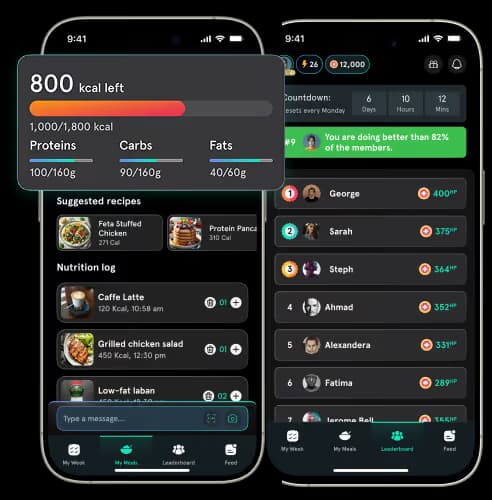
Tracking how your load and velocity change across different pre-workout protocols requires precise data logging. Athletes use guided gym workouts with set-by-set logging of reps, weight and assisted-machine loads to identify subtle performance dips linked to stimulant timing.
Optimizing CYP1A2 Caffeine Resistance Training Protocols by Genotype
Genotype-guided caffeine dosing requires modifying both the total dose and the timing of ingestion relative to the start of the workout. Fast metabolizers thrive on high acute doses taken shortly before training. Slow metabolizers require either extended timing windows to clear un-metabolized caffeine or lower, non-hemodynamic doses.
A 2021 review in Sports Medicine confirmed that caffeine-induced strength enhancements depend heavily on the timing of peak plasma concentration relative to exercise onset. Fast metabolizers reach peak ergogenic plasma status at 45 to 60 minutes post-ingestion. Slow metabolizers require 120 to 180 minutes for peripheral vasoconstrictive effects to subside while maintaining moderate central nervous system stimulation.
CYP1A2 Genotype | Phenotype | Dosage Range | Pre-Workout Timing | Bar Velocity Impact |
|---|---|---|---|---|
AA | Fast Metabolizer | 3 to 6 mg/kg | 45 to 60 min prior | +4% to +12% mean velocity |
AC | Intermediate | 1 to 3 mg/kg | 90 to 120 min prior | 0% to +3% mean velocity |
CC | Slow Metabolizer | 1 to 2 mg/kg (or 0 mg) | 120 to 180 min prior | -2% to -14% if taken at 60 min |
Slow metabolizers who insist on using caffeine should cap intake at 1.5 mg/kg body weight. For an 80 kg lifter, this equates to 120 mg of caffeine ingested 2 hours before training. Fast metabolizers weighing 80 kg can ingest 320 to 480 mg roughly 45 minutes before warm-up sets to maximize peak concentric velocity on compound lifts.

What Non-Caffeinated Ergogenic Aids Work Best for Slow Metabolizers?
Slow metabolizers can maximize heavy strength and velocity gains by replacing central nervous system stimulants with peripheral vasodilators and cellular energy precursors. Nitric oxide donors bypass CYP1A2 pathways entirely, enhancing muscle blood flow, phosphocreatine resynthesis, and cross-bridge recycling rates without elevating resting blood pressure.
Dietary nitrates and amino acid compounds provide direct velocity benefits for C-allele carriers. A 2023 study published in PubMed Central noted that oral nitrate supplementation consistently enhances neuromuscular power output and fatigue resistance independently of adrenergic pathways. Combining 800 mg of dietary nitrates with an 8g citrulline malate dose yields substantial improvements in total volume load.
- Dietary Nitrates: Ingest 400 to 800 mg of inorganic nitrate (via concentrated beetroot juice) 120 minutes prior to training. Learn how dietary nitrate adds reps to heavy compound lifts by reducing the oxygen cost of ATP production.
- Citrulline Malate: Consume 8 g of citrulline malate 60 minutes prior to lifting to stimulate endothelin-dependent vasodilation and plasma arginine concentration.
- Creatine Monohydrate: Maintain a baseline saturation dose of 5 g daily to support rapid phosphocreatine recovery during high-load 1RM efforts without vascular side effects.
Structuring training around non-stimulant ergogenic aids requires consistent monitoring of your load parameters and fatigue levels over time. Advanced lifters build custom routines with personalized training plans that adapt to you to ensure steady progression regardless of their metabolic profile.
Frequently Asked Questions
How does the CYP1A2 gene alter caffeine metabolism and exercise performance?
The CYP1A2 gene encodes the hepatic enzyme responsible for breaking down caffeine. The AA genotype produces fast metabolizers who quickly convert caffeine into active ergogenic metabolites, yielding higher concentric bar velocity and 1RM strength. The C-allele creates slow metabolizers who retain high circulating plasma caffeine, causing vasoconstriction, elevated blood pressure, and impaired athletic output.
Why do slow caffeine metabolizers experience performance decrements from pre-workout caffeine?
Slow metabolizers experience prolonged systemic vasoconstriction and elevated vascular resistance when ingesting caffeine 60 minutes before training. Because the liver processes caffeine slowly, un-metabolized caffeine circulates in the bloodstream, increasing cardiac strain and motor tremor. This physiological distress blunts motor unit recruitment, causing velocity loss and early fatigue during heavy resistance training sets.
How should fast versus slow metabolizers adjust pre-workout caffeine dosing and timing?
Fast metabolizers (AA) should consume 3 to 6 mg/kg of caffeine 45 to 60 minutes before training to align peak plasma caffeine with warm-up sets. Slow metabolizers (AC/CC) should either lower intake to 1 to 2 mg/kg taken 120 to 180 minutes before lifting or eliminate pre-workout caffeine entirely to avoid vasoconstrictive performance drops.
What alternative ergogenic aids should slow caffeine metabolizers use instead of caffeine?
Slow metabolizers should replace stimulants with vasodilators and cellular metabolic buffering agents. Ingesting 8 g of citrulline malate 60 minutes prior to training and 400 to 800 mg of dietary nitrates 120 minutes prior increases nitric oxide synthesis and skeletal muscle perfusion, expanding training volume and velocity without relying on hepatic CYP1A2 metabolism.
Matching your supplementation strategy to your genetic metabolic rate allows you to maintain optimal bar speed and neurological readiness on heavy training days. TrainMate helps you capture every variable in your training by logging reps, loads, and velocity trends across every block. Align your nutrition and lifting parameters precision-by-precision with TrainMate.