How can Gulf HR leaders prevent the week-six drop in corporate wellness participation?
Replacing high-friction launch challenges with automated calendar triggers, peer accountability, and localized execution keeps corporate exercise adherence above 65% past day 45. Most GCC employer initiatives lose 60% to 70% of active participants by week six when novel sign-up incentives fade against heavy workloads and regional climate constraints.
Initial enrollment spikes during launch week driven by executive announcements, but activity drops sharply as work stress and routine friction mount. According to FitOn Health's analysis of corporate wellness metrics, sustaining engagement past day 45 requires structured intervention before week four. HR directors must transition workers from novel incentive schemes to integrated daily habits.
Administrative delays during registration kill early momentum. Manual sign-ups fail. Providing direct access through corporate accounts employees join through their employer removes registration barriers before the initial launch enthusiasm fades.
Addressing regional work patterns determines long-term retention across regional offices in Riyadh, Dubai, and Doha. Flexible execution models accommodate late-night work culture and extreme summer weather that restricts outdoor exercise for five months of the year. Program structures built for Western office hours routinely fail in the Gulf, as detailed in the complete guide to corporate wellness programs in the UAE.

What corporate wellness engagement benchmarks define success in the GCC?
Unmanaged workplace initiatives in Riyadh and Dubai average an active utilization baseline between 15% and 22%. High-performing organizations achieve sustained utilization above 65% past day 45 by evaluating active weekly participation rather than static initial signups. Vanity metrics hide failure.
Active utilization means an employee completes at least 150 minutes of moderate physical activity or three logged training sessions per week. Tracking app downloads alone inflates performance numbers while ignoring actual physical behavior change across the company. Track behavior, not downloads.
Total Rewards leaders evaluating programmatic investment can project prospective returns using a dedicated Corporate Wellness ROI Calculator. Evaluating retention figures alongside direct medical claims reveals the financial impact of sustained active participation.
A 2024 cost-benefit analysis published on ResearchGate demonstrated that maintaining participation rates above 60% reduces voluntary employee turnover by 14% in high-stress sectors. GCC employers operating in financial services, technology, and legal practice capture the largest retention gains.
Direct program costs must be benchmarked against active participation rather than total headcount. HR departments should target an operational investment under AED 180 per active employee per month to maximize financial returns on health initiatives.

How do habit loops sustain employee health engagement in GCC corporate environments?
Behavioral consistency relies on anchoring physical activity to fixed workplace triggers rather than transient willpower. A functional habit loop requires a clear environmental cue, a low-friction physical routine, and immediate feedback.
In GCC corporate environments, work schedules fluctuate heavily due to client deadlines and regional travel. HR directors can structure behavioral consistency using protocols outlined in our guide on how to stay consistent with working out via habit stacking. Short, scheduled movement windows protect completion rates during peak operational periods.
Language accessibility directly impacts continuous engagement across multinational workforces. Deploying platforms with multi-language support including English and Arabic removes interface friction for native Arabic speakers across Saudi Arabia and the broader region.
During religious observances, operational adjustments become vital for maintaining participation baselines. Fasting changes energy dynamics. As detailed in greythr's Gulf workplace guide, adjusting physical intensity requirements during fasting hours prevents complete program abandonment.
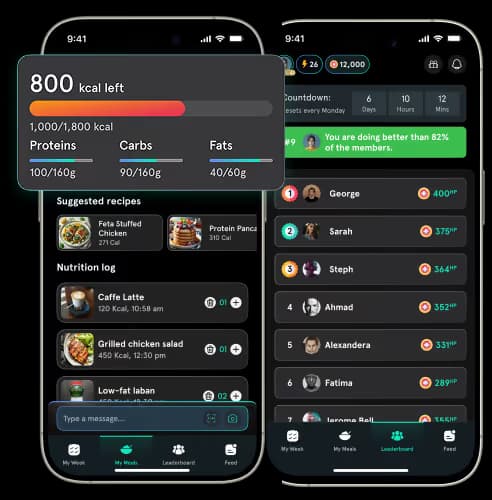
Social accountability reinforces habit loops across hybrid and remote teams. Building structured competitions through leaderboards, teams and events creates peer accountability that carries employees through motivation drops between weeks four and eight.
What corporate wellness engagement benchmarks should HR directors report to executive boards?
Executive board reporting requires metrics anchored directly to medical risk mitigation and operational overhead. HR leaders must replace surface-level registration numbers with monthly active user rates, sick day reductions, and verified insurance claim trends.
A critical metric is sick day reduction, where active program participants log an average of 2.8 fewer absent days per year compared to non-participants. A 2024 systematic review in PubMed Central established that structured workplace health initiatives lower annual absenteeism costs by 26%. Absenteeism cuts directly into quarterly profit margins.
Lowering absenteeism directly impacts group medical coverage expenses over multi-year periods. Total Rewards leaders can cut UAE corporate health insurance costs with data by presenting verified employee exercise logs during annual policy renewals.
Executive boards expect clear cost efficiency metrics relative to total wellness expenditure. Reporting a stable baseline of active utilization past day 45 proves that wellness capital is driving measurable health outcomes.
Organizations seeking to formalize their Gulf HR wellness strategy can evaluate operational delivery models through TrainMate for corporate wellness. Clear benchmark reporting shifts wellness from an unmeasured perk to a strategic business asset.
Frequently Asked Questions
How can Gulf HR leaders prevent the week-six drop in corporate wellness participation?
Automating weekly habit triggers, removing manual login steps, and launching localized team competitions stabilizes adherence. Target active thresholds above 65% past day 45 by offering flexible physical training schedules. Replacing single-week launch events with continuous peer accountability prevents the typical 60% drop off seen in unmanaged regional initiatives.
What is a baseline active utilization rate for corporate wellness programs in the GCC?
Unmanaged regional initiatives average 15% to 22% active utilization. Structured frameworks incorporating multi-language access and local team tracking achieve active utilization rates above 65% after day 45. Active utilization requires employees to complete at least 150 minutes of moderate physical activity or three logged training sessions every week.
How do habit loops sustain employee engagement in workplace health programs?
Habit loops automate daily compliance by pairing exercise sessions with established office calendar events. Connecting fixed environmental cues to low-friction workout logging creates predictable behavior. Immediate feedback through group leaderboards reinforces routine completion, sustaining activity levels when initial launch excitement declines after week three.
What wellness engagement benchmarks should HR directors report to executive boards?
Board reports must emphasize active user rates past day 45, average expenditure per active employee, and sick day reductions. Structured programs achieve an average reduction of 2.8 sick days per active worker annually. Presenting verified workout activity during annual renewals directly supports group health insurance premium negotiations.
Sustaining workforce activity past day 45 requires tools that eliminate administrative friction and integrate into regional work schedules. Equipping teams with automated habit tracking and localized workout programming converts launch momentum into permanent operational savings. Explore how GCC employers deploy TrainMate to maintain participation across regional offices.