How Do Health Risk Assessments Lower Group Insurance Premiums in the UAE?
UAE employers lower corporate health insurance premiums by presenting underwriters with aggregated physical activity logs and Health Risk Assessment (HRA) data 90 days before renewal. Proving a reduced cohort loss ratio below 80% allows finance leaders to negotiate 5% to 15% rate discounts on mandatory DHA and DoH group schemes.
Underwriters in Dubai and Abu Dhabi price group policies based on historical claims ratios and prospective disease risk. When claims paid out exceed 80% of total collected premiums, insurers append a 10% to 25% risk surcharge to the annual renewal quote.
HRAs convert individual health parameters into biological risk classifications across four specific underwriter-inspected clinical thresholds:
- Fasting blood glucose below 100 mg/dL (5.6 mmol/L) or HbA1c below 5.7%.
- Systolic and diastolic blood pressure sustained under 120/80 mmHg.
- Waist-to-height ratio under 0.5 or body mass index (BMI) below 25 kg/m².
- Resting heart rate under 70 beats per minute.
According to workforce research by the CIPD, systematic health tracking reduces unscheduled leave across Middle East firms. When 70% of an employer's workforce shifts from high metabolic risk to low risk over 12 months, the insurer reduces reserve allocations for chronic outpatient claims. Total Rewards teams use this population risk migration to demand premium credits.
To capture structured baseline data across distributed teams, organizations distribute corporate accounts employees join through their employer. This gathers compliant health baseline metrics without revealing private medical profiles to management.

How Do Insurers Calculate Discounts From Corporate Exercise Tracking?
Underwriting models weight active physical training volume as a leading predictor of future outpatient claims expenditure. Historical medical claims reflect past sickness, whereas verified active exercise volume predicts lower future claim frequency. A 2019 systematic review in PubMed demonstrated that structured workplace physical activity interventions deliver statistically significant reductions in cardiometabolic risk markers among sedentary corporate employees.
Insurers evaluate three core operational thresholds when recalculating risk pool pricing:
- 60% or higher sustained program participation across total eligible headcount.
- Minimum 150 minutes of moderate-intensity weekly exercise completed per active employee.
- Year-on-year risk category migration measured through standardized biometric re-assessments.
Tracking these leading indicators gives finance directors tangible pricing leverage during renewal windows. You can calculate how physical activity metrics alter your total benefit spend with our corporate wellness ROI calculator.

What Financial Savings Can Dubai and Abu Dhabi Companies Achieve on Premiums?
On a corporate policy covering 500 employees at an average premium of AED 5,500 per head, total annual premium spend reaches AED 2.75 million. Securing a 10% risk reduction discount lowers annual policy expenditure by AED 275,000.
Financial returns extend into three collateral expense categories:
- Avoidance of the 15% loss-ratio penalty applied when claim payouts cross the 85% loss threshold.
- Reduction in presenteeism losses, which average 2.5 times the cost of direct absenteeism.
- Prevention of high-cost inpatient hospital claims through early detection of metabolic risk.
Pairing structured physical activity with regular health risk profiling provides the verifiable data depth required by underwriters. Leaders designing corporate benefit structures can review our guide to corporate wellness programs in the UAE to align health programs with insurance strategy. To maintain high engagement across diverse multinational teams, companies deploy tools featuring multi-language support including English and Arabic.
What Are the UAE Privacy Regulations for Aggregated Employee Health Reports?
UAE Federal Decree-Law No. 45 of 2021 on the Protection of Personal Data (PDPL) and Law No. 2 of 2019 regarding Health ICT explicitly govern worker health information. Employer access to individual employee medical records, exercise logs, or personal health risk assessment responses remains strictly illegal.
Insurers and employers operate exclusively on cohort-level statistical reports that enforce four mandatory compliance boundaries:
- Individual opt-in consent: Employees explicitly authorize aggregate data inclusion for underwriter reporting.
- Minimum cohort aggregation: Data displays pool metrics across groups of no fewer than 20 employees to prevent individual identification.
- Total PII stripping: Anonymized data transfers exclude Emirates ID numbers, names, employee IDs, and direct contact details.
- On-soil data residency: All health and activity records reside on UAE-based cloud infrastructure complying with Ministry of Health standards.
Underwriters price population risk, not individual liabilities. Demonstrating that 65% of your workforce completes 150 minutes of weekly exercise requires zero individual medical disclosures.
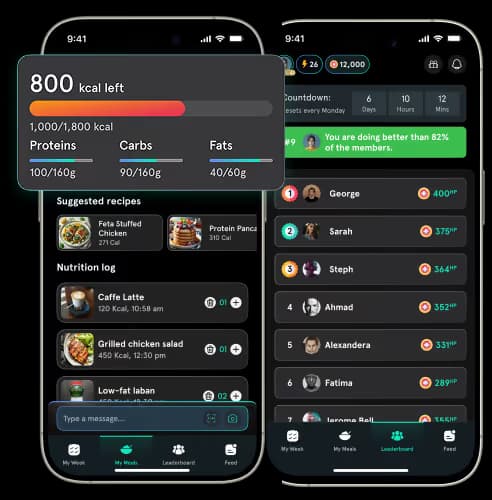
Companies automate this compliance logging using software that generates a weekly "My Week" recap report for employees while aggregating cohort trends for HR directors.
How Should Total Rewards Leaders Present Wellness Data During Policy Renewal?
Initiate the underwriter negotiation sequence 90 days before policy expiration to prevent default renewal rates from taking effect. Waiting until 30 days prior forces HR teams into weak renewal terms without time to solicit competitive counter-bids.
Execute this four-step underwriting submission protocol:
- Extract month-9 aggregate data: Pull cohort HRA participation rates, risk category shifts, and exercise completion percentages 90 days prior to policy expiration.
- Build a quantitative risk mitigation dossier: Document total active workforce hours, participation percentages, and cohort health improvements.
- Highlight clinical risk migration: Present underwriters with specific biological shifts, including percentage drops in employees with blood pressure above 120/80 mmHg or fasting glucose exceeding 100 mg/dL.
- Put the insurance policy out to tender: Direct your broker to present the anonymized health dossier to at least three competing DHA- and DoH-licensed underwriters, demanding revised loss-ratio calculations.
According to analysis from Fisher Human Resources, GCC employers integrating verified preventive health data into benefit renewals capture lower overall benefit overheads and higher employee retention. Examine our comprehensive enterprise wellness framework to align health data collection with your risk management goals. Tracking objective biometric shifts like blood pressure and aerobic capacity provides clearer evidence of population health improvements than subjective employee surveys, as detailed in our guide on fitness metrics to track beyond the scale.
Frequently Asked Questions
How small can a UAE company cohort be to submit anonymized health data to underwriters?
Underwriters require a minimum reporting threshold of 20 active employees in a single cohort to satisfy UAE Federal Decree-Law No. 45 of 2021 data privacy regulations. Companies with smaller team sizes must pool regional branches together into a single anonymized reporting group before submitting health data for insurance renewal evaluation.
Do insurers accept physical activity data collected through mobile applications?
Yes. UAE insurers accept verified activity logs from recognized tracking applications and wearables, provided the data is aggregated through a compliant corporate platform. Raw self-reported exercise entries are typically rejected; underwriters require objective step counts, active workout duration, and verified training volume metrics.
What happens to corporate insurance discount terms if employee participation drops mid-policy?
Insurers bind annual premium discounts based on policy renewal submissions and historical claims performance. If workforce activity declines mid-year, the negotiated discount remains locked for the current 12-month policy term. Lower mid-year participation will negatively impact your loss ratio and weaken your pricing leverage during the following renewal cycle.
Can employers offer financial incentives to employees who participate in health tracking?
Yes. UAE employers frequently offer wellness incentives, such as flexible work hours, gym subsidies, or health allowance credits, to boost program engagement above the critical 60% participation threshold. Higher participation rates directly generate the cohort risk migration data needed to secure premium discounts that outweigh incentive program costs.
***
Instruct your insurance broker to tender your aggregated workforce health metrics to competing underwriters 90 days before your policy renewal date. TrainMate equips your workforce with personalized training tools while capturing the aggregate activity metrics needed to prove population risk reduction. Contact our team to implement a structured health tracking program that lowers your group insurance costs.