7 Best Fitness Metrics to Track for Sustainable Weight Loss (Beyond the Scale)
A 2021 study published in the Journal of Obesity & Metabolic Syndrome found that 75% of dieters abandon their goals within four weeks when relying solely on bathroom scales. The scale fluctuates by up to five pounds daily due to hydration, sodium intake, and glycogen storage. To build sustainable habits, you need better data. Tracking specific physical and physiological markers proves your body is changing long before the scale moves. By monitoring distinct physiological adaptations, you protect your motivation against daily weight fluctuations. Here are the 7 best fitness metrics to track for sustainable weight loss, ensuring you capture every dimension of your metabolic progress and physical transformation.
Key Takeaways
- Resting heart rate drops as cardiovascular fitness improves, signaling better metabolic health and a stronger heart muscle.
- Tape measurements reveal structural body composition changes that bathroom scales completely hide during recomposition phases.
- Tracking workout volume ensures progressive overload, forcing your body to adapt and build metabolically active lean tissue.
- Sleep quality directly impacts cortisol levels and alters the ratio of fat-to-muscle lost during a caloric deficit.
- Daily step counts measure non-exercise activity thermogenesis, which dictates the majority of your daily caloric burn outside the gym.
Table of Contents
- Why the Scale Lies: The Problem with Weight-Only Tracking
- Resting Heart Rate (RHR) and Cardiovascular Efficiency
- Body Circumference Measurements
- Progressive Strength and Workout Volume
- Sleep Quality and Duration
- Daily Step Count and NEAT
- Heart Rate Variability (HRV) for Stress Management
- Biofeedback: Energy Levels and Mood
- Practical Tool: Your Weekly Metric Tracking Checklist
- Frequently Asked Questions
Why the Scale Lies: The Problem with Weight-Only Tracking
When you step on a scale, you measure bone density, organ weight, blood volume, muscle mass, undigested food, and water retention simultaneously. A high-carbohydrate dinner increases your scale weight the next morning because every gram of stored glycogen holds three grams of water. Conversely, a heavy sweat session might show a two-pound drop that is entirely dehydration. These variables mask actual fat loss and create a frustrating feedback loop.
Transitioning away from scale-only tracking requires understanding human physiology. Muscle tissue is significantly denser than adipose tissue (body fat). If you begin a resistance training program, you might add two pounds of muscle while losing two pounds of fat. The bathroom scale will read zero progress, yet your physical dimensions, metabolic rate, and health markers have improved drastically.
Key Insight: A 2018 study in the American Journal of Clinical Nutrition demonstrated that individuals engaged in resistance training lost significant visceral fat mass without any change in overall body weight.
1. Resting Heart Rate (RHR) and Cardiovascular Efficiency
A lower resting heart rate indicates your heart pumps blood more efficiently, serving as a primary marker of improved cardiovascular fitness. Normal resting heart rate ranges from 60 to 100 beats per minute, but consistent aerobic conditioning can lower this number significantly over a three-month period. Research published by the American Heart Association demonstrates that a decrease of just 5 beats per minute in your RHR correlates with a 15% reduction in cardiovascular disease risk over a decade.
Tracking your RHR requires consistency. Measure it first thing in the morning before sitting up in bed, or use a wearable device that automatically calculates your overnight average. A downward trend over several weeks confirms that your heart muscle is strengthening and your parasympathetic nervous system is becoming dominant during rest periods.
Factors like alcohol consumption, late-night meals, and psychological stress will artificially elevate your resting heart rate. By logging this metric daily, you can identify which lifestyle factors actively harm your cardiovascular recovery.
2. Body Circumference Measurements
Measuring your waist, hips, thighs, and arms with a flexible fabric tape provides a highly accurate method for how to measure fat loss. Because muscle tissue takes up roughly 18% less space than an equal weight of fat, physical dimensions shrink as your body composition improves. You can easily lose three inches around your waistline while your overall body weight remains identical.
To track circumference accurately, establish a strict measurement protocol. Measure the exact same anatomical landmarks every two weeks under identical conditions. Take these measurements first thing in the morning, standing naturally, and exhale completely before pulling the tape snug against the skin without compressing the tissue.
Focus specifically on the waist-to-hip ratio, as this metric directly correlates with visceral fat reduction. According to the Centers for Disease Control and Prevention, a waist circumference over 35 inches for women or 40 inches for men indicates a higher risk for metabolic syndrome, making this measurement far more medically relevant than standard body mass index calculations.
3. Progressive Strength and Workout Volume
Logging the exact weight, sets, and repetitions you complete verifies that your central nervous system and muscle fibers are adapting to physical stress. Tracking progressive overload requires you to continuously challenge your muscular system with increased mechanical tension. If you deadlift 135 pounds for 8 reps one month and 155 pounds for 8 reps the next, you have objectively increased your lean mass capability.
This specific metric directly impacts your basal metabolic rate. Skeletal muscle is highly metabolically active tissue, requiring constant caloric expenditure simply to exist on your frame. By increasing your workout volume over time, you build a metabolic engine that passively oxidizes fat even when you are completely sedentary.
Avoid relying entirely on memory for this data. Keep a structured log of your major compound movements: squats, deadlifts, presses, and rows. Recording your training volume ensures you do not accidentally plateau by lifting the exact same weights for months on end.
4. Sleep Quality and Duration
Sleep duration and restorative phases dictate your hormonal environment, governing whether your body primarily burns fat or actively stores it. A landmark 2010 study published in the Annals of Internal Medicine revealed that individuals sleeping 5.5 hours per night lost 55% less fat and 60% more muscle mass compared to those sleeping 8.5 hours, despite consuming the exact same caloric deficit.
Suboptimal sleep elevates cortisol (a stress hormone) and ghrelin (the hunger hormone) while suppressing leptin (the satiety hormone). This neurochemical combination makes adherence to any nutritional protocol nearly impossible due to intense physiological cravings. Optimizing your sleep for muscle recovery transforms a difficult diet into a manageable lifestyle adjustment.
Track your total time asleep, sleep latency (how long it takes to fall asleep), and the number of nighttime awakenings. Aim for a consistent 7 to 9 hours of quality sleep, maintaining the same bedtime and wake time across both weekdays and weekends to regulate your circadian rhythm.
5. Daily Step Count and NEAT
Non-Exercise Activity Thermogenesis (NEAT), effectively tracked via daily step counts, accounts for up to 15% of your total daily energy expenditure. While a vigorous 45-minute gym session burns acute calories, the baseline physical movement you complete throughout the remaining 23 hours dictates your overall metabolic deficit.
Implementing a consistent walking for weight loss plan provides a predictable, low-impact mechanism for fat oxidation that does not spike systemic hunger hormones. Hitting a daily target of 8,000 to 10,000 steps ensures you maintain a high energy flux, allowing you to consume more nutrient-dense food while still losing body fat.
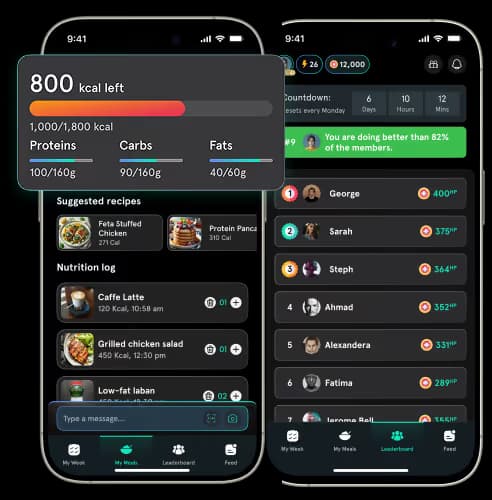
Trainmate's unified dashboard automatically logs this background activity by syncing directly with your device's pedometer. Monitoring your daily steps alongside your nutritional intake creates a complete picture of your energy balance, preventing the common pitfall of extreme sedentary behavior following a hard workout.
6. Heart Rate Variability (HRV) for Stress Management
Heart rate variability measures the microsecond variations in time between consecutive heartbeats, serving as a primary indicator of your autonomic nervous system's recovery status. A higher HRV indicates that your body is resilient, adaptable, and recovering efficiently from physical training and psychological stress.
Conversely, a plummeting HRV signals systemic overtraining, elevated systemic stress, poor sleep architecture, or impending illness. Monitoring this advanced metric prevents severe burnout and provides objective guidance on when to push intensely during a workout versus when to prioritize mobility and active recovery.
Tracking HRV requires a dedicated wearable device, such as a chest strap or advanced smartwatch, that captures data during deep sleep. Establish a baseline over 14 days before using the data to make training adjustments, as individual HRV scores vary drastically based on genetics and age.
7. Biofeedback: Energy Levels and Mood
Subjective biofeedback markers like sustained afternoon energy, improved cognitive focus, and reduced joint pain are critical non scale victories that accurately predict long-term adherence. The neurochemical benefits of exercise, specifically dopamine and serotonin regulation, manifest immediately and alter your baseline mood.
Documenting your daily energy levels on a scale of 1 to 10 helps identify which nutritional protocols and training schedules optimize your performance. If a specific diet causes your energy to crash at 3:00 PM every day, it is not sustainable, regardless of what the bathroom scale indicates.
Building a routine that respects biofeedback leads to permanent lifestyle changes. Utilizing habit stacking techniques to tie your workouts to high-energy periods of the day ensures you remain consistent over a timeframe of years rather than weeks.
Practical Tool: Your Weekly Metric Tracking Checklist
Implement this specific data collection routine to comprehensively track your physiological progress without becoming obsessed with daily fluctuations.
- Log daily morning metrics: Record your resting heart rate and sleep duration immediately upon waking before consuming caffeine.
- Track daily steps: Monitor your total step count every evening, aiming to consistently breach the 8,000-step threshold.
- Record workout data: Log every set, repetition, and weight used during resistance training sessions to guarantee progressive overload.
- Assess biofeedback: Rate your daily energy levels, mood, and subjective hunger on a scale of 1 to 10 each evening.
- Measure body circumferences bi-weekly: Use a fabric tape measure on your waist, hips, and arms every 14 days under identical morning conditions.
Frequently Asked Questions
How often should I check my resting heart rate?
You should measure your resting heart rate daily, ideally first thing in the morning before getting out of bed. Daily tracking establishes a clear baseline and highlights anomalies caused by poor sleep, high stress, or impending illness. Over several months, you will notice a gradual downward trend as cardiovascular fitness improves.
What is the most accurate way to measure fat loss without a scale?
The most accurate accessible method is using a flexible fabric tape measure to track physical circumferences, specifically the waist, hips, and thighs. Because muscle is denser than fat, your physical dimensions will shrink as your body composition improves, clearly indicating fat loss even if your total body weight remains static.
Why did my weight go up after a hard workout?
Intense physical training causes micro-tears in your muscle fibers, triggering acute localized inflammation as part of the healing process. Your body retains water to facilitate this cellular repair. Additionally, increased blood volume and replenished glycogen stores will temporarily elevate your scale weight for 24 to 48 hours post-workout.
Do non scale victories actually matter for weight loss?
Yes, non scale victories are critical physiological indicators of metabolic improvement. Markers like increased strength, better sleep architecture, and dropping dress sizes prove that your internal chemistry and body composition are optimizing. These metrics prevent premature discouragement and foster the long-term adherence necessary for permanent physical transformation.
Can a weight loss tracking app monitor all these metrics?
Yes, advanced platforms aggregate diverse health data points. Modern applications sync with wearable devices to pull resting heart rate, sleep duration, and daily step counts into one central location. This unified view allows you to correlate your physical movement and recovery habits directly with your changing body measurements.
The Next Step in Your Data-Driven Fitness Journey
Fixating on a single number on a bathroom scale guarantees frustration and masks the incredible physiological adaptations occurring beneath the surface. By expanding your perspective to include resting heart rate, physical measurements, strength progression, and sleep architecture, you construct a truly accurate picture of your physical health. These seven metrics validate your hard work, providing objective proof that your cardiovascular system is strengthening, your metabolic rate is increasing, and your body composition is steadily improving.
Managing multiple data points requires the right infrastructure to prevent analytical fatigue. As a comprehensive weight loss tracking app, Trainmate's intelligent dashboard aggregates your sleep duration, workout volume, and body statistics into one seamless interface. Rather than jumping between different pedometers and workout journals, use Trainmate to centralize your progress and let the science-backed algorithms guide your next phase of growth.