How Stress and Cortisol Actually Impact Your Weight Loss Results
According to the American Psychological Association (2020), nearly 78% of adults report that stress severely impacts their physical health and daily routines. If you are eating in a calculated deficit, consistently training, and still staring at a stagnant scale, elevated cortisol might be obscuring your progress. This specific physiological response alters tissue water retention, manipulates core appetite hormones, and actively suppresses your subconscious daily movement.
Key Takeaways
- Chronic stress elevates ghrelin (the hunger hormone) by 28%, driving subconscious cravings for hyper-palatable foods.
- Cortisol causes significant water retention by binding to mineralocorticoid receptors, masking up to 5 pounds of genuine fat loss on the scale.
- High allostatic load drastically reduces Non-Exercise Activity Thermogenesis (NEAT), burning up to 400 fewer calories per day without you realizing it.
- Managing systemic inflammation through optimized sleep architecture restores your metabolic baseline faster than adding aggressive cardiovascular exercise.
Table of Contents
- The Science of Cortisol and Weight Loss
- Does Stress Stop Weight Loss Completely?
- The Real Mechanisms Behind Stress Weight Gain
- How to Lower Cortisol for Fat Loss
- The 6-Step Cortisol Management Checklist
- Frequently Asked Questions
The Science of Cortisol and Weight Loss
High cortisol does not magically stop your metabolism or violate the laws of thermodynamics. It operates by increasing systemic fluid retention, downregulating thyroid conversion (T4 to T3), and actively dismantling your calorie deficit through hormonally driven hunger signals. Your body prioritizes immediate survival over long-term body composition when it perceives a persistent psychological threat.
Key Insight: Elevated basal cortisol directly correlates with reduced muscle protein synthesis. When cortisol remains consistently high, the liver undergoes gluconeogenesis, breaking down lean muscle tissue into amino acids to form glucose, which fundamentally lowers your basal metabolic rate over time.
How Cortisol Masks Fat Loss with Water Retention
When your central nervous system detects an ongoing stressor, your adrenal glands continuously pump out cortisol. A 2011 study published in Psychosomatic Medicine found that prolonged cortisol elevation mimics aldosterone, a hormone responsible for sodium and fluid regulation. This chemical mimicry forces your kidneys to reabsorb sodium rapidly, pulling excess water straight into your tissues.
This fluid accumulation can easily add 3 to 5 pounds of scale weight in just a few days. This sudden spike completely obscures the genuine tissue loss you achieved through your caloric deficit. Many individuals abandon their diets entirely because they misinterpret this temporary water retention as a fat-loss plateau.
Does Stress Stop Weight Loss Completely?
Stress does not literally halt fat oxidation at the cellular level, but it significantly compromises the behavioral and biological mechanisms required to maintain a caloric deficit. Your biology actively fights against fat loss when your allostatic load reaches its maximum capacity.
The Impact on Leptin and Ghrelin
Research from the University of Chicago (2004) demonstrated that sleep deprivation and high psychological stress lower leptin (the satiety hormone) by 18% and increase ghrelin by 28%. You feel ravenously hungry despite consuming mathematically adequate calories. This hormonal imbalance effectively shuts off the neurological signals that tell your brain you are full.
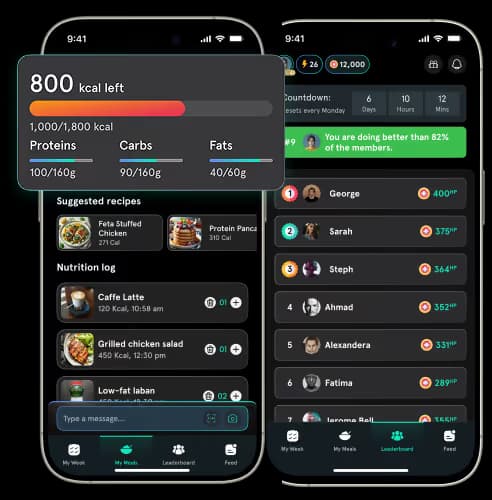
Logging your daily stress levels alongside your food intake using Trainmate's nutrition tracking helps identify specific triggers that lead to these hormonally driven binge episodes. By correlating your emotional state with your caloric intake, you can preemptively adjust your environment on high-stress days. This proactive approach prevents temporary stress from ruining an entire week of nutritional discipline.
The Hidden Drop in NEAT
Non-Exercise Activity Thermogenesis (NEAT) accounts for 15% to 30% of your total daily energy expenditure. Under high mental strain, your central nervous system conserves energy by unconsciously reducing fidgeting, pacing, and standing. This evolutionary survival mechanism easily eliminates 200 to 400 calories from your daily burn rate.
Since subconscious movement drops when you are stressed, relying on Trainmate's step tracking ensures you hit a baseline of 8,000 steps daily regardless of mental fatigue. Treating this baseline as a non-negotiable metric forces you to compensate for the natural drop in subconscious movement that occurs during a difficult work week. Maintaining this daily activity level preserves your caloric deficit even when your body attempts to conserve energy.
The Real Mechanisms Behind Stress Weight Gain
Stress weight gain happens due to a destructive combination of impaired insulin sensitivity and a massive psychological drive toward energy-dense, highly palatable foods. Your body is physically altering how it partitions the calories you consume.
Craving Hyper-Palatable Foods
Elevated cortisol triggers the immediate release of glucose into the bloodstream to prepare your muscles for action. When you do not physically burn off this glucose through a physical fight-or-flight response, your pancreas pumps out massive amounts of insulin to store it. This rapid insulin spike and subsequent crash creates an intense, visceral craving for sugar and saturated fat.
A 2014 study published in Frontiers in Psychology confirmed that chronic stress rewires the brain's reward centers, driving a strict preference for hyper-palatable comfort foods. You are not lacking willpower; your neurochemistry is actively demanding quick energy to replenish the resources drained by stress.
Insulin Resistance and Fat Partitioning
Continuous cortisol dumping eventually makes your cellular receptors highly resistant to insulin's signal. Because insulin is fundamentally an anabolic storage hormone, hyperinsulinemia halts lipolysis (fat breakdown) entirely. This biochemical state forces your body to shuttle incoming calories directly into visceral fat stores rather than utilizing them for daily energy.
Sleep Deprivation as a Primary Stressor
Sleeping fewer than six hours per night elevates evening cortisol levels by up to 30% the following day. This lack of deep restorative sleep also drastically blunts baseline insulin sensitivity. Correcting this specific stressor is mandatory, which is why learning how to optimize sleep for recovery must precede any aggressive dietary restrictions.
How to Lower Cortisol for Fat Loss
Lowering cortisol requires regulating your circadian rhythm, optimizing protein intake at strategic times, and deliberately managing your exercise intensity. You cannot out-train a chronically stressed nervous system.
Nutritional Interventions
Consuming 0.8g to 1g of protein per pound of body weight stabilizes blood sugar, preventing the drastic cortisol spikes directly associated with hypoglycemia. Carbohydrate timing also profoundly influences your hormonal state. Eating a moderate portion of complex carbohydrates, like 150g of sweet potato, with your evening meal blunts the evening cortisol response and promotes serotonin production for deeper sleep.
Exercise Modifications
More exercise is not always better when your nervous system is already heavily overloaded. High-Intensity Interval Training (HIIT) acutely spikes cortisol, which becomes entirely counterproductive if your baseline levels are already chronically elevated.
Swap a high-intensity session for a lighter one in your Trainmate workout plan if you notice consecutive days of poor sleep and mounting physical fatigue. Following a rigidly intense program during a period of high psychological stress only compounds systemic inflammation and delays recovery. Strategically utilizing a lower-intensity cardio alternative protects your nervous system while keeping your fitness habits consistent.
The 6-Step Cortisol Management Checklist
- Prioritize 7-8 hours of sleep: Anchor your circadian rhythm by waking up and going to bed at the exact same time every day to normalize your morning cortisol awakening response.
- Limit caffeine after 12 PM: Caffeine artificially increases cortisol and adrenaline; cutting it off at noon prevents interference with your evening hormonal wind-down.
- Walk 20 minutes outside daily: Exposure to morning sunlight immediately halts melatonin production and completely resets your daily cortisol curve.
- Swap one HIIT session for LISS: Replace a highly stressful interval workout with 45 minutes of steady-state cardio to encourage parasympathetic nervous system recovery.
- Supplement with Ashwagandha: Taking 600mg of KSM-66 Ashwagandha extract daily has been clinically shown to lower serum cortisol levels by up to 27% over a 60-day period.
- Implement 4-7-8 Breathing: Utilize focused breathing (inhale 4 seconds, hold 7 seconds, exhale 8 seconds) to immediately activate the vagus nerve and drop acute heart rate.
Frequently Asked Questions
Does cortisol make belly fat harder to lose?
Yes. Research shows that abdominal fat cells possess up to four times more cortisol receptors than subcutaneous fat cells located elsewhere. High cortisol actively directs lipid storage to the visceral area to protect internal organs. Lowering systemic stress is biologically necessary for mobilizing stubborn abdominal body fat.
How long does it take to flush out cortisol water weight?
Once the primary stressor is removed and your serum cortisol levels drop, your kidneys begin flushing excess sodium and water within 48 to 72 hours. This biological reset often results in a massive "whoosh" effect on the scale, where you might lose 2 to 4 pounds overnight.
Can I still lose weight if I have high stress?
You can absolutely lose weight under stress by maintaining a strict caloric deficit, but the process feels exponentially harder. Stress dramatically increases hunger hormones and decreases your daily calorie burn through reduced subconscious movement. Managing your diet with extreme precision becomes absolutely mandatory when systemic stress remains high.
What foods help reduce cortisol levels quickly?
Foods heavily rich in Vitamin C, magnesium, and Omega-3 fatty acids actively help regulate the adrenal response. Consuming 400mg of dietary magnesium through spinach, pumpkin seeds, or supplementation directly blunts the release of cortisol during stressful events. Wild-caught salmon also reduces brain inflammation directly linked to high stress.
Does fasting increase cortisol too much for weight loss?
Extended fasting periods beyond 16 hours place an additional physiological stressor on the body, triggering a sharp increase in cortisol to mobilize stored glucose. If you are already experiencing chronic lifestyle stress, aggressive intermittent fasting will compound the allostatic load and significantly worsen your fluid retention.
Conclusion
Understanding the biochemical interplay between cortisol and weight loss empowers you to stop fighting your own biology. When the scale stalls despite perfect adherence to your diet, recognize that an overloaded nervous system might simply be masking your success with transient water weight. The next time you face a high-stress week, prioritize your sleep hygiene, baseline step counts, and adequate protein targets rather than punishing yourself by slashing calories further. True body recomposition requires an environment where the body feels safe enough to release stored energy. Your immediate next step is to evaluate your sleep duration over the past seven days and deliberately adjust your bedtime to secure eight full hours tonight.
Stop guessing why the scale isn't moving and start tracking the metrics that actually matter for true body recomposition. Trainmate combines automated step tracking, advanced nutrition logging, and personalized workout plans to give you a complete, scientific picture of your metabolism. Download Trainmate today to track your sleep patterns and daily stress logs right alongside your macros, helping you identify exactly what your body needs to thrive.