A landmark 2021 study published in the journal Science analyzed the metabolic rates of 6,400 people and proved that human energy expenditure remains completely flat between ages 20 and 60. The $250 billion weight loss industry relies on convincing you that your metabolism is permanently damaged or naturally slow. We are getting these metabolism myths debunked using peer-reviewed metabolic ward data. You do not need a complex eating schedule, bizarre fat-burning supplements, or extreme restriction to change your body composition.
Key Takeaways
- Meal frequency has zero impact on your basal metabolic rate or daily calorie burn.
- Starvation mode is a physiological exaggeration; your metabolism adapts slightly to weight loss, but it does not stop fat burning.
- Negative calorie foods defy the laws of thermodynamics and do not exist in human nutrition.
- Age-related metabolic slowdown before age 60 is entirely driven by a loss of muscle mass and reduced daily movement.
- Resistance training permanently elevates resting energy expenditure by building metabolically active muscle tissue.
Table of Contents
- The Science of Energy Expenditure
- Myth 1: The Starvation Mode Myth
- Myth 2: Frequent Meals Speed Up Metabolism
- Myth 3: The Fat Burning Foods Myth
- Myth 4: Identifying Genuine Slow Metabolism Causes
- Myth 5: Genetics Completely Dictate Your Burn Rate
- Metabolism Optimization Checklist
- FAQ: Metabolism Myths Debunked
The Science of Energy Expenditure
Your total daily energy expenditure (TDEE) is divided into four distinct components that operate based on thermodynamics. Basal Metabolic Rate (BMR) accounts for 60-70% of your daily calorie burn just to keep your organs functioning. Non-Exercise Activity Thermogenesis (NEAT) covers daily movements like fidgeting or walking and makes up roughly 15%. The Thermic Effect of Food (TEF) uses about 10% of your energy for digestion, while Exercise Activity Thermogenesis (EAT) accounts for a mere 5% in the average adult.
Key Insight: The thermic effect of food (TEF) is strictly dictated by total daily macronutrient intake, not meal timing. Protein requires 20-30% of its usable energy simply for digestion, which is why a high-protein diet naturally increases daily calorie expenditure.
Myth 1: The Starvation Mode Myth Will Stop Your Weight Loss
Adaptive thermogenesis is a documented biological response to calorie restriction, but the starvation mode myth drastically overstates its impact. When you consume fewer calories than you burn, your body slightly downregulates subconscious movement (NEAT) and lowers your basal metabolic rate to conserve energy. This adaptation slows the rate of weight loss over time, but it physically cannot halt weight loss entirely if you remain in a true calorie deficit.
A comprehensive 2018 study published in the International Journal of Obesity measured this exact metabolic adaptation in dieting subjects. The researchers found that adaptive thermogenesis accounts for a reduction of only 50 to 100 calories per day on average. You are not failing to lose weight because your body is holding onto fat for survival; you are likely underestimating your calorie intake or experiencing a drop in daily movement. Trainmate's automatic step tracking helps you quantify this non-exercise activity to ensure you do not inadvertently reduce your daily movement while dieting.
Myth 2: Does Eating Frequent Meals Speed Up Metabolism?
Eating six small meals a day provides zero metabolic advantage over eating three larger meals. The belief that frequent eating "stokes the metabolic fire" stems from a misunderstanding of the Thermic Effect of Food (TEF). Your body expends energy to digest food, but this expenditure is a fixed percentage of the total calories and macronutrients consumed over a 24-hour window.
A definitive review published in the British Journal of Nutrition compared the energy expenditure of subjects eating identically constructed diets split into varying meal frequencies. The results showed identical 24-hour energy expenditure whether subjects ate two meals or seven meals. Consuming three 600-calorie meals produces the exact same metabolic response as consuming six 300-calorie meals. Using Trainmate's nutrition logger ensures you focus on total daily caloric intake rather than stressing over arbitrary meal timings.
Myth 3: The Fat Burning Foods Myth
Negative calorie foods are a physical impossibility manufactured by diet marketing campaigns. The premise claims that digesting certain foods, like celery or grapefruit, burns more calories than the food itself contains. Digestion only requires roughly 10% of the total caloric value of any given food item.
A stalk of celery contains approximately 10 calories of usable energy. Your digestive system requires roughly 1 calorie of energy to process that stalk, leaving you with a net gain of 9 calories, not a deficit. While prioritizing these foods is excellent for volume eating and managing hunger, they will never induce fat loss on their own unless your total daily intake is controlled.
Myth 4: Identifying Genuine Slow Metabolism Causes
Your metabolism does not plummet the moment you turn 30 or 40. Herman Pontzer's 2021 study at Duke University analyzed total daily energy expenditure across 6,400 people spanning 29 countries. The researchers discovered that human metabolism remains remarkably stable from age 20 all the way to age 60, before declining at a rate of just 0.7% per year thereafter.
The actual slow metabolism causes you experience in your thirties are lifestyle-driven, not biological. As adults age, they typically transition into sedentary desk jobs, accumulate less daily step volume, and lose muscle mass due to a lack of resistance training. This loss of metabolically active muscle tissue directly lowers your basal metabolic rate, creating the illusion of age-related metabolic damage.
Myth 5: Genetics Completely Dictate Your Burn Rate
Genetics establish your baseline body structure and certain hormonal predispositions, but they do not trap you in a slow metabolic state. Clinical variance in resting metabolic rate between individuals of the exact same weight and body composition rarely exceeds 200 to 300 calories per day. You have complete control over the variables that increase your daily burn rate through specific lifestyle modifications.
Building lean muscle tissue through progressive overload is the most effective intervention for altering your metabolic output. Muscle tissue is highly active and requires continuous energy for maintenance, meaning every pound of muscle you build permanently elevates your resting calorie expenditure. Relying purely on genetics as an excuse ignores the immense physiological adaptations driven by structured resistance training.
Metabolism Optimization Checklist
Follow this daily protocol to maximize your total daily energy expenditure using proven physiological mechanisms.
- Prioritize 0.8g to 1g of protein per pound of target body weight daily to maximize the thermic effect of food.
- Execute three days of heavy resistance training per week to stimulate muscle protein synthesis and elevate basal metabolic rate.
- Accumulate between 8,000 and 10,000 daily steps to drastically increase non-exercise activity thermogenesis.
- Track your total daily calorie intake for one week to identify hidden surpluses causing weight loss plateaus.
- Sleep seven to eight hours per night to regulate cortisol and insulin sensitivity, optimizing nutrient partitioning.
FAQ: Metabolism Myths Debunked
What is the starvation mode myth?
The starvation mode myth claims that eating too few calories stops weight loss because your body holds onto fat for survival. Science shows that adaptive thermogenesis only reduces daily calorie burn by roughly 50 to 100 calories. Weight loss stalls occur due to underestimating food intake or decreasing daily movement, not physiological starvation.
Does eating frequent meals speed up metabolism?
Eating frequent meals does not speed up your metabolism. The thermic effect of food requires a fixed amount of energy to digest macronutrients over a 24-hour period. Eating three meals totaling 1,800 calories requires the exact same digestion energy as eating six meals totaling 1,800 calories. Meal frequency is entirely a matter of personal preference.
Are there any true fat burning foods?
There are no individual foods that burn fat simply by consuming them. The fat burning foods myth relies on the false concept of negative calories. While high-protein diets increase the thermic effect of food significantly, fat loss still requires an overall daily calorie deficit regardless of specific food choices.
What are the actual slow metabolism causes?
Actual slow metabolism causes are primarily behavioral, including a severe loss of muscle mass from aging without resistance training, and drastically reduced non-exercise daily movement. Clinical hypothyroidism can slow metabolism by 10% to 15%, but this medical condition requires physician diagnosis and accounts for a minority of weight loss plateaus.
Can drinking cold water boost my metabolism?
Drinking cold water creates a temporary, negligible increase in calorie burn as your body warms the liquid to internal temperature. Studies indicate this burns fewer than 15 extra calories per glass. This microscopic expenditure will not alter your body composition or meaningfully impact your total daily energy expenditure over time.
Stop Fighting Phantom Biology
Metabolism myths debunked by clinical ward studies reveal a clear, empowering truth: your body responds predictably to total energy balance and progressive resistance training. You are not fighting a broken metabolism, genetic curses, or the consequences of eating after 7 PM. Begin by calculating your maintenance calories, prioritizing high-protein meals, and tracking your daily step count to control the variables that actually move the needle.
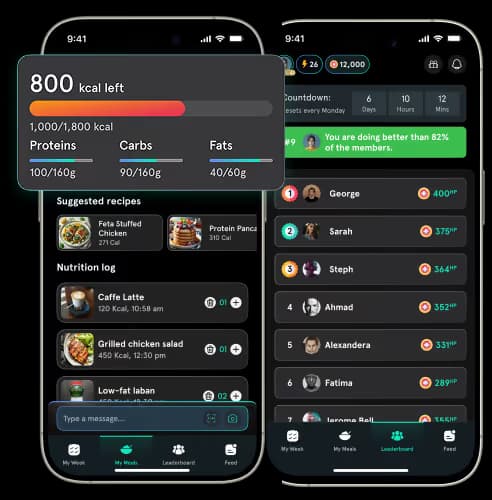
Trainmate's AI-powered workout plans and integrated nutrition logging provide the exact tools you need to apply this scientific framework daily. The app strips away diet industry noise by tracking your real-world calorie intake and physical output. Download Trainmate today to start logging your macronutrients with precision and stop wasting energy on myths that do not matter.