Macro Counting for Beginners: Flexible Dieting Guide
A 2022 survey by the International Food Information Council revealed that 52% of adults follow a specific diet, yet only 20% maintain their weight loss over three years. Macro counting for beginners shifts the focus from restrictive elimination diets to exact metabolic math. You will learn how to allocate protein, fats, and carbohydrates to build muscle or lose fat while still eating foods you actually enjoy. This flexible dieting guide removes the guesswork from nutrition. By calculating your exact energy needs and macronutrient ratios, you control your body composition without sacrificing your social life.
Key Takeaways
- Calculate your baseline: Determine your Total Daily Energy Expenditure (TDEE) before setting any specific carbohydrate or fat targets.
- Prioritize protein: Aim for 0.8 to 1.2 grams of protein per pound of target body weight to preserve muscle mass during fat loss.
- Embrace flexibility: Use the 80/20 rule, ensuring 80% of your macros come from whole foods while 20% can include treats.
- Weigh raw foods: Track your meats and grains before cooking to prevent 20-30% variations in caloric logging.
Table of Contents
- What Is Flexible Dieting and Macro Tracking?
- The Three Macronutrients Explained
- How to Calculate Macros for Your Goals
- IIFYM Weight Loss: Why Food Quality Still Matters
- Sample Flexible Dieting Meal Plan Math
- Navigating Plateaus and Metabolic Adaptation
- Common Macro Tracking Mistakes to Avoid
- Practical Macro Counting Checklist
- Macro Counting for Beginners FAQ
What Is Flexible Dieting and Macro Tracking?
Flexible dieting, often referred to as "If It Fits Your Macros" (IIFYM), is a nutritional framework prioritizing total macronutrient quantities over strict food categorization. You track three primary macronutrients: protein (4 calories per gram), carbohydrates (4 calories per gram), and fats (9 calories per gram). Rather than banning sugar or bread, you budget them into your daily allowances.
A 2021 study published in the Journal of the International Society of Sports Nutrition demonstrated that equating calories and protein between "clean eating" and flexible dieting groups resulted in identical fat loss over a 12-week period. Furthermore, research on flexible dieting adherence shows individuals who avoid rigid food rules experience 34% fewer binge-eating episodes and report higher long-term satisfaction.
Key Insight: A calorie deficit dictates weight loss, but your macronutrient breakdown dictates body composition—specifically how much of that lost weight comes from body fat versus lean muscle tissue.
The Three Macronutrients Explained
Every food you consume breaks down into macronutrients, which your body uses for distinct physiological functions. Understanding these roles prevents you from blindly chasing numbers on a screen.
Protein: The Building Block
Protein contains amino acids required for repairing muscle tissue damaged during exercise, synthesizing hormones, and maintaining immune function. It possesses the highest thermic effect of food (TEF), meaning your body burns 20-30% of the calories from protein just digesting it. Excellent sources include chicken breast, lean ground beef, tofu, tempeh, Greek yogurt, and whey isolate.
Fats: The Hormone Regulator
Dietary fats are calorically dense at 9 calories per gram, but they are essential for testosterone production, brain health, and the absorption of fat-soluble vitamins (A, D, E, and K). The American Heart Association recommendations suggest capping saturated fat at 5-6% of total daily calories, prioritizing monounsaturated and polyunsaturated fats. Healthy fat sources include avocados, almonds, salmon, chia seeds, and extra virgin olive oil.
Carbohydrates: The Energy Source
Carbohydrates are your body's preferred and most efficient energy source, particularly for high-intensity resistance training. They break down into glucose, which is stored in your muscles and liver as glycogen. Contrary to popular low-carb diets, carbohydrates do not inherently cause fat gain. Quality sources include oats, sweet potatoes, quinoa, jasmine rice, and fresh fruit.
How to Calculate Macros for Your Goals
Setting up your nutritional targets requires basic metabolic math. You must establish your maintenance calories before determining a deficit for fat loss or a surplus for muscle growth.
Step 1: Find Your Total Daily Energy Expenditure (TDEE)
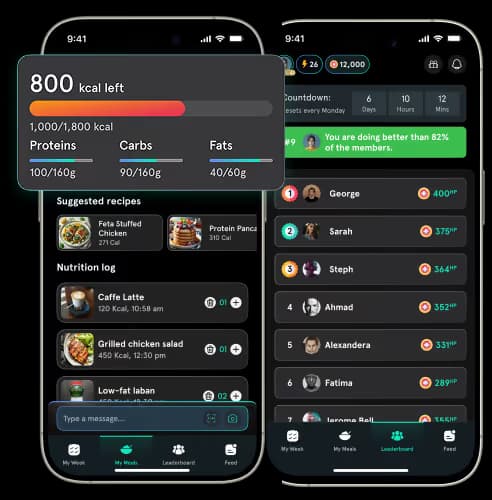
Your TDEE represents the total calories you burn in 24 hours. This includes your Basal Metabolic Rate (BMR), non-exercise activity thermogenesis (NEAT), the thermic effect of food (TEF), and formal exercise. According to NIH data on resting metabolic rate, your BMR accounts for roughly 60-70% of your total daily burn. To calculate your TDEE, multiply your BMR by an activity factor ranging from 1.2 (sedentary) to 1.9 (highly active). If you find spreadsheets tedious, Trainmate's intelligent nutrition logging automatically handles the math, adjusting your daily targets based on your metabolic data and wearable device inputs.
Step 2: Set Your Protein Target
Protein is non-negotiable for preserving lean tissue. When counting macros for fat loss, elevated protein intake prevents catabolism and increases satiety. The Journal of the International Society of Sports Nutrition guidelines recommend 0.7 to 1.0 grams of protein per pound of body weight for active adults. A 180-pound individual should aim for 126 to 180 grams daily. If you struggle to hit these numbers, exploring high-protein meal prep strategies ensures you always have lean meats or plant-based alternatives ready.
Step 3: Allocate Fats and Carbohydrates
After calculating protein calories (protein grams x 4), subtract that number from your total daily calorie goal. Allocate 20-30% of your total daily calories to dietary fats to support hormone production and nutrient absorption. A 2,000-calorie diet requires roughly 45 to 65 grams of fat. The remaining calories belong to carbohydrates. Carbohydrates fuel high-intensity resistance training and glycogen replenishment. If your goal is hypertrophy, combining these carb targets with a structured resistance training plan maximizes muscle protein synthesis.
IIFYM Weight Loss: Why Food Quality Still Matters
An IIFYM weight loss approach does not give you a free pass to consume only ultra-processed foods. While you can lose weight eating processed snacks as long as you maintain a calorie deficit, your health markers, hunger levels, and training performance will suffer.
Micronutrients—vitamins and minerals—regulate cellular function and energy metabolism. Eating 80% whole, minimally processed foods ensures you meet your daily fiber requirement of 25-35 grams. Fiber slows digestion, blunts blood sugar spikes, and keeps you full. You can balance food quality and budget constraints by practicing budget-friendly grocery shopping, focusing on bulk oats, frozen vegetables, and dry legumes.
Sample Flexible Dieting Meal Plan Math
To understand macro counting for beginners, reviewing a real-world mathematical example is crucial. Assume a 160-pound woman wants to lose fat. Her calculated fat loss intake is 1,800 calories. Her targets are 140g protein (560 calories), 55g fat (495 calories), and 186g carbohydrates (745 calories).
Here is how she might structure her day to hit these targets:
- Breakfast: 3 whole eggs, 1 cup egg whites, 50g dry oats, 100g berries (42g protein, 18g fat, 45g carbs).
- Lunch: 150g raw chicken breast, 150g cooked rice, 150g broccoli, 1 tbsp olive oil (38g protein, 16g fat, 50g carbs).
- Dinner: 150g lean ground turkey (93/7), 150g sweet potato, large green salad, 2 tbsp light dressing (35g protein, 14g fat, 40g carbs).
- Snack/Treat: 1 scoop whey protein, 30g dark chocolate, 1 apple (25g protein, 7g fat, 51g carbs).
This example perfectly hits 140g protein, 55g fat, and 186g carbs while including chocolate and an apple as flexible treats.
Navigating Plateaus and Metabolic Adaptation
Weight loss is rarely linear. As your body mass decreases, your metabolic rate naturally drops because a smaller body requires less energy to function. This is often confused with "starvation mode," but understanding metabolic adaptation myths clarifies that you simply need to adjust your macros.
When weight stalls for more than two weeks, reduce your daily carbohydrate or fat intake by 100-200 calories. Do not drop protein. Trainmate detects weight stagnation and gently suggests macro adjustments so you don't have to guess when to lower carbohydrates. Implement a two-week diet break—returning to maintenance calories—every 8-12 weeks to downregulate metabolic fatigue and restore hormonal balance.
Common Macro Tracking Mistakes to Avoid
Beginners frequently underreport their intake due to measurement errors and forgotten bites. Eyeballing portion sizes can lead to a 400-calorie discrepancy by the end of the day, completely erasing a standard fat loss deficit.
Always weigh foods in their raw state. A 4-ounce chicken breast shrinks to about 3 ounces when cooked due to water loss, but the caloric density changes. Using Trainmate to scan barcodes while cooking prevents the common error of mislogging portion sizes. Additionally, you must track liquid calories, cooking oils, and condiments. One tablespoon of olive oil contains 120 calories; forgetting to log the oil used to roast vegetables is a primary reason people fail to lose weight while claiming they are in a deficit.
Practical Macro Counting Checklist
Transitioning to a flexible dieting lifestyle requires preparation. Follow this exact ordered list to build a sustainable tracking habit.
- Purchase a digital food scale: Buy a kitchen scale that measures in grams and ounces. Volume measurements (cups and spoons) are highly inaccurate for solid foods like peanut butter or oats.
- Log food before eating: Enter your meals into your tracking application before you consume them to ensure they fit your remaining daily macronutrient budget.
- Plan your protein first: Build your meals around a central protein source, then fill the remaining caloric space with carbohydrate and fat sources.
- Standardize your breakfasts: Eating the same macro-friendly breakfast every day reduces decision fatigue and stabilizes your morning energy.
- Track alcohol accurately: Alcohol contains 7 calories per gram. Log alcoholic beverages by converting their total calories into carbohydrate or fat grams to maintain your deficit.
Macro Counting for Beginners FAQ
Do I need to count macros forever?
No. Macro counting for beginners serves as an educational tool. After three to six months of diligent tracking, you will develop an intuitive understanding of portion sizes and macronutrient densities. This allows you to maintain your physique and healthy habits without relying on a digital food scale long-term.
What happens if I miss my macro targets?
Hitting your macronutrient targets within a 5-10 gram range is sufficient for optimal results. If you overeat carbohydrates on a Friday, slightly reduce your carbohydrate intake on Saturday to balance your weekly energetic average. Total weekly adherence dictates your progress, not microscopic daily perfection.
Should I track net carbs or total carbs?
Always track total carbohydrates when applying a flexible dieting framework. While dietary fiber is not fully digested, it still contributes a small amount of caloric energy to your body. Tracking total carbohydrates ensures you maintain a precise caloric deficit, preventing hidden calories from stalling your fat loss.
Can I build muscle and lose fat at the same time?
Body recomposition is possible for beginners, obese individuals, and athletes returning from a training hiatus. It requires a slight caloric deficit of 200-300 calories, a high daily protein intake, and consistent progressive overload. Advanced trainees usually require dedicated bulking or cutting phases to see significant changes.
How often should I recalculate my macro targets?
Recalculate your macros after gaining or losing 10 pounds, or if your daily physical activity level changes significantly. A smaller body burns fewer calories, meaning your initial fat loss deficit will eventually become your new maintenance intake. Regular recalibrations prevent prolonged weight loss plateaus.
Conclusion
Mastering macro counting for beginners fundamentally changes your relationship with food. By understanding the energetic value of protein, carbohydrates, and fats, you liberate yourself from restrictive diet culture. You no longer have to label foods as "good" or "bad." Instead, you view them as data points in your weekly nutritional budget. As you progress, the goal is not to be chained to a food scale, but to use these calculations to build long-term, intuitive eating habits. Start by tracking your baseline intake for three days without making changes, then apply a structured deficit to begin your physical transformation.
Ready to stop stressing over spreadsheets and manual calculations? Trainmate’s intelligent nutrition logging automatically calculates your customized macro splits and tracks your daily progress with a simple barcode scanner. Download Trainmate today to make flexible dieting fit effortlessly into your busy life and reach your goals faster.