A corporate wellness vendor RFP checklist for GCC enterprise buyers requires local data residency under Saudi Arabia's PDPL and UAE Federal Decree-Law No. 45/2021, contractually enforced 50% week-six engagement SLAs, REST API HRIS integration, and individualized training adaptation protocols. This framework prevents engagement from decaying to the 15% regional baseline while eliminating employer liability for regulatory data breaches.
What legal data privacy requirements must a digital wellness vendor meet in Saudi Arabia and the UAE?
Digital health platforms operating in the Gulf Cooperation Council must comply with regional data sovereignty statutes. In the Kingdom of Saudi Arabia, the Personal Data Protection Law enforced by the Saudi Data and AI Authority mandates that employee physical health data be processed and stored on cloud infrastructure inside KSA borders. Cross-border transfers of biometric performance records require explicit authorization from SDAIA under strict adequacy guidelines.
In the UAE, Federal Decree-Law No. 45/2021 on Personal Data Protection and the ICT Health Law (Federal Law No. 2 of 2019) limit offshore cloud storage. Platforms holding employee health risk assessments, physical activity, or body composition data must use data centers physically located in the UAE. Administrative fines for non-compliant employers acting as data controllers reach up to AED 1,000,000 per violation.
Enterprise RFPs must mandate technical verification of tenant isolation and end-to-end encryption. Vendors must prove AES-256 encryption at rest and TLS 1.3 encryption in transit. Systems must support granular consent workflows, letting staff revoke data access immediately without disrupting their primary HR profile.
How does Saudi Arabia's PDPL impact corporate employee health data management?
Executive Regulations issued by the Saudi Data and AI Authority carry statutory fines up to SAR 5,000,000 for unlawful cross-border health data transfers or secondary commercialization of employee profiles. Standard health tracking software exposes employers to direct legal liability if biometric metrics route through external cloud servers.
Procurement teams must mandate that vendors operate strictly as contractually bound data processors. Platforms using corporate accounts employees join through their employer maintain total isolation between administrative oversight and personal exercise records. Vendors cannot aggregate or sell employee health data for commercial marketing.
To guarantee individual privacy, reporting systems must restrict managerial access to aggregated cohorts of 10 or more active participants. Small department cohorts under this threshold must be merged into broader organizational reporting units. This structure prevents employers from identifying individual employee health metrics through process-of-elimination analysis.

How do GCC HR leaders structure a corporate wellness vendor RFP checklist for Week-6 retention?
Enterprise health initiatives lose an average of 78% of active users within 42 days when relying on generic step challenges. Sustaining participation requires individual workout progression rather than uniform daily movement targets.
Incorporating a personalized plan per employee rather than one generic programme ensures training stimulus adapts to baseline fitness levels. Software must also provide personalized onboarding that accounts for each employee’s injuries and sensitive joints to prevent early dropped sessions caused by physical discomfort.
A 2025 study in Frontiers in Nutrition established that physical performance gains depend on precise load tracking rather than static duration goals. Unadjusted exertion metrics lead to acute fatigue and rapid app abandonment. RFPs must evaluate vendors on adaptive programming capability rather than basic activity logging.
Evaluation Category | Legacy Program Baseline | Performance RFP Standard |
|---|---|---|
Data Hosting Architecture | Shared global cloud infrastructure | In-country tenant isolation (KSA / UAE) |
Customization Protocol | Static step challenges and disclaimers | Individual load tracking and injury accounting |
SLA Enforcement | Fixed annual payment schedule | 20% invoice holdback tied to week-6 active usage |
System Access | Shared managerial login portals | SAML 2.0 / Entra ID SSO with RBAC controls |
Language Native Support | Machine-translated UI overlays | Native Arabic and English interface design |

What key technical and HRIS integration standards should enterprise buyers require?
Integrating wellness platforms directly into enterprise HR stacks cuts administrative overhead for People operations. RFPs must require REST API compatibility and native connectors for SAP SuccessFactors, Workday, and Oracle HCM.
Automated roster synchronization should update employee records within 24 hours of onboarding or offboarding. Immediate credential revocation prevents former staff from retaining access to corporate-funded accounts or sensitive platform features.
Identity management requires SAML 2.0 or Microsoft Entra ID single sign-on with multi-factor authentication. Organizations can evaluate long-term financial impacts through our Corporate Wellness ROI Calculator and review operational benchmarks in our guide to GCC Corporate Wellness Benchmarks: Reach 65% Retention.
How should buyers structure vendor financial penalties and SLA terms in a corporate wellness vendor RFP checklist?
Annual flat-fee SaaS structures pay vendors regardless of employee engagement. RFP commercial terms must tie vendor compensation directly to active user retention past the six-week threshold.
Contracts should enforce a 20% invoice holdback contingent on reaching target weekly active user rates at day 42. Active usage must be defined as completing at least two logged training sessions per 7-day period. If active usage drops below 30% at day 60, the vendor must supply technical account management remediation hours at zero additional fee.
A 2024 systematic review in PMC documented that structured health interventions directly lower corporate absenteeism rates. Buyers can leverage aggregate physical activity data to cut UAE corporate health insurance costs with data during annual policy renewals.
Protocol consistency matters during extended work breaks, similar to the principles outlined in our 3-Week Returning to Lifting After a Layoff Protocol. For full framework development, review The Complete Guide to Corporate Wellness Programs in the UAE.
Frequently Asked Questions
What is the minimum participant threshold for anonymized HR reporting under KSA PDPL?
Under Saudi Arabia's PDPL regulations enforced by SDAIA, corporate wellness reporting must aggregate metrics across cohorts of at least 10 active employees. This threshold prevents line managers from inferring individual employee physical activity levels, health risk scores, or workout frequencies from small team data sets.
How does local data hosting impact GCC corporate wellness software deployment?
Local data hosting inside KSA or the UAE satisfies regional data sovereignty laws including Saudi PDPL and UAE Federal Decree-Law No. 45/2021. Local cloud tenancy eliminates employer breach fines up to SAR 5,000,000, simplifies regulatory audits, and reduces network latency for regional mobile application users.
What week-six active retention rate should HR directors mandate in an RFP?
HR directors should contractually mandate a minimum 45% to 50% weekly active user retention rate at week six. Unenforced programs average 12% to 15% engagement by week six. Tying a 20% invoice holdback to this milestone forces vendors to deliver individualized exercise adaptation.
Can corporate wellness vendors share employee activity data with health insurance brokers?
No. Under KSA and UAE privacy laws, vendors cannot disclose individual employee health or activity records to insurance brokers without explicit, unbundled employee consent. Employers may only share anonymized, aggregate physical activity reports to support group health underwriting and premium discount negotiations during policy renewals.
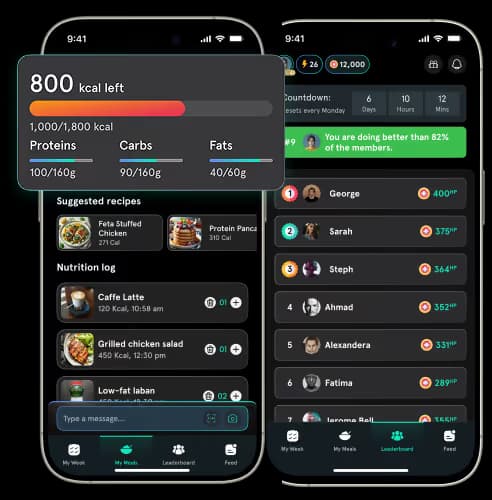
Enterprise wellness procurement requires balancing strict GCC data residency laws with verified week-six engagement protocols. Deploying TrainMate for Corporate Wellness delivers compliant local infrastructure paired with personalized training mechanics that protect both corporate health budgets and employee data.