A 2021 Strava analysis of 100 million user logs found that 73% of people abandon their fitness resolutions by mid-February. You will learn exactly how to stay consistent with working out using behavioral psychology and structural environmental design. Willpower is a finite biological resource that physically drains throughout the workday, leaving you exhausted by the time your shift ends. Relying on motivation to carry your fitness routine is a mathematically proven strategy for failure. Instead, attaching new physical activity to ingrained daily routines allows you to bypass the brain's resistance to exertion entirely.
Key Takeaways
- Automate your triggers: Anchor your workout to an unavoidable daily habit, like brushing your teeth or shutting down your laptop.
- Lower the threshold: Scale workouts down to two minutes on low-energy days to protect the habit loop.
- Execute a friction audit: Eliminate every physical barrier between your couch and your gym equipment.
- Leverage external accountability: Use community tools to create a psychological cost for skipping a session.
Table of Contents
- The Science Behind Workout Consistency Tips
- What is Habit Stacking Fitness?
- How to Build a Gym Habit Using Triggers
- What to Do When Lacking Gym Motivation
- Environmental Design Over Willpower
- The Impact of Social Accountability
- Practical Tool: 4-Week Consistency Quick-Start Guide
- Frequently Asked Questions (FAQ)
The Science Behind Workout Consistency Tips
Workout consistency tips only work when they focus on automating behaviors through neurological cues, completely bypassing the need for daily motivation. Your prefrontal cortex handles active decision-making, which is why debating whether or not to train feels physically exhausting. Once a behavior becomes a habit, execution shifts to the basal ganglia, a region of the brain that operates on autopilot with near-zero cognitive load.
A landmark 2009 study published in the European Journal of Social Psychology by Dr. Phillippa Lally demonstrated that habit formation takes an average of 66 days, not the commonly cited 21 days. During this critical window, your brain is actively laying down new neural pathways. Motivation naturally fluctuates based on variables like sleep quality, stress levels, and blood sugar, making it an entirely unreliable engine for long-term physiological adaptation.
By outsourcing your daily decision-making to a pre-planned environmental cue, you conserve mental energy for the workout itself. You do not wake up and actively decide to brush your teeth; you simply execute the action based on the cue of waking up. Achieving this same automated neurological state is the ultimate goal of behavioral fitness planning.
What is Habit Stacking Fitness?
Habit stacking fitness involves attaching a new, desired exercise behavior to an existing daily routine so the old habit acts as an automatic trigger. Dr. BJ Fogg, founder of the Stanford Behavior Design Lab, pioneered this framework under the Tiny Habits methodology. The formula dictates stating: 'After I [current habit], I will [new micro-habit].'
This strategy leverages existing synaptic connections in your brain rather than forcing you to build entirely new neural infrastructure from scratch. Your morning coffee, brushing your teeth, or shutting down your work laptop are deeply ingrained behaviors that happen with 100% reliability. By treating these actions as firing mechanisms, you guarantee your new fitness behavior will be cued every single day.
You can apply this immediately by finding a high-frequency anchor in your evening routine. For example, you can implement the rule: 'After I wash my dinner plates, I will execute a 10-minute walking for weight loss routine.' The dirty plates become the undeniable cue for physical movement.
Key Insight: Motivation dictates your intention, but friction dictates your execution. Lowering the barrier to entry ensures you start, and starting is the only requirement for solidifying a neural pathway.
How to Build a Gym Habit Using Triggers
You learn how to build a gym habit by identifying unavoidable daily transitions and preparing your environment to make the gym the path of least resistance. This prevents the classic mistake of going home to sit on the couch before heading back out to train. Once your body enters a state of rest, the activation energy required to leave the house again skyrockets.
- Identify an immovable anchor: Leaving the office at 5:00 PM is a transition that happens five days a week without fail.
- Prepare the physical space: Pack your gym bag the night before and place it in the front passenger seat of your car, forcing you to look at it during your commute.
- Execute the micro-step: When you leave work, your only mandatory rule is to drive directly to the gym parking lot.
What to Do When Lacking Gym Motivation
When lacking gym motivation, scale your workout down to a trivial two-minute threshold rather than skipping the session entirely. Behavioral economist James Clear popularized this as the 'Two-Minute Rule,' emphasizing that a habit must be established before it can be optimized. Your goal on a low-energy day is to simply put on your shoes, step into the gym, and do two minutes of warm-ups before granting yourself permission to leave.
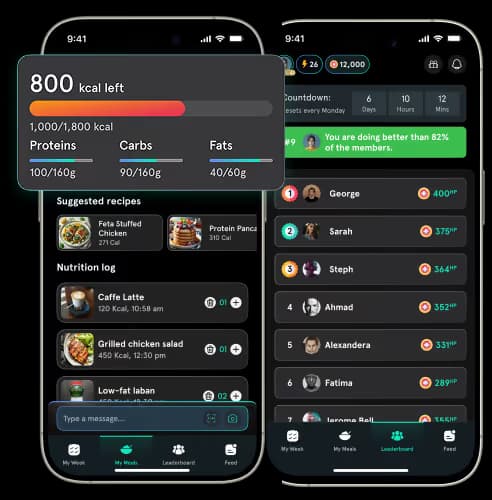
A 2015 study published in Health Psychology found that consistency in executing a cue-response loop is significantly more important than the duration or intensity of the exercise during the first eight weeks. Trainmate's streak-tracking dashboard visually reinforces these micro-workouts perfectly. Logging just a 10-minute session keeps your visual streak alive, proving to your brain that showing up is the primary objective on difficult days.
Never miss twice. Missing one day of training is an inevitable statistical anomaly caused by life events, but missing two consecutive days is the literal beginning of a new, sedentary habit. When the motivation completely vanishes, doing 5% of your planned workout protects the behavioral loop.
Environmental Design Over Willpower
Environmental design restructures your physical and digital surroundings to eliminate the need for willpower entirely. The Cornell Food and Brand Lab conducted extensive research on choice architecture, proving that visual proximity dictates human consumption. This exact neurological principle applies directly to physical training; if your running shoes are buried beneath boxes in a dark closet, your brain calculates the caloric cost of retrieving them and mathematically opts for the couch instead.
You must create a living space where the absolute default choice is physical movement. Install a pull-up bar inside the doorway of your home office, leave a kettlebell in the center of your living room rug, and place your foam roller next to your television remote. You can also optimize your digital environment to completely remove decision fatigue. Utilizing AI fitness workout plans ensures you step into the gym knowing exactly what movements to execute, preventing the aimless wandering that kills momentum.
Conducting a Friction Audit
A friction audit identifies and systematically eliminates the physical, mental, or logistical barriers standing between you and your scheduled training session. Take a notepad and map out every single micro-step required to go from your current resting state to executing your first working set in the gym.
- Pre-mix your protein shake or pre-workout the night before and place it at the front of the refrigerator.
- Select your workout playlist before you leave the house to avoid scrolling in the parking lot.
- Choose a training facility that is located explicitly on your direct commute path between the office and your home.
The Impact of Social Accountability
Social accountability creates an external psychological cost for skipping a workout, forcing compliance when internal drive inevitably fails. A 2018 study published by the National Institutes of Health (NIH) revealed that individuals exercising with a partner or within a community had a staggering 34% higher adherence rate over six months. Humans are highly social creatures biologically wired to honor tribal commitments to maintain status.
When you verbally promise someone else you will show up to train, the fear of letting them down violently overrides your personal fatigue. Digital accountability is equally effective for modern remote lifestyles where meeting physical training partners is difficult. Engaging with Trainmate's social accountability features directly links your daily physical effort to a shared community metric. Knowing that your training partners will see if you skip your planned steps naturally pushes you through the initial friction of getting off the couch.
Practical Tool: 4-Week Consistency Quick-Start Guide
This four-week framework transitions you from a beginner to a consistent exerciser by systematically layering behavioral micro-habits. Do not skip ahead; the entire purpose of this protocol is to master one variable at a time.
- Week 1 - The 2-Minute Anchor: Choose one existing daily habit (like drinking morning coffee). Immediately after, do precisely two minutes of movement, such as stretching or bodyweight squats. Stop after two minutes.
- Week 2 - Environmental Prep: Expand the workout to 15 minutes. Set out your training clothes, water bottle, and shoes the night before. Your only goal is to eliminate morning decision fatigue.
- Week 3 - The Commute Stack: Add a physical gym visit to a transition you already make. Stop at the gym on the way home from work. Even if you only stay for 20 minutes, log the physical visit.
- Week 4 - Social Contracts: Invite a friend to your routine or join a digital accountability challenge. Lock in your new habit with external social pressure.
Frequently Asked Questions (FAQ)
How long does it take to build a workout habit?
It takes an average of 66 days to form a fully automated workout habit, according to clinical data from University College London. The exact timeline varies between 18 and 254 days depending on the complexity of your routine. Sticking to simple micro-habits drastically accelerates this neurological rewiring process.
What is the 2-day rule for working out?
The 2-day rule is a behavioral contract stating you will never skip your training routine for two consecutive days. Missing a single day is a normal logistical disruption that does not impact long-term progress. Missing two days creates a new behavioral pattern that signals your brain to revert to a sedentary state.
How do I restart my fitness routine after a long break?
Restart your fitness routine by deliberately capping your initial workouts at 50% of your previous capacity. Trying to match your old performance levels immediately causes severe delayed onset muscle soreness (DOMS) and psychological burnout. Focus strictly on rebuilding the habit of showing up three days a week before optimizing the intensity.
Does habit stacking work for morning workouts?
Yes, habit stacking is exceptionally effective for morning workouts because morning routines are usually rigid. You can stack your workout directly onto turning off your alarm clock. For example, placing your phone across the room on top of your gym clothes forces you out of bed and instantly triggers the workout cue.
How can I exercise if I have zero energy?
When you have zero energy, deploy the two-minute rule and engage in low-friction movement like light stretching or an outdoor walk. Physical movement actually generates mitochondrial energy and boosts endorphins, meaning the exhaustion you feel is often mental, not physical. Committing to a micro-workout protects your habit streak without causing nervous system fatigue.
Next Steps for Long-Term Success
Do not rely on sheer willpower to carry you through a 12-week training program. Building a highly structured system of behavioral triggers, prepared environments, and micro-habits is precisely how to stay consistent with working out over a lifetime. Your immediate next step is to perform a friction audit tonight. Lay out your training gear, attach a two-minute warmup to your morning coffee, and commit to lowering the barrier to entry tomorrow morning.
Automate Your Consistency With Trainmate
Stop guessing if your new behaviors are actually sticking. Trainmate automatically tracks your daily streaks, logs your micro-workouts, and connects you directly to social accountability challenges. Download the app today to design a digital environment that scientifically supports your long-term fitness goals.