Maximizing dxa scan accuracy muscle glycogen hydration controls require strict standardization because dual-energy X-ray absorptiometry measures total attenuation of photon beams. Acute shifts in intracellular water, muscle glycogen storage, and gastrointestinal volume alter photon beam absorption, misidentifying fluid fluctuations as lean soft tissue. Uncontrolled testing conditions yield fat-free mass errors up to 2.5 kg.
How does hydration status affect DXA scan lean mass results?
Dual-energy X-ray absorptiometry calculates lean soft tissue (LST) by passing low- and high-energy X-ray photons through the body. The system assumes a constant biological hydration fraction of 73.2% in lean tissue. When acute body fluid levels shift, the scanner misclassifies water mass gain or loss directly as lean soft tissue changes.
Systemic hyperhydration inflates measured fat-free mass, while hypohydration artificially depresses it. A study in the European Journal of Clinical Nutrition demonstrated that acute fluid shifts alter measured lean soft tissue by 1.0 to 1.5 kg without any change in actual muscle protein. Drinking 1000 mL of water shortly before a scan increases trunk lean mass readings by approximately 0.9 kg.
Athletes who manage hydration incorrectly risk tracking false gains or losses. If you are calculating diet protocols based on lean body mass, accurate baseline figures are vital. Before setting targets, review how to calculate protein via fat-free mass to retain lean muscle to align your nutrition with precise scan output.
What is the glycogen impact on DXA scan accuracy?
Muscle glycogen stores hold approximately 3 g of intracellular water per gram of glucose. High-carbohydrate loading or severe carbohydrate restriction causes massive swings in skeletal muscle volume. DXA photon attenuation cannot differentiate between intracellular water bound to glycogen and functional myofibrillar muscle tissue.
Fully glycogen-repleted skeletal muscle holding 15 g/kg of glycogen increases lean mass readings by 1.5 kg to 2.5 kg compared to a depleted state. A report published by Examine.com notes that short-term carbohydrate shifts skew apparent lean tissue mass without altering structural muscle protein synthesis. A 48-hour high-carbohydrate refeed can easily obscure real fat loss or fake rapid muscle growth.
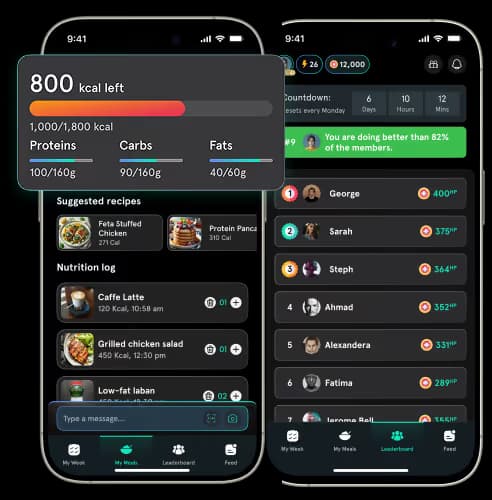
If you implement a 2-day carb refeed, schedule your DXA scan before the carbohydrate load or wait until baseline glycogen levels normalize. Consistent daily logging of your carbohydrate intake prevents unexpected glycogen spikes from ruining your longitudinal scan data. You can log your daily food intake using meal logging by photo, chat or manual entry.

How to standardize a DXA scan protocol for true hypertrophy
Advanced drug-free athletes typically gain between 0.25 kg and 0.5 kg of actual muscle tissue per month. Because protocol noise often exceeds this rate of progress, standardization must keep error margins below 1.0%. Research from the University of the Sunshine Coast highlights that strict standardized positioning and prep protocols reduce lean mass variation to under 0.8%.
Follow this standardized preparation sequence prior to every scan:
- Fast for 12 hours overnight, avoiding all solid food and caloric beverages.
- Drink 500 mL of plain water exactly 2 hours prior to testing to establish euhydration, then void your bladder immediately before lying on the table.
- Cease heavy resistance training and intense cardio for 48 hours prior to testing to clear localized muscle edema and temporary tissue trauma.
- Maintain identical daily carbohydrate intake (e.g., 3 to 5 g/kg of body weight) for the 72 hours leading into the test.
Establishing reproducible daily nutrition targets ensures consistent baseline conditions between scans. Use our TDEE Calculator to determine maintenance requirements, and set precise target macronutrients with our Macro Calculator. To verify your prep, review your weekly macronutrient adherence using a weekly nutrition summary and meal history.
Do food and fluid intake create false lean tissue readings on DXA scans?
Undigested contents inside the gastrointestinal tract add unaccounted weight directly to the DXA scan beam path. The scanner reads gastrointestinal volume as soft tissue within the abdominal region. Because the system cannot isolate gut contents, it categorizes digested food mass primarily as trunk lean tissue.
Consuming a moderate meal weighing 750 g increases total lean mass readings by roughly 0.6 kg to 0.75 kg. A clinical trial hosted on PubMed Central demonstrated that acute fluid and meal ingestion caused immediate trunk lean mass errors up to 0.8 kg. Fasting eliminates gut tissue artifacts entirely.
Training sessions performed shortly before a scan also induce temporary fluid shifts. Intense muscular contractions draw extracellular plasma into muscle tissue, causing acute muscle swelling. Track your training sessions accurately with guided gym workouts with set-by-set logging of reps, weight and assisted-machine loads to ensure your deloads align perfectly with scheduled body composition testing days.
Frequently Asked Questions
Can a DXA scan tell the difference between water and muscle?
No. Dual-energy X-ray absorptiometry measures total tissue photon attenuation and assumes a fixed hydration status of 73.2% in fat-free tissue. It cannot distinguish between intracellular hydration, extracellular fluid retention, gastrointestinal contents, and true myofibrillar muscle protein. All fluid changes directly alter the reported lean soft tissue mass.
How long should you refrain from training before a DXA scan?
Refrain from heavy resistance training and strenuous cardiovascular exercise for 48 hours before testing. Exercise causes temporary muscular microtrauma, localized inflammation, and fluid pooling, which inflates local lean mass readings. Restoring baseline fluid distribution takes 24 to 48 hours of complete recovery.
Why did my DXA scan show lean mass loss during a weight loss phase?
Most acute lean mass loss on a DXA scan during a calorie deficit represents depleted muscle glycogen and lost intracellular water. Fasting and low carbohydrate availability reduce stored glycogen by up to 200 g, which strips away an additional 600 g of bound water. True myofibrillar muscle tissue loss is significantly lower than the total lean soft tissue drop reported by the scanner.
What is the single best time of day to get scanned?
Schedule all comparative DXA scans first thing in the morning. An early morning appointment allows you to complete a 12-hour overnight fast easily, void your bladder upon waking, and test in an unstressed, post-absorptive state before any physical activity occurs.
Tracking real hypertrophy requires separating true myofibrillar tissue growth from environmental and dietary noise. Standardizing your hydration, carbohydrate timing, and training status ensures your DXA scan outputs reflect real physiological adaptations. Pair your standardized testing schedule with precision workout and nutrition tracking in TrainMate to confirm your progressive overload translates to genuine muscle growth.