How Do HR Leaders Adapt GCC Shift Worker Corporate Wellness Programs?
GCC shift worker corporate wellness requires moving away from standard 9-to-5 office programs toward circadian-aligned operational frameworks. HR leaders reduce unscheduled absences by implementing timed light exposure, chronotype-adjusted meal windows, and mobile micro-recovery protocols. These target the metabolic and hormonal drivers of night shift fatigue across aviation, logistics, healthcare, and energy sectors.
Standard wellness programs fail 24/7 workforces because gym stipends and daytime webinars assume conventional sleep schedules. A 2022 review in the National Center for Biotechnology Information shows rotating shift schedules disrupt melatonin secretion and lower glucose tolerance by 20% to 30%. When employees work through the night, standard wellness perks go completely unused.
Enterprise organizations must adapt their offerings to match shift patterns. Building effective health initiatives for round-the-clock operations requires specialized infrastructure, as detailed in The Complete Guide to Corporate Wellness Programs in the UAE. Instead of requiring physical attendance at daytime workshops, organizations must provide corporate accounts employees join through their employer to deliver asynchronous, shift-adjusted support directly to mobile devices.
What Causes High Unscheduled Absenteeism Among Gulf Night Shift Workers?
Unscheduled sick leave among GCC night shift employees is a physiological reaction to systemic circadian disruption. Working opposite to natural biological light cycles elevates nocturnal cortisol production, driving chronic central nervous system fatigue. Over consecutive night shifts, this systemic stress suppresses immune function and alters fundamental metabolic processes.
Environmental conditions across the Gulf intensify these physiological burdens. According to a workplace health analysis by GCC Pulse, operational environments in the region demand proactive health measures to prevent severe productivity drops. Night shift workers operating industrial equipment or managing flight lines face heat indexes exceeding 40°C even after sunset.
The combined impact of heat stress and sleep debt rapidly degrades human performance. A research project by the National University of Singapore demonstrated that heat stress paired with exertion lowers cognitive capacity by 15% and speeds muscle fatigue. When shift workers accumulate more than 2.5 hours of sleep debt per night, absenteeism spikes as the body forces recovery.
Unscheduled absences directly inflate operational expenses through emergency shift coverage and overtime pay. HR directors can model the financial damage of shift fatigue using our Corporate Wellness ROI Calculator. Addressing the root physiological causes of absence converts reactive medical spending into predictable operational performance.

How Do Circadian Light and Nutrition Protocols Support GCC Shift Worker Corporate Wellness?
Circadian alignment relies heavily on precise light exposure protocols during a 12-hour shift cycle. Exposing night shift workers to 10,000 lux bright blue-enriched lighting during the first 3 hours of a shift suppresses daytime melatonin and maintains baseline alertness. Conversely, workers must wear blue-blocking glasses filtering 99% of blue light below 500 nm during their morning commute home to safeguard daytime sleep quality.
Metabolic timing is equally critical for suppressing shift worker circadian fatigue GCC operations generate. Consuming high-glycemic carbohydrates at 03:00 creates severe blood glucose spikes because nocturnal insulin sensitivity drops significantly. Shift workers should restrict food intake between 22:00 and 06:00 to lean protein and healthy fats, targeting precisely 0.4 g/kg of protein per meal to maintain muscle protein synthesis without overburdening the digestive system.
Employees can calculate precise night-shift calorie and protein requirements using our Macro Calculator. Generic nutrition guidelines fail because night workers process nutrients differently than day workers. Effective platforms must provide a personalized plan per employee rather than one generic programme so every worker receives guidance mapped directly to their specific shift rotation.
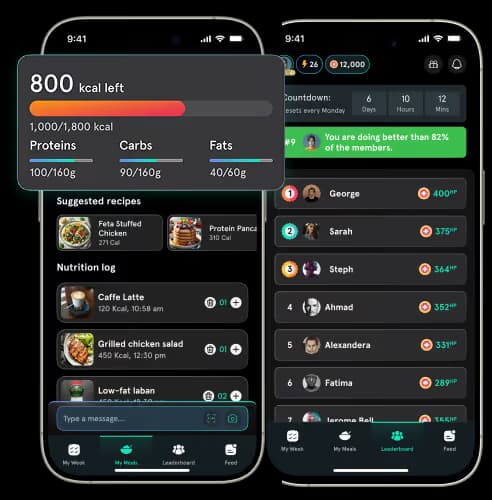
Adherence depends entirely on friction-free logging during irregular work hours. Shift workers operating under strict operational demands cannot spend ten minutes entering meal details manually. Providing options like meal logging by photo, chat or manual entry allows employees working at 02:00 to track nutrition in seconds, maintaining behavioral consistency over long rotations.

What Strategies Lower Healthcare Claims for Rotating Workforces in the Gulf?
Rotating night shifts accelerate metabolic breakdown, directly inflating chronic disease rates and high-cost emergency medical claims. A comprehensive study published by the Centers for Disease Control and Prevention confirms that long-term shift work sleep disorder significantly increases cardiovascular disease risks, gastrointestinal disorders, and emergency medical utilization.
HR leaders lower healthcare costs by introducing structured micro-recovery protocols during shifts. Scheduling mandatory 15-minute rest breaks inside dark, temperature-controlled recovery rooms between 03:00 and 05:00 reduces central nervous system fatigue. This targeted intervention lowers blood pressure spikes and decreases workplace safety incidents during the most physiologically dangerous hours of a night shift.
Data-driven health interventions protect company margins while protecting employees. Employers can review practical approaches to lowering group policy rates in Cut UAE Corporate Health Insurance Costs With Data. Establishing a circadian-aligned GCC 24/7 workforce health strategy prevents severe medical events, lowers inpatient hospitalization rates, and helps reduce shift work absenteeism Gulf enterprises experience year after year.
Implementing targeted health protocols creates measurable financial returns. A night shift employee wellness ROI manifests through lower short-term disability claims, reduced turnover among skilled shift workers, and stable health insurance renewal premiums. Aligning enterprise health benefits with biological rhythms transforms workforce health from an unmanaged liability into a competitive asset.
Frequently Asked Questions
How can GCC HR leaders adapt wellness programs for 24/7 shift workers?
GCC HR leaders adapt wellness programs by replacing daytime-only events with asynchronous digital delivery, circadian lighting, and night-shift nutrition windows. Providing tailored recovery protocols and targeted nutrition support directly addresses the 24/7 physiological demands placed on night shift workers across industrial, healthcare, and aviation sectors.
What causes high unscheduled absenteeism among night shift employees in the Gulf?
Unscheduled absenteeism among Gulf night shift employees stems from circadian rhythm disruption, severe sleep debt, and metabolic dysfunction. When night shifts combine with extreme ambient heat, workers experience cumulative central nervous system fatigue, elevated blood pressure, and doubled burnout rates compared to daytime office staff.
How do circadian-aligned nutrition and light exposure reduce shift worker fatigue?
Circadian-aligned light exposure suppresses daytime melatonin production during shifts, while blue-blocking glasses preserve sleep quality before rest. Restricting night-shift calories to protein and fats while avoiding high-glycemic carbohydrates at 03:00 prevents severe insulin spikes, stabilizing metabolic energy and maintaining cognitive focus throughout night rotations.
What strategies lower emergency healthcare claims for rotating shift workforces in the GCC?
Employers lower emergency healthcare claims by implementing metabolic health screening, micro-recovery rest intervals between 03:00 and 05:00, and targeted diabetes prevention programs. Stabilizing blood pressure and insulin sensitivity reduces cardiovascular events, shift-work workplace injuries, and costly emergency department admissions among rotating staff.
Managing 24/7 workforce health requires targeted, asynchronous tools designed for irregular hours. TrainMate delivers scalable fitness and nutrition support tailored to shift patterns across Gulf enterprises. Deploying individualized protocols keeps shift workers active, healthy, and on duty.