Why Does Standard Whey Fail to Fully Stimulate Muscle Protein Synthesis During Severe Caloric Deficits?
During an aggressive fat loss phase, supplementing standard whey isolate with 3 to 5 g of free-form essential amino acids triggers maximal muscle protein synthesis while saving 60 kcal per serving. Free-form amino acids enter systemic circulation within 20 minutes, bypassing slow gastrointestinal digestion and overcoming the elevated anabolic resistance threshold caused by low energy availability.
Hypoenergetic states suppress postprandial myofibrillar protein synthesis by up to 27%, as demonstrated in a 2023 systematic review by Churchward-Venne et al. in Sports Medicine. When daily energy availability drops below 30 kcal/kg of fat-free mass, basal mechanistic target of rapamycin complex 1 (mTORC1) signaling declines significantly. Intact whey protein requires 90 to 120 minutes for enzymatic cleavage within the stomach and small intestine, during which first-pass splanchnic metabolism consumes up to 50% of ingested systemic amino acids.
In a hyperenergetic or eucaloric baseline state, the remaining leucine entering systemic circulation easily initiates muscle protein synthesis. In an energy deficit, elevated cellular adenosine monophosphate-activated protein kinase (AMPK) activity directly phosphorylates raptor and suppresses downstream mTORC1 signaling. Overcoming this biochemical resistance requires a higher concentration gradient of arterial leucine across the L-type amino acid transporter 1 (LAT1) to phosphorylate p70S6K and 4E-BP1.
A standard 25 g serving of intact whey isolate yields approximately 2.7 g of total leucine. That leucine enters blood plasma slowly over two full hours. The resulting protracted appearance curve fails to generate the sharp intracellular concentration spike required to override blunted anabolic machinery.
To reach maximal myofibrillar protein synthesis using unfortified intact protein alone, an athlete must scale bolus intake up to 40 or 50 g per feeding. That increase adds 60 to 100 extra calories to each protein meal, taking away energy that could be allocated to whole-food satiety. Establishing an accurate baseline calculation prevents these unnecessary calorie trade-offs; determine target intake using a protein intake calculation based on fat-free mass. Pushing energy availability below safe thresholds introduces catabolic tissue loss detailed in our guide on the 30 kcal energy availability limit.

How Does Leucine Kinetics Alter the Intracellular mTORC1 Trigger Threshold?
Under eucaloric conditions, an absolute leucine dose of 2.0 to 2.5 g per meal maximizes fractional synthetic rate in trained athletes. In a severe energy deficit, this activation threshold increases to 3.5 to 4.0 g of leucine per feeding event. Plasma amino acid appearance kinetics govern the magnitude of the downstream anabolic cascade.
Peak arterial leucine concentration ($C_{max}$) and the rate of systemic appearance ($T_{max}$) dictate mTORC1 phosphorylation intensity far more than total cumulative area under the concentration curve. Rapid amino acid appearance reaching peak plasma concentrations within 20 to 30 minutes triggers potent intracellular signaling. Conversely, a gradual curve reaching equivalent leucine exposure over 90 minutes yields weak, sub-maximal phosphorylation of translation initiation factors.
Athletes must hit this elevated kinetic threshold across every major daily protein feeding to preserve lean tissue. Spacing high-leucine feedings by 3.5 to 5.0 hours allows the intracellular refractory period to reset, as detailed in our analysis on how meal spacing resets mTORC1 growth.
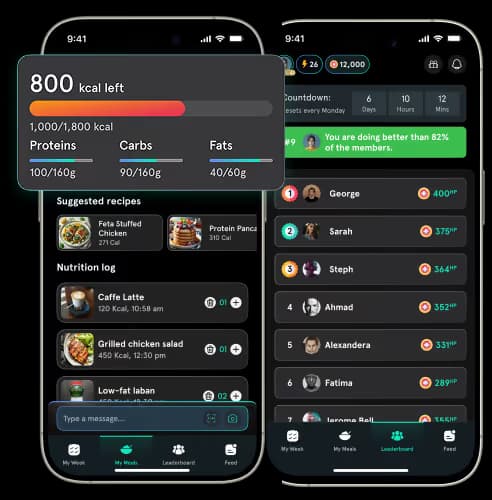
Maintaining disciplined meal timing and hitting specific macro targets requires precise daily oversight. Athletes can eliminate tracking friction by using meal logging by photo, chat or manual entry.

How Do Free-Form Essential Amino Acid Protocols Maximize Energy Efficiency?
Free-form essential amino acids require no intestinal digestion. They bypass gastrointestinal cleavage entirely and pass through transporter proteins into systemic circulation within 15 to 20 minutes of ingestion.
Combining 25 g of intact whey isolate with 3 g of free-form L-leucine or 5 g of a leucine-rich free-form amino acid mixture establishes a dual-kinetic delivery profile. The free-form component creates an immediate plasma hyperaminoacidemia spike that overrides intracellular anabolic resistance. Meanwhile, the intact protein matrix supplies a sustained release of substrate over the subsequent 3 hours to sustain myofibrillar assembly.
A clinical investigation by Areta et al. in the Journal of Physiology confirms that free-form amino acid fortification enhances muscle protein synthetic response above intact protein alone when energy intake is restricted. An enriched serving delivers a 3.8 g leucine dose within a 110 kcal footprint. Delivering that same 3.8 g leucine payload purely through intact whey isolate requires consuming 42 g of powder, totaling 170 kcal.
Across four daily protein feedings, this targeted fortification strategy saves 240 kcal per day while maintaining maximal fractional synthetic rates. Over a 12-week contest prep phase, that energy difference amounts to 20,160 kcal, representing over five pounds of fat loss potential preserved for nutrient-dense food.
Supplement Strategy | Intracellular Leucine Inflow Rate | Peak S6K1 Phosphorylation Window | Refractory Reset Latency | Caloric Overhead per 3.8g Leucine Payload |
|---|---|---|---|---|
Standard Intact Whey Isolate (25g) | Slow ($18–24 \ \mu\text{mol/L/min}$) | 60–90 minutes | 4.5–5.0 hours | 170 kcal |
Standalone Free-Form EAAs (12g) | Very Fast ($55–70 \ \mu\text{mol/L/min}$) | 15–30 minutes | 2.0–2.5 hours | 50 kcal |
EAA-Enriched Whey Isolate (25g + 3g EAA) | Dual-Phase ($60+ \ \mu\text{mol/L/min}$ peak) | 20–45 minutes | 3.5–4.0 hours | 110 kcal |
Structuring a caloric deficit around kinetic savings requires exact macro distribution. Calculate your daily macronutrient targets using our macro calculator. Establishing your baseline metabolic rate before setting deficit depth prevents tissue wasting; confirm your total energy output using our TDEE calculator.
Managing complex timing schedules and kinetic strategies demands long-term consistency. To audit weekly intake patterns, review your historical trends via a weekly nutrition summary and meal history.
Frequently Asked Questions
How does energy restriction increase the leucine threshold for muscle protein synthesis?
Cellular AMPK activity rises during energy deficits, directly phosphorylating the raptor subunit to suppress mTORC1 signaling. This biochemical inhibition requires higher intracellular leucine concentrations to initiate translation through S6K1 and 4E-BP1. Consequently, the minimum leucine dose required to maximize fractional synthetic rate increases from 2.5 g up to 4.0 g per feeding event.
What is the exact amino acid ratio for enriching standard whey isolate?
Combining 25 g of standard whey isolate with 3 g of free-form L-leucine or 5 g of a free-form essential amino acid blend containing 40% leucine optimizes kinetic delivery. This yield delivers 3.8 g to 4.7 g of total leucine into circulation. Total energy intake stays under 120 kcal per serving while achieving maximal synthetic signaling.
Why are standalone free-form EAAs insufficient for a prolonged anabolic response?
Free-form essential amino acids clear systemic circulation within 60 to 90 minutes of ingestion. Although this rapid appearance triggers peak mTORC1 phosphorylation, the short circulation window fails to sustain extracellular amino acid availability beyond two hours. Lacking sustained substrate delivery, myofibrillar protein synthesis returns to baseline prematurely compared to intact protein sources.
How frequently should EAA-fortified doses be consumed during a severe cut?
Spacing EAA-fortified protein doses 3.5 to 5.0 hours apart across 3 to 4 daily meals prevents continuous intracellular receptor desensitization. This interval allows plasma leucine concentrations to decline sufficiently to reset the mTORC1 refractory period. Subsequent protein feedings then trigger full muscle protein synthetic responses without wasting extra daily caloric budget.
Precision nutrition kinetics protect muscle tissue during severe energy deficits, but training execution dictates whether that signal translates into lean tissue retention. TrainMate ensures your training stress matches recovery capacity through personalized training plans that adapt to you. Hit your leucine targets, control energy availability, and let automated programming manage progressive overload variables.