High cognitive load from daily work depletes executive function, raising central perception of effort during strength training without weakening muscular capacity. This mental fatigue causes lifters to terminate sets 1 to 2 reps early, cutting total session volume load by up to 15 percent. Removing real-time workout decisions preserves total training output.
How does decision fatigue reduce resistance training volume?
Executive function relies on prefrontal cortex networks governing impulse control and working memory. Prolonged mental exertion accumulates central brain adenosine, raising sensory feedback sensitivity during heavy sets.
This neural fatigue lowers your threshold for discomfort long before motor unit recruitment drops. A 2024 meta-analysis in Sports Medicine - Open demonstrated that mental fatigue systematically impairs physical performance, causing athletes to terminate sets 1 to 2 reps before true muscular failure.
That rep loss compounds across a workout. On a four-set squat session at 100 kg, leaving two reps on the table per set subtracts 800 kg of volume load. Over a four-week mesocycle, you leave thousands of kilograms of mechanical tension in the tank.
Your muscle fibers retain full contractile capacity. The central nervous system simply limits top-down motor drive. You walk out of the gym exhausted, yet the target muscle group received an insufficient stimulus for growth.
Why does mental fatigue make weights feel heavier?
Rating of Perceived Exertion (RPE) measures neural effort, not target muscle tension. When executive function suffers, the brain misinterprets baseline physiological feedback—like heart rate and intramuscular acidity—as severe exertion.
A 2020 systematic review in Neuroscience & Biobehavioral Reviews confirmed that prior cognitive effort increases perceived exertion during physical tasks without altering heart rate, blood lactate, or muscle activation. The muscle is fine. Your brain miscalibrates the intensity.
This miscalibration ruins auto-regulated training like Repetitions in Reserve (RIR). If your program calls for 2 RIR, a mentally fatigued brain stops the set thinking you have 2 reps left when you actually have 5. Calibrate your proximity to failure accurately by mastering repetitions in reserve for muscle hypertrophy.
You experience maximum psychological strain while executing suboptimal work. Over time, this mismatch halts progression while increasing central burnout.

What pre-workout protocols counteract mental fatigue?
Protecting your volume load requires eliminating live choices before you step onto the gym floor. Deciding weights, warm-up jumps, or rest periods on the fly drains spent mental bandwidth.
Consume 30 grams to 40 grams of fast-acting carbohydrates 30 minutes before training. Carbohydrate receptors in the mouth and gut signal safety to the brain, suppressing central fatigue signals. Pair this nutrition strategy with the options in our guide to pre-workout foods for sustained energy.
Strategic caffeine intake restores top-down motor drive. Doses of 3 mg/kg to 6 mg/kg of body weight block brain adenosine receptors, lowering perceived exertion during heavy sessions.
A 2023 review in Nutrients highlights that targeted nutritional strategies like caffeine and carbohydrates reduce the higher sense of exertion caused by mental fatigue.
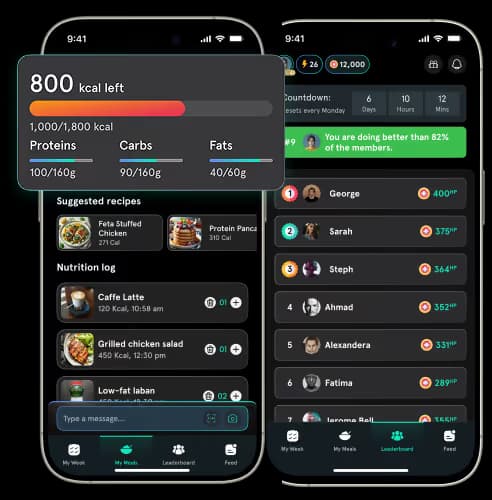
To eliminate micro-decisions at the rack, pre-load your routine into a digital tracker. Utilizing guided gym workouts with set-by-set logging of reps, weight and assisted-machine loads strips away friction so you focus purely on force production.
Take a 10-minute transition period between work and lifting. Use this window for passive breathing or light movement instead of checking work messages.

How do you automate training choices to maintain consistency?
Automation converts conscious effort into reflexive execution. When a high-stress workday wipes out executive function, an immutable training template guarantees you finish the workout.
Lock in your variables 24 hours before entering the gym. Set your exercise sequence, target loads, rep ranges, and rest periods—such as 180 seconds for compound lifts and 90 seconds for isolation work—in advance.
According to a psychological framework by Learning Loop, pre-commitment removes real-time negotiation when willpower falters. Pre-selecting your variables serves as a hard barrier against quitting sets early.
When fatigue distorts subjective effort, use objective speed tracking or pre-planned autoregulation. Learn to strip emotion out of load selection using velocity-based training autoregulation.
If fatigue remains high for consecutive weeks, adjust your framework systematically. Use an autoregulated deload protocol to reduce volume load while keeping your movement patterns intact.
How should you adjust your programming on high-stress days?
Modifying execution during high-stress periods prevents full session cancellations. Standardizing pre-gym routines removes cognitive friction before you reach the gym door.
A working paper from the National Bureau of Economic Research showed that pre-planned routines and standardized defaults significantly improve long-term adherence to demanding habits. Pack your gym bag the night before and keep your intra-workout drink ready.
A 2021 study in Frontiers in Psychology demonstrated that reducing decision complexity during cognitive tasks improves long-term consistency. Keep pre-built workouts ready so you never write sessions under mental strain.
Storing fixed routines in a personal template library allows immediate action. Accessing build-your-own custom workouts saved to a personal library means you select your session, hit start, and lift without second-guessing.
Frequently Asked Questions
How does decision fatigue reduce strength training volume?
Decision fatigue increases brain adenosine and alters central sensory processing. Muscle fibers retain full force output, but higher perceived exertion causes lifters to end sets 1 to 2 reps early. This artificial stop truncates total session tonnage across a workout without hitting true physical muscle failure.
Why do heavy weights feel harder after a high-stress workday?
Mental strain alters how your brain processes sensory feedback. Intramuscular acidity and heart rate are interpreted as far more intense than normal. The target tissue retains physical strength capability, but depleted prefrontal executive function lowers your psychological threshold for enduring heavy physical discomfort.
What is the fastest pre-workout fix for mental fatigue?
Consume 3 mg/kg to 6 mg/kg of caffeine alongside 30 grams to 40 grams of fast-acting carbohydrates 30 minutes before lifting. Caffeine blocks central adenosine receptors while mouth and gut carbohydrate sensing signals reward centers in the brain, rapidly lowering perceived exertion during heavy sets.
How do pre-commitment devices prevent missed gym sessions?
Pre-commitment locks in training variables—loads, exercise selection, and rest intervals—24 hours in advance. Removing mid-workout choice points stops depleted lifters from negotiating set counts, dropping weight prematurely, or skipping scheduled exercises when executive function is exhausted.
Does mental exertion permanently reduce maximum force output?
No. Mental fatigue degrades central motor drive and discomfort tolerance, but leaves peripheral muscle contractile capability intact. Eliminating cognitive friction and resetting central focus restores force production immediately without needing structural muscle tissue recovery.
Managing cognitive fatigue ensures high-stress workdays never undermine physical gains. Offloading session planning, load calculations, and workout adjustments to automated systems keeps your execution precise when willpower is low. Using personalized training plans that adapt to you inside TrainMate protects your training volume so you hit target adaptations on every workout.