How Should You Set RIR Targets for Hypertrophy Versus Strength?
Target 0 to 1 Repetitions in Reserve (RIR) for maximal muscle hypertrophy to maximize high-threshold motor unit recruitment and mechanical strain on targeted fibers. Target 2 to 3 RIR for maximal strength to preserve concentric repetition velocity, maintain optimal neural drive, and prevent central nervous system fatigue during heavy compound loading.
Hypertrophy depends on high mechanical tension experienced by high-threshold motor units over a sustained time under tension. A 2024 meta-analysis in Sports Medicine demonstrated that hypertrophic stimulus increases as proximity to failure decreases from 4 RIR down to 0 RIR. Moving from 4 RIR to 2 RIR yields a substantial jump in muscle protein synthesis, while moving from 1 RIR to 0 RIR yields a marginal gain in growth at the cost of disproportionate recovery demands.
Strength development relies on distinct physiological mechanisms. Maximal force production requires high bar velocity, rapid rate of force development, and optimal neural drive. A 2022 meta-analysis on proximity to failure by Refalo and colleagues showed that training at 2 to 3 RIR preserves force output across sets while producing maximal 1RM gains equivalent to training to absolute failure. When executing heavy compound lifts at 85% of 1RM, accurate tracking becomes essential. Athletes can use a one-rep max calculator to set baseline intensities before applying precise RIR thresholds.
How Does Proximity to Failure Drive Muscle Growth and Neuromuscular Adaptation?
The physiological response to training proximity diverges based on whether the primary adaptation is structural or neurological. Hypertrophy requires recruited muscle fibers to experience high strain at slow shortening velocities. As fatigue accumulates within a set, concentric repetition velocity drops automatically. This velocity reduction forces the central nervous system to recruit high-threshold motor units to maintain force production, maximizing mechanical strain on individual muscle fibers.
According to a 2023 dose-response review by Robinson and colleagues, stopping sets at 3 or 4 RIR fails to recruit the highest-threshold motor units unless working loads exceed 80% 1RM. For hypertrophy programming, working in the 0 to 2 RIR window ensures full recruitment even with moderate loads of 60% to 75% 1RM. Taking every set to 0 RIR raises biological markers of muscle damage, such as serum creatine kinase, extending recovery timelines beyond 72 hours.
For pure strength, neural adaptations dictate progress. Strength gains depend on motor unit synchronization, firing frequency, and intermuscular coordination. Grinding through 0 RIR repetitions causes extreme intra-set fatigue, which alters joint kinematics and reduces bar velocity on subsequent sets. Preserving neural freshness by staying at 2 to 3 RIR allows lifters to complete high-quality repetitions at velocities exceeding 0.3 meters per second. Lifters monitoring concentric speed can implement velocity load autoregulation to maintain exact neuromuscular thresholds without premature failure.
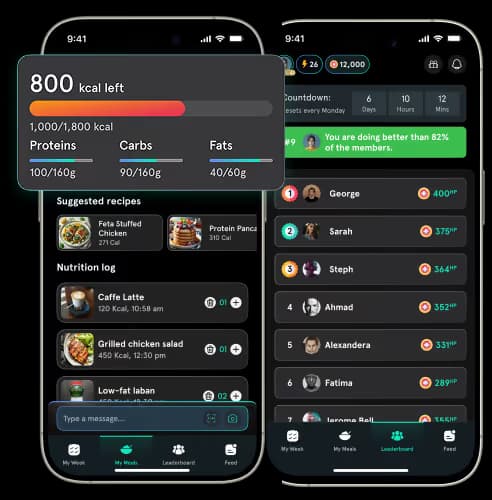
To maintain continuous overload across mesocycles, intermediate lifters benefit from tracking set performance systematically. Utilizing guided gym workouts with set-by-set logging of reps, weight and assisted-machine loads allows lifters to record true target proximity rather than relying on subjective memory.

How Should RIR Targets Differ Between Compound and Isolation Exercises?
The trade-off between fatigue and stimulus depends heavily on exercise selection. Axial loading, multi-joint movement patterns, and muscle cross-sectional area determine how much systemic fatigue a set generates relative to local muscle fatigue.
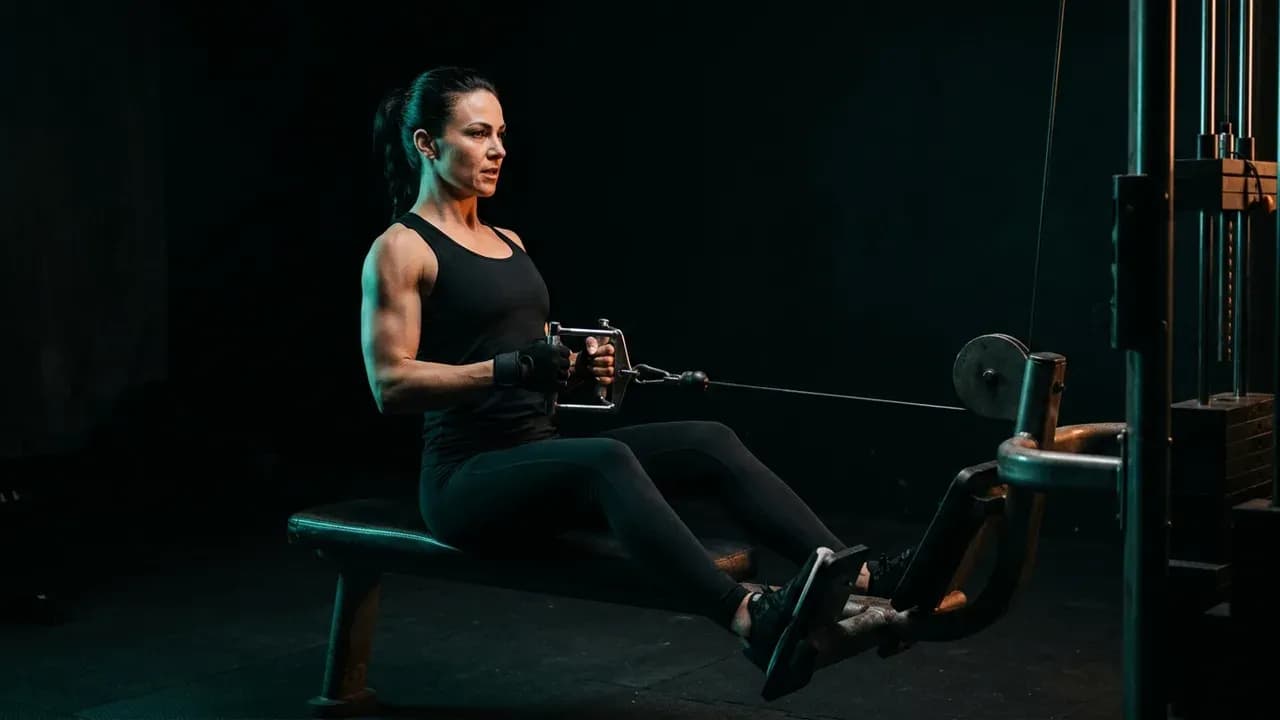
Compound multi-joint lifts like the barbell back squat, deadlift, and bent-over row place high mechanical demands on the axial skeleton and central nervous system. Pushing a squat to 0 RIR creates severe central nervous system fatigue, raising systemic inflammation and suppressing force output across the entire session. Operating at 1 to 2 RIR on multi-joint exercises preserves total session volume while keeping systemic fatigue manageable.
Isolation exercises, such as dumbbell lateral raises or leg extensions, generate minimal axial load and negligible systemic fatigue. The fatigue produced is predominantly peripheral, localized within the target muscle group. Consequently, isolation movements can be safely taken to 0 RIR—or even beyond failure using lengthened partial reps—without impairing overall recovery capacity for subsequent workout days.
A 2023 trial hosted on the Open Science Framework examined proximity to failure across exercise modalities, confirming that isolation movements sustain higher training frequencies at 0 RIR than compound lifts. Pushing isolation sets to true dynamic failure optimizes local fiber recruitment without compromising recovery across the weekly plan.
How Do You Manage Central Fatigue on Multi-Joint Lifts?
Systemic fatigue accumulates through central nervous system inhibition and metabolic byproduct accumulation. When multi-joint sets reach absolute concentric failure, spinal cord motor neuron excitability decreases for up to 48 hours. This lingering central fatigue reduces force production capacity in non-targeted muscle groups during subsequent training days.
Managing total work per session prevents fatigue from compounding. Pushing too many sets to 0 RIR rapidly consumes recovery reserves, forcing athletes to drop total effective volume below the optimal per-session set threshold. A 2024 study by Vieira and colleagues indicates that capping compound set failure keeps blood markers of muscle disruption low, permitting session volume to stay between 6 and 10 hard sets per target muscle group without performance degradation.
Lifters who track cumulative stimulus across multiple weeks can evaluate their output with precision. Accessing volume insights showing training load per muscle group on a body map helps prevent unintentional overreaching before fatigue impacts performance.
What Is the Ideal RIR Protocol for a Concurrent Training Mesocycle?
To optimize both muscle cross-sectional area and maximal force, structure RIR progression systematically throughout a 4-to-6 week mesocycle. Do not maintain fixed RIR targets indefinitely; taper proximity to failure across weeks to drive adaptation while controlling cumulative strain.
Here is an evidence-based RIR assignment structure by movement tier:
- Primary Compound Lifts (Squat, Bench Press, Deadlift, Overhead Press): Target 3 RIR in Week 1, progressing down to 1 RIR in Week 4. Never hit 0 RIR on primary strength lifts outside of testing phases.
- Secondary Compound Lifts (Incline Dumbbell Press, Romanian Deadlift, Roman Chair Split Squat): Target 2 RIR in Week 1, progressing down to 1 RIR in Week 3, and 0 RIR on the final set of Week 4.
- Isolation & Machine Exercises (Cable Flyes, Hamstring Curls, Lateral Raises): Target 1 RIR in Week 1, progressing to 0 RIR across all sets by Weeks 3 and 4.
When fatigue indicators rise—such as a drop of 10% or more in load at the same RIR—implement a planned deload. Periodically reviewing progression trends with strength insights that track how each lift improves over time ensures volume and load scale appropriately over successive mesocycles.
Frequently Asked Questions
What exact RIR target maximizes muscle hypertrophy without causing excessive fatigue?
A target of 0 to 1 RIR maximizes muscle hypertrophy while keeping systemic fatigue within manageable limits. Reaching 1 RIR on multi-joint lifts and 0 RIR on isolation movements provides full motor unit recruitment while preventing the severe neuromuscular fatigue that delays recovery beyond 48 hours.
How does proximity to failure affect strength gains compared to muscle growth?
Hypertrophy scales steadily as proximity to failure approaches 0 RIR due to mechanical strain on muscle fibers. In contrast, maximal strength peaks at 2 to 3 RIR. Stopping sets 2 to 3 reps short of failure maintains concentric bar velocity, preserves neural freshness, and allows higher overall training quality.
Why should RIR targets differ between compound lifts and isolation exercises?
Compound lifts involve significant spinal loading and recruit large muscle masses, generating high central nervous system fatigue when pushed to 0 RIR. Isolation exercises carry low axial loading and generate localized peripheral fatigue, allowing them to be safely taken to 0 RIR without compromising systemic recovery.
Can beginners use the same RIR targets as intermediate lifters?
Beginners often misjudge RIR, frequently rating sets as 0 RIR when they are actually 3 to 4 reps from true failure. Novices achieve maximal adaptations at 3 to 5 RIR, so they should focus on form and velocity before attempting low-RIR targets.
Executing precise RIR protocols across compound and isolation movements requires set-by-set precision. Tracking load, rep velocity, and target proximity keeps training stimulus high while guarding against neuromuscular burnout. Use TrainMate to systematically auto-regulate your progression, track your volume limits, and keep every lift aligned with your strength and hypertrophy goals.