How Do You Implement an Autoregulated Deload Protocol?
Implement an autoregulated deload protocol by monitoring objective fatigue triggers—specifically mean propulsive velocity decay exceeding 0.08 m/s, unexplained RIR drops greater than 2 points across sets, or session RPE spikes over 20%. When these thresholds trigger, cut overall working volume by 40% to 50% for 3 to 7 days while keeping load intensity above 70% 1RM.
Standard four-week block programming assumes fatigue accumulates at a linear, predictable rate. Human physiology does not follow a calendar. Advanced lifters accumulate stress non-linearly based on sleep quality, calorie deficits, and absolute mechanical load.
Reactive deloading removes arbitrary rest periods. Instead of taking a deload week every fourth week because a spreadsheet dictates it, you train until objective intra-session fatigue metrics signal that central nervous system recovery is compromised.
What Objective Intra-Session Metrics Signal the Need for a Reactive Deload?
Unexplained RIR decay across sets directly indicates central motor drive impairment. Squatting 140kg for 3 sets of 5 reps at a target of 2 RIR should yield consistent exertion. Hitting 5 reps at 2 RIR on set one, 4 reps at 1 RIR on set two, and 3 reps at 0 RIR on set three signals acute motor unit recruitment suppression.
First-rep velocity drop provides a clear warning sign. Using a linear position transducer or accelerometer, measure mean propulsive velocity (MPV) on warm-up singles at 80% 1RM. An unexplained velocity drop exceeding 0.08 meters per second (m/s) relative to your baseline indicates suppressed rate of force development.
Session RPE (sRPE) spikes quantify overall session stress. Calculate sRPE by multiplying overall session RPE (scale 1-10) by total session duration in minutes. Rating a standard 60-minute session at RPE 9 (540 sRPE units) when the identical block baseline averages RPE 7 (420 sRPE units) represents an abnormal systemic fatigue response.
Tracking these metrics across multi-week mesocycles requires strict logging accuracy. Intermediate lifters using guided gym workouts with set-by-set logging of reps, weight and assisted-machine loads capture performance drops instantly against historical averages without interrupting session tempo.
Metric | Baseline / Normal Range | Reactive Deload Trigger Threshold | Physiological Mechanism |
|---|---|---|---|
Unexplained RIR Decay | Loss of 0-1 RIR across 3-4 working sets | Loss of >2 RIR on identical loads across sets | Inhibited motor unit re-recruitment |
Warm-Up First-Rep MPV | ±0.02 m/s relative to historical mean at 80% 1RM | Decline >0.08 m/s at equivalent warm-up load | Decreased rate of force development (RFD) |
Session RPE (sRPE) | Baseline score ±10% for volume block | Elevation >20% above block baseline | Elevated central perception of effort |
Intra-Set Velocity Loss | 20-30% velocity loss from rep 1 to final rep | >40% velocity loss occurring prior to rep 3 | Rapid metabolic byproduct accumulation |
Fixed Deloads vs. Reactive Deloads: A Direct Comparison
Fixed calendar deloads scheduled every 4 to 6 weeks treat all lifters and training blocks identically. A lifter coming off high external stress might require an unloading phase on week 2, while a well-recovered lifter in a hypercaloric state can push productively for 8 weeks straight.
Autoregulated deloading applies hard decision rules: continue training while performance metrics remain within 10% of historical baselines, and reduce load volume immediately when fatigue indicators exceed defined limits across two consecutive sessions.
Variable | Fixed Calendar Deload | Autoregulated Reactive Deload |
|---|---|---|
Trigger Point | Scheduled every 3-6 weeks on a calendar | Objective performance threshold breaches |
Volume Reduction | Preset 30-50% reduction across all lifts | Target 40-50% reduction focused on fatigued patterns |
Intensity (Load) | Dropped to 50-60% 1RM | Preserved at >70% 1RM (RIR capped at 3-4) |
Primary Risk | Premature unloading or accumulated overreaching | Requires accurate baseline performance tracking |
Frequency | Fixed interval | Dynamic based on systemic stress |
Fixed deloads force adapting lifters to un-load when adaptations are peaking. Conversely, fixed models force overreached lifters to execute heavy sessions simply because the calendar dictates a high-volume week.
Reactive deloading relies on data. It initiates a reduction in volume or intensity only when real performance metrics demonstrate performance regression.
How Should Volume and Intensity Be Adjusted in an Autoregulated Deload Protocol?
Executing an effective reactive deload requires deliberate manipulation of volume and intensity. Reducing both variables simultaneously strips away the mechanical tension required to maintain structural adaptations.
Hold relative intensity near normal working levels while sharply curtailing total set volume. Reduce total working sets per muscle group by 40% to 50% while capping proximity to failure at 3 to 4 RIR.
González-Badillo et al. (2017) demonstrated that maintaining load intensity above 70% 1RM while cutting set volume maintains neuromuscular coordination without generating additional systemic fatigue. Keeping load intensity high preserves motor unit firing rates without causing additional muscle damage.
When structuring your training block, build a framework on how to create a custom weekly workout plan for muscle gain that accommodates dynamic volume fluctuations without disrupting macrocycle targets.
If fatigue markers return to baseline within 3 to 5 days, resume standard training volume immediately. If velocity or RIR suppression persists after a reduced microcycle, modify your structural split, evaluating full body vs split workouts to distribute frequency better across the week.
Analyzing systemic fatigue trends across training blocks requires consistent data tracking. Lifters evaluating recovery trends use recovery insights to pinpoint the exact training session when high-threshold motor unit capacity returns to baseline.
How Do You Integrate Velocity Loss Fatigue Tracking with RIR Indicators?
Sánchez-Medina and González-Badillo (2011) established that velocity loss within a set correlates directly with metabolic fatigue and lactate accumulation. A 20% velocity loss in a set corresponds to approximately 2 to 3 RIR, whereas a 40% velocity loss indicates proximity to task failure (0 to 1 RIR).
Track warm-up sets against daily velocity profiles. If an 85% 1RM warm-up single moves at 0.32 m/s instead of its established 0.40 m/s baseline, central fatigue is present before working sets begin.
Pair bar velocity drops with RIR indicators to validate fatigue. When bar velocity drops by 0.08 m/s on warm-ups and self-reported RIR drops by 2 points on working loads, an autoregulated deload must be triggered.
High cardiovascular stress accelerates intra-session velocity loss. Limit metabolic interference by applying the 6-hour rule to stop concurrent training interference, preserving high-threshold motor unit recruitment for heavy barbell training.
Standardizing exercise tracking ensures velocity baselines remain accurate across training blocks. Athletes manage their lift variations by utilizing build-your-own custom workouts saved to a personal library for consistent execution across microcycles.
Frequently Asked Questions
Should I deload if only one movement pattern shows performance regression?
No. Isolated performance drops in a single exercise indicate localized joint irritation or technical breakdown rather than systemic neural fatigue. Substitute the exercise variation or reduce set volume for that specific movement pattern while maintaining standard volume for uncompromised lifts.
How many consecutive sessions of depressed velocity warrant a reactive deload?
Two consecutive sessions. A single session of depressed velocity can stem from transient dehydration or acute sleep disruption. Depressed velocity across two consecutive sessions targeting different muscle groups confirms systemic central nervous system overreaching.
Can I maintain muscle mass during a reactive deload with a 50% volume reduction?
Yes. Research demonstrates that maintaining muscle cross-sectional area requires significantly less volume than inducing new hypertrophy. Maintaining load intensity above 70% 1RM while cutting working sets by half retains structural adaptations while clearing accumulated fatigue.
How long should an autoregulated deload last?
An autoregulated deload should last between 3 and 7 days. Resume full training volume as soon as warm-up velocity profiles and RIR thresholds return to baseline values, rather than adhering to an arbitrary 7-day schedule.
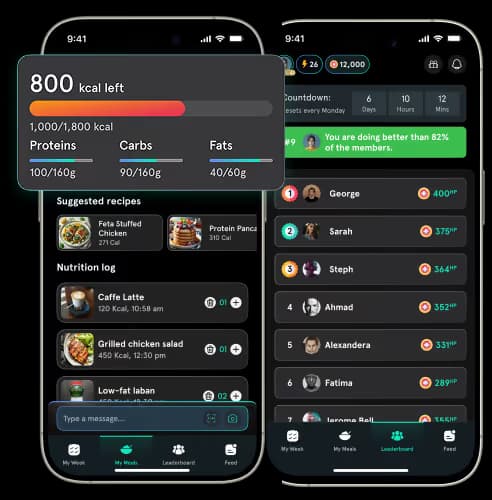
Trigger deloads using real-time performance markers rather than a predetermined calendar date. Tracking velocity loss, RIR decay, and session RPE ensures you only un-load when central nervous system recovery requires it. TrainMate tracks these intra-session metrics automatically, helping you implement precise, data-backed autoregulated deloads into your training blocks.