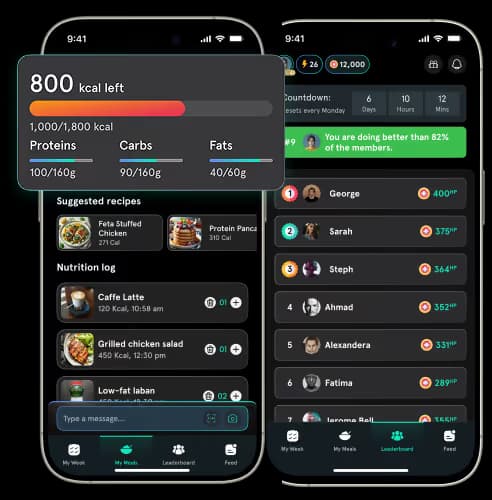
To mitigate the concurrent training interference effect, separate strength and endurance sessions by at least six hours, prioritize cycling or rowing over running, and sequence heavy resistance training before cardiovascular work. Maintaining a caloric surplus and consuming 0.25–0.40 g/kg of protein post-workout restores glycogen and keeps mammalian target of rapamycin complex 1 (mTORC1) signaling dominant over adenosine monophosphate-activated protein kinase (AMPK).
What is the molecular mechanism behind the concurrent training interference effect?
Mechanical overload from high-tension lifting activates mTORC1, the primary serine/threonine protein kinase regulating muscle protein synthesis (MPS). Once activated, mTORC1 phosphorylates p70S6 kinase (p70S6K) and 4E-binding protein 1 (4E-BP1). This downstream cascade accelerates ribosomal biogenesis and initiates translational efficiency, laying down new contractile proteins within the sarcomere.
Aerobic engine work triggers a competing intracellular pathway driven by metabolic turnover. Endurance training depletes intramuscular adenosine triphosphate (ATP) stores, elevating the intracellular AMP:ATP ratio. This metabolic stress activates AMPK, an energy-sensing enzyme that stimulates mitochondrial biogenesis by phosphorylating peroxisome proliferator-activated receptor gamma coactivator 1-alpha (PGC-1alpha).
AMPK impairs mTORC1 signaling through two distinct enzymatic actions. First, AMPK phosphorylates tuberous sclerosis complex 2 (TSC2), converting the Ras homolog enriched in brain (Rheb) protein to its inactive GDP-bound state. Inactive Rheb cannot stimulate the kinase domain of mTORC1. Second, AMPK directly phosphorylates the regulatory-associated protein of mTOR (Raptor) subunit, inducing inhibitory protein binding that deactivates the complex.
When AMPK signal intensity remains elevated, muscle protein synthesis drops regardless of post-workout amino acid availability. Fyfe et al. (2014) demonstrated that performing high-intensity aerobic work immediately alongside heavy resistance training blunts the downstream phosphorylation of p70S6K for up to eight hours post-exercise. The intracellular environment stays oriented toward energy preservation rather than structural remodeling.
What is the optimal strength and cardio session spacing?
To prevent AMPK from overriding mTORC1 signaling, separate strength and aerobic engine workouts by a minimum of six hours. An eight-to-twenty-four-hour separation window provides superior intracellular isolation.
AMPK activity peaks during acute metabolic stress and decays back to baseline within 180 minutes post-cardio, provided carbohydrate availability is restored. Conversely, mTORC1 signaling and MPS elevation require 24 to 48 hours to complete a repair cycle following high-tension loading. Running or cycling immediately after heavy squats introduces high AMP:ATP ratio signals that interrupt the active mTORC1 cascade.
When double-session days are unavoidable, sequence resistance training first. Lifting with fully restocked intramuscular glycogen maximizes high-threshold motor unit recruitment and mechanical tension. Performing cardio while fatigued lowers force production capacity, reducing total volume load and muscle fiber activation.
Monitoring force output across dense microcycles prevents overreaching. Utilizing guided gym workouts with set-by-set logging of reps, weight and assisted-machine loads lets lifters spot acute performance drops early and trim redundant resistance volume before systemic fatigue accumulates.
Which modality minimizes the concurrent training interference effect?
Cardiovascular modality selection directly controls the magnitude of muscle tissue breakdown and interference signaling. Movement patterns with high structural damage amplify the systemic inflammatory response and prolong central nervous system fatigue.
Running inflicts severe eccentric muscle action during every foot strike. Ground reaction forces reach 3 to 5 times body weight, generating substantial micro-trauma, elevated plasma creatine kinase, and persistent delayed onset muscle soreness (DOMS). This structural damage impairs performance in subsequent lifting sessions and diverts available amino acids toward membrane repair rather than hypertrophic growth.
In contrast, cycling and ergometer rowing rely almost exclusively on concentric muscle contractions. Concentric-dominant modalities produce zero ground impact, minimal structural damage, and significantly faster intracellular recovery.
Modality | Primary Contraction Type | Ground Impact Force | Eccentric Muscle Damage | Interference Threat Level | Hypertrophy Preservation |
|---|---|---|---|---|---|
Cycling (Ergometer) | Concentric | None | Negligible | Low | High |
Incline Treadmill Walk | Concentric | Low | Low | Low | High |
Rowing Ergometer | Concentric | None | Low | Low-Moderate | High |
Outdoor / Track Running | Eccentric / Concentric | High (3-5x BW) | High | High | Moderate-Low |
HIIT Running Sprints | Eccentric / Concentric | Very High | Severe | Extremely High | Low |
To maximize regional hypertrophy while building endurance, structure your resistance selection around high mechanical tension. Incorporating movements with dedicated stretch-position overload drives mechanical transduction signals strong enough to partially offset localized metabolic interference from low-impact cardio.
How should you structure a hybrid athlete training split?
A successful concurrent training microcycle arranges hard resistance days, light cardio sessions, and high-intensity aerobic engine blocks without overlapping recovery windows. Stacking heavy lower-body compound lifts with high-intensity interval running on consecutive days guarantees structural failure.
Choosing between full body versus split workout configurations determines your intra-session spacing options. Upper/lower splits offer cleaner separation for leg recovery than full-body routines.
Sample 7-Day High-Performance Concurrent Split
- Monday: Lower Body Strength (Heavy Hypertrophy focus)
- Tuesday: Upper Body Strength (Push/Pull) + PM Zone 2 Cycling (45 min, 6-8 hours post-lift)
- Wednesday: Dedicated Aerobic Engine Block (Threshold Rowing / SkiErg)
- Thursday: Lower Body Hypertrophy (Machine-dominant / Low systemic fatigue)
- Friday: Upper Body Strength + PM Zone 2 Incline Walk (45 min)
- Saturday: High-Intensity Aerobic Intervals or Rest
- Sunday: Complete Neuromuscular Rest
Separating heavy lower-body lifts from high-velocity conditioning requires strict macrocycle organization. Athletes who build or modify their programming often use build-your-own custom workouts saved to a personal library to keep high-tension lifting days distinct from conditioning sessions.
Choosing between low-intensity steady-state versus high-intensity conditioning depends on where you are in your macrocycle. Keep high-intensity cardiovascular intervals (Zone 4/5) at or below 10% of total weekly endurance volume. This cap prevents systemic central nervous system fatigue from degrading maximum voluntary contraction speed during strength sessions.
How do energy availability and sleep suppress interference signals?
Low intramuscular glycogen levels double baseline AMPK activation during exercise. Starting an aerobic session in a depleted state accelerates catabolic cascades through FOXO transcription factors, elevating MuRF1 and MAFbx protein degradation markers.
Consuming intra-workout carbohydrates (30–60 grams per hour during endurance sessions exceeding 45 minutes) maintains blood glucose, attenuates AMPK activation, and reduces cortisol output. Post-cardio nutrition must supply 1.0–1.2 g/kg of fast-digesting carbohydrates alongside 0.3–0.4 g/kg of complete protein to rapidly shift the cell back into an anabolic state.
Sleep architecture directly dictates the suppression of interference signals. Growth hormone (GH) peaks during slow-wave sleep (N3), driving systemic tissue repair and peptide synthesis. Implementing targeted sleep optimization strategies keeps systemic recovery ahead of cumulative volume demands.
Tracking systemic expenditure across separate daily sessions prevents underfueling. Enabling Apple Health and Google Fit syncing centralizes energy burn data across strength and endurance workouts, simplifying daily carbohydrate adjustments.
What is the recommended concurrent protocol for maximum strength and endurance?
To maximize concurrent adaptation without sacrificing muscle mass, execute this four-point operational protocol:
- Maintain strict intra-day separation: Keep high-intensity lifting and conditioning sessions separated by a minimum of 6 to 8 hours. Always lift first.
- Eliminate unnecessary eccentric impact: Replace running blocks with concentric-dominant cardiovascular apparatuses such as stationary bikes, rowers, or incline treadmills.
- Cap high-intensity conditioning: Limit Zone 4 and Zone 5 cardiovascular work to no more than 10% of total weekly endurance duration. Allocate the remaining 90% to Zone 2 steady-state work.
- Fuel to suppress AMPK: Ingest 30–60g of simple carbohydrates during cardio blocks exceeding 45 minutes. Follow every session immediately with 0.3–0.4 g/kg of high-leucine protein.
Sustaining both high-threshold neural drive and aerobic capacity requires precise load monitoring across every training microcycle. Track velocity loss, manage intra-session rest, and audit your total weekly volume parameters to ensure strength targets advance alongside cardiovascular conditioning.
TrainMate simplifies the execution of complex concurrent splits by managing session parameters, tracking progressive overload, and logging exercise data across every training phase. Use TrainMate to structure your workouts, optimize intra-session recovery, and protect your strength gains while expanding your aerobic engine.
Frequently Asked Questions
Can I perform Zone 2 cardio and heavy lifting on the same day?
Yes. Perform heavy strength work first, rest a minimum of six to eight hours, and execute Zone 2 cardiovascular work on a low-impact apparatus like a stationary bike. Ensure you consume a protein-and-carbohydrate meal immediately following your strength workout to establish mTORC1 dominance before starting your cardiovascular work.
Does running completely destroy muscle growth?
Running does not completely destroy muscle, but its high eccentric shock profile increases systemic muscle damage and central fatigue. Running places greater demands on total recovery capacity than concentric-dominant modalities like cycling. Excessive running volume degrades total leg hypertrophy over long training blocks.
How many hours after running does AMPK stay elevated?
AMPK activity typically peaks during the workout and decays back to baseline within two to three hours post-exercise, provided adequate carbohydrates and amino acids are ingested immediately after the session. Low energy availability extends AMPK elevation, prolonging mTORC1 suppression.
Should I eat extra carbohydrates on concurrent training days?
Yes. Concurrent training drains both liver and muscle glycogen at accelerated rates. Add 0.5–1.0 grams of carbohydrates per kilogram of body weight on days where strength and endurance blocks fall within the same 24-hour window to keep muscle glycogen saturated and suppress chronic AMPK hyperactivation.