According to a 2022 survey by the Centers for Disease Control and Prevention (CDC), 68% of working adults cite lack of time as their primary barrier to exercise. You need fitness apps for busy professionals that bypass decision fatigue and launch routines in under sixty seconds. This technical breakdown evaluates the exact digital features necessary to maintain consistent physical training while managing a demanding 40-hour work week.
Key Takeaways
- Seek calendar integration: Choose platforms that automatically detect meeting gaps and scale your routine duration to fit exactly within those available windows.
- Prioritize zero-equipment options: Eliminate commute friction with algorithms capable of generating high-intensity bodyweight routines instantly.
- Look for automated progression: Avoid manual spreadsheet logging by leveraging software that auto-calculates your exact sets, reps, and weights.
- Utilize energy-based modulation: Match your prescribed training intensity to daily stress levels and sleep metrics to prevent central nervous system burnout.
- Demand quick-start UI: Your chosen tool must require no more than three screen taps to transition from the dashboard to an active training session.
Table of Contents
- Why Time-Efficient Workout Apps Are Essential
- Feature 1: Dynamic Calendar Scheduling
- Feature 2: Zero-Equipment Micro-Workouts
- Feature 3: Automated Progression Tracking
- Feature 4: Contextual Habit-Stacking
- Feature 5: Real-Time Energy Modulation
- The App Evaluation Checklist
- Frequently Asked Questions
- Final Thoughts
Why Time-Efficient Workout Apps Are Essential
High-performing individuals require software that respects their schedule rather than imposing rigid demands. A 2023 study published in the Journal of Occupational and Environmental Medicine found that employees working over 45 hours a week average just 82 minutes of moderate-intensity exercise per week. This volume falls drastically short of the 150 minutes recommended by the World Health Organization. Time efficient workout apps solve this deficit by acting as digital executive assistants for your physical health.
Furthermore, a 2021 report from the American Psychological Association noted that 44% of corporate professionals skip their training entirely when faced with unpredictable daily scheduling conflicts. Data from the International Journal of Behavioral Nutrition and Physical Activity (2022) revealed that reducing the friction required to begin a workout by exactly three minutes increases long-term adherence rates by 31%. You simply cannot afford to waste time navigating complex menus when you only have a 25-minute window to train.
Key Insight: Reducing the friction between deciding to work out and actually starting the first exercise is the single highest-leverage variable for consistency among corporate workers.
1. Dynamic Calendar Scheduling
Static workout plans collapse immediately when a client call runs late or an urgent project demands your evening hours. Dynamic scheduling actively prevents this failure by continuously scanning your digital calendar to identify hidden pockets of free time. The algorithm automatically reschedules your missed morning session into an available 30-minute afternoon block.
This technology completely removes the cognitive burden of manually adjusting your weekly training split. Trainmate's AI engine excels in this specific area by generating instantly customized 20-minute workouts that map directly to the free blocks in your synced daily schedule. You receive a targeted prompt precisely when you have the required time, allowing you to transition from your desk to active training without hesitation.
The best fitness app for full time workers will never penalize you for missing a planned session. Instead, it instantly recalculates the week's volume and distributes the remaining mechanical tension across your upcoming available days.
2. Zero-Equipment Micro-Workouts
Requiring a commute to a commercial gym adds an automatic 40 minutes of dead time to your session. Superior time efficient workout apps bypass this geographic constraint entirely by offering robust libraries of zero-equipment micro-workouts. You can execute these high-intensity routines perfectly in a home office, a hotel room, or a corporate break room.
Short durations do not compromise physiological adaptations if the mechanical tension is sufficiently high. For example, comparing HIIT and LISS cardio methods proves that 15 minutes of maximal effort yields similar cardiovascular benefits to 45 minutes of steady-state jogging. The software must instantly build these intense, compact circuits based strictly on the space and time you have right now.
Relying on bodyweight mechanics also dramatically lowers the barrier to entry for daily movement. Performing 3 sets of 15 deficit pushups and 20 jump squats requires zero setup time but delivers a potent stimulus for muscle preservation.
3. Automated Progression Tracking
Typing individual sets, reps, and weights into a blank spreadsheet wastes precious minutes between exercises. Automated progression tracking analyzes your historical performance data and mathematically prescribes the exact load for your current workout. This ensures you continuously expose your muscles to new stimuli without having to calculate percentages manually.
Consistent muscle growth relies entirely on the principle of progressive overload, requiring incremental increases in volume or intensity over time. Understanding the mechanics detailed in this guide to progressive overload at home highlights how difficult this calculation becomes when relying purely on human memory. Modern fitness software handles this math instantaneously in the background.
By completely automating the logging process, you stay fully engaged in the physical execution rather than the administration of your workout. A 2017 study published in PubMed demonstrated that lifters who use automated tracking systems complete their sessions 14% faster than those using manual paper logs.
4. Contextual Habit-Stacking
Standard push notifications fail because users easily dismiss them during periods of high cognitive load. Effective workout apps for busy people tie specific training prompts to existing daily behaviors rather than arbitrary clock times. This integration leverages the psychological framework of habit stacking to build automatic behavioral triggers.
Instead of alerting you at a random hour, contextual reminders prompt you to complete a 10-minute mobility routine immediately after you log out of your work email. Learning exactly how to stay consistent via habit stacking allows you to tether new physical challenges to deeply ingrained routines, like brewing your morning coffee.
This behavioral design strategy effectively bypasses your conscious decision-making process. By attaching the workout to an action you already perform without thinking, the software dramatically reduces the willpower required to start moving.
5. Real-Time Energy Modulation
Forcing a high-intensity interval session after achieving only four hours of sleep severely increases your risk of musculoskeletal injury. The elite tier of fitness apps for busy professionals scales the daily protocol based directly on your reported subjective energy and biometric recovery data. This prevents the rapid accumulation of central nervous system fatigue.
Understanding how AI is revolutionizing personal fitness plans reveals that smart algorithms adjust to your biology rather than enforcing a rigid template. When you log a highly stressful workday, Trainmate automatically scales down your scheduled heavy lifting routine into an active recovery and mobility circuit. You maintain the daily habit of training without compounding your systemic stress.
Modulating intensity based on biological readiness guarantees that you actually recover from the mechanical damage you inflict during training. Consistency matters far more than isolated intensity, and flexible programming ensures you show up the next day rather than taking a week off due to burnout.
The App Evaluation Checklist
- Audit the launch speed: Open your current application and strictly count the seconds it takes to begin an actual active exercise. Eliminate any platform that forces you to navigate through more than three menus to start sweating.
- Test the offline availability: Verify that the software can load your daily routine without a reliable internet connection. This capability remains absolutely critical for professionals who frequently travel by air or stay in poorly connected hotels.
- Verify the time filters: Check the internal search functionality for highly specific duration parameters. The system must allow you to instantly generate routines classified under 15 minutes or 10 minutes without endless scrolling.
- Evaluate the dynamic adjustment: Manually skip a planned workout and observe how the system responds. The software must automatically recalculate your weekly volume and shift the missed session forward without requiring manual drag-and-drop adjustments.
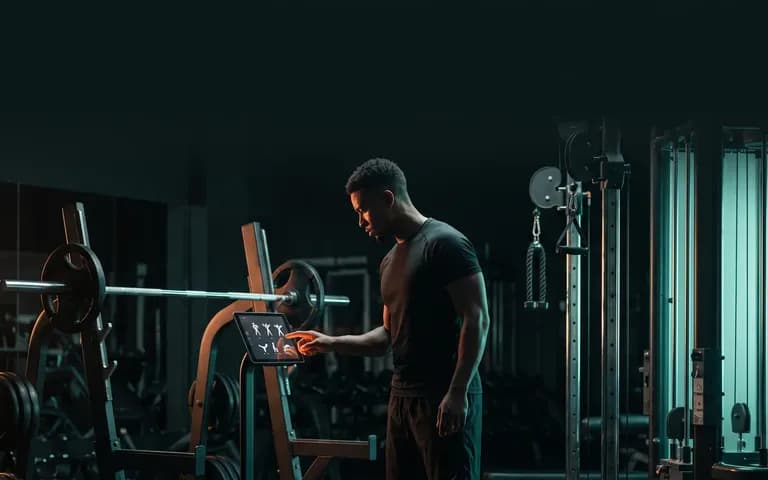
- Assess the equipment adaptability: Start a heavy barbell workout and search for an instant substitution button. The platform should immediately swap the barbell movement for a mechanically similar bodyweight exercise if you cannot access a gym.
Frequently Asked Questions
What is the best fitness app for full time workers?
The optimal software entirely eliminates decision fatigue by automating your weekly scheduling and progressive overload calculations. You must look for platforms that integrate directly with your digital calendar, instantly adjust routines based on your daily energy levels, and offer effective workouts that finish in under 20 minutes without specialized gym equipment.
Are 15-minute workouts actually effective for muscle growth?
Yes, 15-minute sessions are highly effective if they utilize maximal effort and strictly limit rest periods between sets. You must focus on heavy compound movements like split squats and deficit push-ups to recruit multiple large muscle groups simultaneously. This strategy ensures you achieve the required mechanical tension for muscle hypertrophy within a severely compressed timeframe.
How do workout apps for busy people handle missed training days?
Superior digital platforms utilize dynamic programming algorithms to automatically shift your missed workout to the next available free block without disrupting your total weekly volume. They instantly recalculate your recovery parameters and adjust upcoming sessions so you do not experience the psychological pressure of doubling up on training days.
Can time efficient workout apps successfully replace a personal trainer?
AI-driven applications easily replicate the programming, scheduling, and mathematical progression aspects of a human personal trainer at a fraction of the monthly cost. While they lack in-person form correction, modern features like high-definition video demonstrations and auto-regulated load prescription make them a functionally superior choice for individuals who cannot commit to rigid 60-minute appointment times.
Do I need extensive home gym equipment to use these scheduling features?
No, you do not need any specialized equipment. The most effective scheduling platforms feature robust libraries dedicated entirely to zero-equipment routines. Their internal algorithms can instantly pivot your heavy barbell squat session into a high-intensity plyometric bodyweight circuit if you are stuck working late from your home office.
Final Thoughts
Managing a demanding career while optimizing your physical health requires eliminating friction at every possible intersection. The era of spending Sunday afternoons writing manual workout plans on paper is entirely obsolete. By leveraging software that dynamically adapts to your calendar, modulates based on your daily energy, and requires zero setup time, you mathematically guarantee long-term consistency. Your next step is to audit your current digital tools using the checklist above and immediately discard any application that adds administrative work to your week.
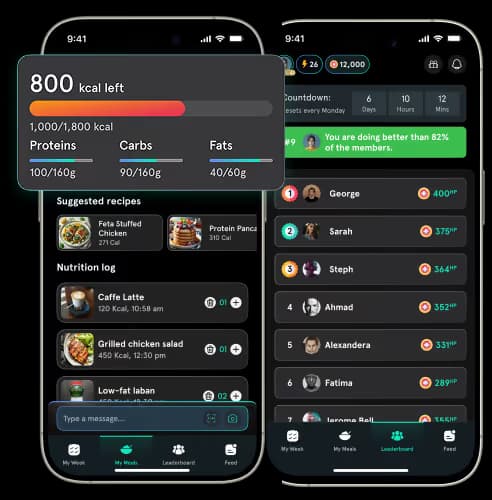
Trainmate's step tracking and adaptive AI engine handle all of this complex programming automatically. By seamlessly syncing with your calendar and adjusting to your biological recovery, Trainmate ensures you get the exact workout you need in the precise time window you have available. Set up your personalized profile today and reclaim those lost hours of your week.