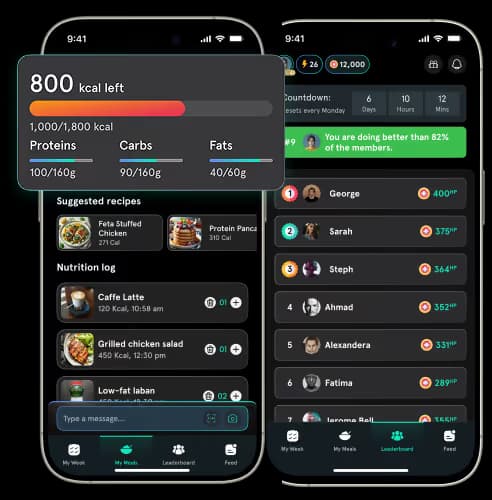
A commitment contract enforces workout adherence by placing monetary collateral into escrow that forfeits if an athlete skips a scheduled session. By pairing loss aversion with immediate financial penalties verified by an impartial referee, lifters eliminate acute decision fatigue and turn voluntary training schedules into non-negotiable liabilities.
How Does Loss Aversion Drive Resistance Training Consistency?
Standard workout motivation relies on delayed physical outcomes like myofibrillar hypertrophy or increased force production. Deposit contracts invert this temporal structure by introducing immediate, explicit capital loss for missing a scheduled session.
Behavioral economists Daniel Kahneman and Amos Tversky established prospect theory, demonstrating that human decision-making responds to loss with an asymmetric ratio of roughly 2.25 to 1. Forfeiting $50 creates twice the psychological pain that acquiring $50 generates in satisfaction. According to a 2013 paper in Management Science, pre-commitment contracts harness this cognitive asymmetry to force short-term compliance when acute fatigue encourages skipping sessions.
When workout cancellation carries an instant financial cost, subjective willpower ceases to be a point of failure. Athletes who pair clear financial stakes with using the M-PAC action control framework shift gym attendance from a daily debate into an automatic routine.

What Is the Optimal Financial Stake for Exercise Adherence?
An effective workout stake equals 1% to 3% of an athlete's gross weekly income per missed session. For an athlete earning $1,500 weekly, placing $20 to $45 on each individual session generates enough psychological pain to prevent default without causing financial ruin.
Research on behavioral economics applied to health behaviors in a 2016 study in PMC indicates that stakes below this 1% threshold are routinely dismissed as acceptable costs for taking an unscheduled rest day. Conversely, setting stakes above 5% of weekly income induces excess performance anxiety and leads to contract abandonment.
In a standard 4-session weekly program, the athlete places $100 into third-party escrow on Monday morning. Completing all 4 planned sessions returns the $100 balance in full at 23:59 on Sunday evening. Missing a single session forfeits $25 instantly to an anti-charity, maximizing the non-monetary pain of non-compliance.
To remove execution friction once inside the facility, lifters rely on guided gym workouts with set-by-set logging of reps, weight and assisted-machine loads. Eliminating mid-session ambiguity ensures focus remains entirely on completing assigned working sets.

Who Should Act as the Referee for a Training Contract?
Commitment contracts fail when participants attempt to self-verify their own workout data. Self-refereed contracts trigger cognitive dissonance, causing lifters to invent rationalizations for missed sessions under acute physical fatigue.
An effective referee operates as an independent third party with zero financial incentive tied to contract forfeiture. Friends and domestic partners make poor referees because interpersonal empathy causes them to pardon skipped sessions. A remote coach, an automated digital system, or an unaligned training partner functions far better.
According to a 2012 clinical review in PubMed, objective third-party verification increases long-term protocol adherence by 35% compared to self-reported logging. The referee enforces a strict 120-minute post-workout verification window requiring geotagged timestamps or precise session logs.
Lifters who share performance benchmarks through community groups you can join or create reinforce third-party accountability while establishing public social accountability.
How Do Pre-Commitment Rules Eliminate Workout Procrastination?
Pre-commitment protocols neutralize acute decision-making when physical and mental fatigue peak at the end of a workday. Agreements are funded and locked days before entering the weight room, preventing real-time negotiations with present bias.
An operational workout commitment contract requires four mandatory structural parameters established at least 24 hours before the training week begins:
- Escrow funds locked prior to Monday morning ($100 minimum total pool).
- Verification proof submitted within 120 minutes of planned workout completion.
- Contract cancellation permitted only with verifiable medical documentation submitted 4 hours prior to the session start time.
- Forfeited funds transferred automatically to an anti-charity or unaligned recipient.
Athletes who combine loss aversion with coping planning to manage schedule disruptions neutralize excuses before acute friction occurs. Enforcing rigid operational rules minimizes the training volume lost to mitigating decision fatigue in training.
Before locking parameters into a deposit agreement, athletes can review the TrainMate exercise library to select exact movements and set structures that fit their current microcycle.
How Should Financial Contracts Adapt Across Training Phases?
Deposit contracts require systematic calibration as training density and fatigue accumulation shift across macrocycles. Fixed financial penalties that work during an accumulation phase can cause overtraining if applied identically during a peaking or deload block.
According to a research report from the NBER, incentive structures maintain maximum efficacy when participants adjust targets to match predictable energy fluctuations. During high-fatigue microcycles with planned autoregulation, commitment metrics should pivot from absolute performance targets to session entry and completion parameters.
In a deload microcycle, the contract should enforce compliance on lowered load thresholds rather than force maximal effort under heavy fatigue. Lowering the stake size to 1% of weekly income during recovery blocks maintains the behavioral habit without driving non-functional overreaching. Adjusting parameters between macrocycles ensures long-term consistency without burnout.
Athletes manage these structural shifts by using personalized training plans that adapt to you to align financial stakes directly with progressive overload demands.
Frequently Asked Questions
How do you handle commitment contract stakes during sudden illness?
Valid medical exemptions require strict rules defined before the training week begins. Submit verifiable proof, such as a medical note or doctor appointment confirmation, at least 4 hours prior to the scheduled session. If acute illness occurs past this window, the session should be rescheduled within 36 hours rather than forfeited immediately.
Should forfeited contract funds go to a standard charity or an anti-charity?
Directing forfeited funds to an anti-charity — an organization whose cause you strongly oppose — provides significantly higher compliance than a standard charity. Donating to a cause you support softens the psychological blow of losing money, whereas funding an opposing organization maximizes loss aversion and enforces absolute session completion.
How do commitment contracts work for athletes with unpredictable shift work?
Shift workers should anchor commitment contracts to a rolling 72-hour window rather than fixed calendar days. Reserve a pool of 3 mandatory session credits per week, with each credit requiring completion proof within 16 hours of shift completion. This maintains financial stakes while absorbing mandatory overtime disruptions.
What should you do if a training partner serving as referee soft-caps penalties?
If a human referee pardons a missed session due to sympathy, replace them immediately with an automated tracking platform or neutral party. Referees who grant unearned exemptions destroy the psychological loss threshold. An effective referee must treat missing verification data as an automatic financial forfeiture without negotiation.
Contractual pre-commitment converts training intentions into tangible daily action. Pairing financial collateral with systematic set tracking guarantees that willpower is never the bottleneck in your progression. Use TrainMate to log your sessions, verify your progress, and secure long-term consistency in the gym.