How Do Open Goals Improve Exercise Adherence During High-Stress Phases?
Open goals improve adherence during high-stress phases by replacing fixed performance metrics with exploratory objectives like "see how many clean reps feel strong." This dynamic approach eliminates binary success-or-failure evaluations, preventing the goal-failure distress that triggers missed workouts. Lifters maintain microcycle consistency while preserving intrinsic motivation when recovery capacity drops.
What is the difference between open goals and SMART targets in resistance training?
SMART targets demand fixed, predetermined outcomes before a set begins. A standard SMART prescription forces 4 sets of 8 reps at 82.5% of 1RM. When total life stress suppresses baseline neural drive by 10%, completing those 8 reps forces execution at 0 RIR rather than the intended 2 RIR. Missing designated targets creates performance distress and accelerates training burnout.
Open goals replace fixed numerical benchmarks with flexible boundaries. An open prescription instructs you to explore load or rep potential based on daily readiness, such as working up to a heavy double at 2 RIR. Performance parameters scale dynamically without triggering explicit metric failure.
Parameter | SMART Target Programming | Open Goal Programming |
|---|---|---|
Velocity Cutoff Trigger | Fixed percentage (stop set at predefined load drop) | Dynamic threshold (stop set when rep velocity drops > 20% from rep 1) |
Target Proximity to Failure | Static rating (exact 2 RIR across all working sets) | Variable range (exploratory window between 1 RIR and 3 RIR) |
CNS Fatigue Threshold | Demands 100% planned load regardless of recovery | Auto-regulates load if HRV drops > 1.5 standard deviations |
Goal Evaluation Criteria | Binary outcome (complete 5 reps @ 85% 1RM or fail) | Continuum outcome (identify top load for maximum clean velocity) |
SMART targets assume predictable recovery rates and static non-training stress. When work deadlines, sleep deprivation, or travel interfere, non-training stress elevates system fatigue. Forcing fixed numbers under these conditions raises injury risk and turns your session into a source of psychological threat.
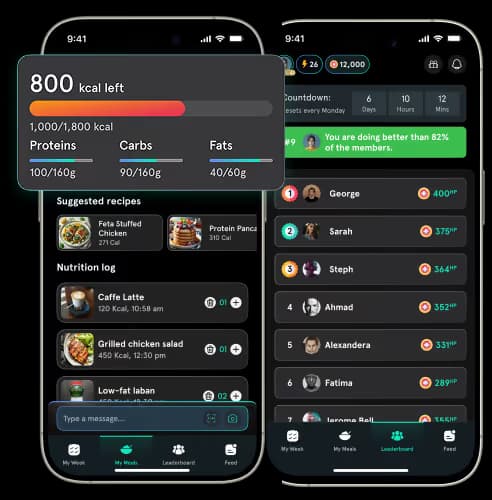
To adjust load targets based on daily baseline strength changes, use our one-rep max calculator to recalculate training zones from submaximal effort sets without forcing static programming.
How do open goals preserve flow state and workout consistency under fatigue?
Managing rigid expectations under cognitive fatigue demands significant executive function. A 2017 study in PLOS ONE by Swann et al. demonstrated that open goals reduce performance anxiety and self-handicapping compared to specific target goals. Removing binary win-loss parameters promotes task absorption and sustains psychological flow states during lifting sessions.
Systemic fatigue impairs motor unit recruitment, reducing peak force output by 10% to 15%. Expecting peak power during suppressed readiness creates cognitive friction. When a lifter perceives 6 reps as a failure against an 8-rep target, the brain registers the training session as an unpleasant stimulus. Repeating this pattern across microcycles degrades overall exercise adherence.
Open goals reframe high effort as qualitative data collection. A set terminated when concentric speed drops below 0.15 m/s becomes an investigation of immediate capacity rather than a passed or failed exam. Recognizing how mental fatigue raises resistance training RPE by 2 units allows lifters to adjust effort expectations without interpreting high exertion as physical regression.

When should an advanced athlete switch to open goals exercise adherence protocols?
Transition to open goals when non-training fatigue exceeds baseline recovery thresholds. A drop in resting heart rate variability exceeding 1.5 standard deviations over 72 hours signals severe parasympathetic suppression. Enforcing rigid performance metrics during these physiological windows elevates systemic strain and increases long-term workout drop-off rates.
Switch protocols during acute travel, sleep deficits under 6 hours per night, or intense work deadlines. A 2020 dissertation at the University of Victoria by Sara Paziraei established that open-ended targets preserve exercise adherence during high subjective fatigue far better than fixed numerical benchmarks.
Track key physiological markers to identify when to alter session parameters:
- Baseline session RPE increases by 2 or more units across identical relative loads.
- Psychometric fatigue scores spike, requiring psychometric monitoring for athlete burnout prevention before total training output collapses.
- Bar velocity drops over 20% on standard 70% 1RM warm-up sets, signaling suppressed central nervous system output.
- Psychological drive shifts from autonomous execution to severe pre-workout friction.
When these markers surface, adjust session goals dynamically. Utilizing guided gym workouts with set-by-set logging of reps, weight and assisted-machine loads allows you to capture valid training volume without forcing arbitrary intensity targets.
How can I implement open goals exercise adherence into a heavy microcycle?
Implementing open goals requires clear process boundaries, not random loading. Replace fixed numerical targets with qualitative effort frames. Instead of writing 4 sets of 5 reps at 140 kg, prescribe 4 sets focused on finding a top working weight that allows 3 clean reps at 2 RIR.
Define the primary physiological stimulus before entering the gym. If the session targets main-lift strength, set the objective to work up to a heavy triple that moves with crisp velocity. Select the barbell load using real-time warm-up speed rather than spreadsheet calculations.
Compare the structural execution of both approaches:
Under a SMART protocol, an athlete squatting 140 kg for 4 sets of 5 reps must complete all 20 reps at 140 kg regardless of daily fatigue levels.
Under an open goal protocol, the athlete performs 4 working sets total. They work up to a heavy triple terminating at 2 RIR, then perform 3 back-off sets exploring maximum clean reps before visual velocity loss.
Evaluate set termination using precise proximity-to-failure metrics. Applying research-backed rules for set RIR for strength vs hypertrophy keeps training intensity within effective physiological thresholds without locking you into fixed load requirements.
To manage flexible programming alongside long-term tracking, configure build-your-own custom workouts saved to a personal library to adjust rep targets directly inside your workout session based on daily recovery.
When acute stress threatens training consistency, pre-established behavioral strategies safeguard routine execution. Deploying structured methods like coping planning to protect your exercise routine maintains session completion when non-training demands peak.
Frequently Asked Questions
What are open goals in strength training?
Open goals are process-focused targets that omit fixed numerical outcomes prior to a set. Instead of prescribing 8 reps at a specific load, an open goal directs you to explore maximum quality reps with solid technique. This removes binary success-or-failure evaluations during high-stress microcycles when recovery fluctuates.
Do open goals reduce muscle hypertrophy or strength gains?
No. Hypertrophy relies on total mechanical tension and sets taken close to failure (0-3 RIR), not pre-selected numbers on a spreadsheet. Open goals maintain full muscular stimulus by matching loads to daily capacity while preventing the psychological burnout and excessive neural fatigue caused by forcing fixed targets under stress.
How do SMART targets cause exercise burnout in advanced lifters?
SMART targets rely on predictable, static recovery rates. When total life stress increases non-training fatigue, executing fixed loads forces lifters closer to failure than planned. Repeatedly failing to hit mandated weights or rep counts causes goal-failure distress, increasing psychological friction and driving training abandonment.
Can open goals be combined with autoregulation tools like RIR?
Yes. Open goals integrate directly with ratings of perceived exertion and reps in reserve. An open goal set might direct you to "find the highest weight you can lift for 3 reps at 2 RIR," allowing immediate readiness to determine barbell loading rather than forcing a pre-determined metric.
High-stress training blocks require objective loading adjustments that safeguard both physical output and psychological resilience. Stop forcing static spreadsheet numbers when recovery drops. Deploy personalized training plans that adapt to you to automatically align volume and load with your real-time fatigue metrics.