What is the Difference Between Habit Instigation vs Execution Exercise?
Habit instigation is the automated decision to initiate a workout when triggered by an environmental cue, removing mental friction before training. Habit execution is the physical performance of exercise sets, which must remain conscious and deliberate to protect motor unit recruitment, maintain proper mechanical tension, and drive progressive overload.
A 2015 study by Gardner and colleagues in the British Journal of Health Psychology demonstrated that habit instigation, rather than execution, determines long-term exercise frequency. When instigation becomes habitual, you bypass internal negotiation at 17:00 about driving to the weight room. The environmental trigger initiates the movement sequence automatically.
Habit execution operates once you cross the gym threshold. In low-complexity endurance tasks like treadmill walking, automatic execution conserves conscious bandwidth without degrading performance. In resistance training, shifting set execution onto autopilot compromises motor control and guarantees early performance plateaus.
Attempting to merge initiation and movement into a single mindless process degrades lifting quality. Heavy compound resistance training demands explicit focus to manage posture, control force output, and gauge proximity to failure accurately. You need high automaticity to enter the facility, and zero automaticity when grinding through a heavy squat eccentric.
When you stop decision fatigue from cutting training volume, you preserve executive function for sets that stimulate myofibrillar protein synthesis. Instigation removes the friction of showing up. Execution requires total concentration to produce mechanical tension.
Why Does Automating Resistance Training Set Execution Ruin Progressive Overload?
High-threshold motor unit recruitment depends on conscious voluntary effort and precise force production under load. When a lifter automates set execution, the central nervous system defaults to path-of-least-resistance biomechanics. You shorten the range of motion, speed through controlled eccentric tempos, and terminate sets prematurely.
Research archived in the Iowa State University digital repository indicates that automaticity during skill-based motor tasks suppresses self-monitoring, directly impairing performance precision. Progressive overload requires accurate tracking of proximity to muscular failure within a strict threshold of 0 to 2 Reps in Reserve (RIR). Mindless repetition destroys the real-time sensory feedback needed to evaluate true effort.
Falling into automatic execution during a heavy barbell back squat causes your nervous system to redistribute load away from target tissues to conserve energy. Your torso shifts into a hip-dominant angle rather than driving force through the midfoot. Monitoring velocity loss—such as ending a set when concentric speed drops by 10% to 20%—requires focused concentration on every millimeter of distance.
Conscious motor unit recruitment follows Henneman's size principle, requiring maximal intentional force output on heavy efforts even as concentric velocity slows. Mindless set execution leads to subconscious deceleration, reducing force output below the threshold required to recruit high-threshold Type IIx fibers.
Lifters who experience high mental fatigue prior to training face even greater autoregulation errors. When mental capacity drops, perception of effort increases dramatically, making deliberate evaluation of working sets vital. You can adjust load based on real-time subjective feel or autoregulate resistance training with affective valence to maintain productive training volume without risking systemic overreach.

How Do Contextual Cues Build Automatic Workout Instigation?
Time-based anchors like "I train at 07:00" fail whenever sleep schedules shift, work emergencies arise, or traffic delays commute times. Event-contingent anchors bind the decision to train directly to an established daily action that occurs regardless of external schedule variance.
A study in Frontiers in Public Health on physical activity habits showed that cue stability directly predicts the strength of automatic habit initiation. Linking the start of your training sequence to an unshakeable daily event removes cognitive deliberation entirely.
Effective event-contingent triggers rely on sequential, friction-free protocols:
- Closing your work laptop upon completing your shift triggers changing into training apparel immediately.
- Finishing a pre-workout meal 90 minutes before your session triggers packing your gear bag.
- Stepping through your front door after work triggers driving directly to the weight room.
Removing decision points during these initial transition steps protects your cognitive reserve. If you sit on the couch before changing shoes, automaticity breaks, plunging you into internal debate. Research from King's College London on habitual instigation confirms that separating initiation from execution protects behavioral adherence under high stress.
To secure this sequence against unexpected disruptions, establish clear backup routines. You can use coping planning to protect your exercise routine when business travel or schedule shifts threaten your primary trigger. Establishing an unbroken environmental sequence ensures you arrive at the rack regardless of daily fluctuations in motivation.

How Can Lifters Balance Habit Instigation vs Execution Exercise to Maximize Gains?
Lifters preserve maximum strength and hypertrophy stimulus by establishing an explicit boundary between pre-session logistics and on-platform execution. Automate everything up to entering the gym floor, then institute a strict pre-set setup checklist before every working set.
Establishing a formal transition ritual separates these two distinct operational states. Automated habits manage changing clothes, traveling to the facility, and entering the locker room without requiring active thought. Stepping onto the lifting platform signals a deliberate shift into complete cognitive engagement.
During execution, implement concrete set setup protocols rather than open-ended lifting. Use a standardized pre-set setup routine:
- Position foot stance and grip width to exact millimeter targets.
- Create maximum intra-abdominal pressure against a lifting belt before unracking the barbell.
- Control the eccentric phase for 2 to 3 seconds to maximize mechanical tension.
- Explode through the concentric phase with maximum voluntary velocity.
Selecting movement patterns before stepping onto the lifting floor prevents wasted cognitive energy. Choosing movement patterns from a structured exercise library ensures you select variations aligned with your current joint integrity and movement capabilities.
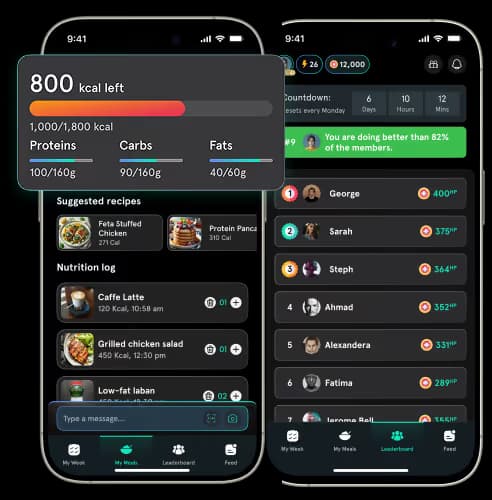
Quantifying performance changes across every microcycle requires tracking logged variables. Executing guided gym workouts with set-by-set logging of reps, weight and assisted-machine loads forces you to record exact output metrics rather than guessing proximity to failure.
Standardizing execution technique allows micro-loading increments—such as adding 0.5 kg to a heavy barbell press—to reflect genuine physiological adaptation rather than altered movement momentum. Reviewing strength insights that track how each lift improves over time confirms that conscious execution converts heavy training sessions into measurable physical output.
Managing systemic and muscular fatigue across separate muscle groups requires equal monitoring precision. Referencing volume insights showing training load per muscle group on a body map provides visual feedback on how stimulus is distributed across target tissues, keeping fatigue balanced across multi-week mesocycles.
Frequently Asked Questions
What is the difference between habit instigation and habit execution in exercise?
Pre-workout instigation automates the decision to go to the gym, bypassing internal negotiation through environmental triggers. Exercise execution requires active cognitive focus on movement technique, mechanical tension, and proximity to failure. While instigation succeeds through mindless repetition, effective execution depends entirely on deliberate sensory feedback and intentional force output.
Why should you avoid trying to automate the execution of resistance training sets?
Mindless set performance causes technical breakdown, uncalibrated range of motion, and premature set termination. High-threshold motor unit recruitment demands maximum voluntary intent during heavy efforts. Shifting execution onto autopilot prevents accurate evaluation of reps in reserve, degrading the hypertrophic stimulus and increasing mechanical stress on passive joint structures.
How do event-contingent contextual cues build automatic workout instigation?
Event-based triggers chain training prep to guaranteed daily actions, such as shutting down a computer at 17:00. Unlike rigid clock times that collapse under schedule delays, anchor events occur consistently. Bypassing conscious deliberation at these transition points ensures consistent gym arrival regardless of daily stress or fatigue levels.
How can lifters stay consistent automatically without sacrificing training quality?
Automate all pre-training logistics—such as packing equipment, traveling, and entering the facility—to eliminate decision fatigue before lifting. Once on the gym floor, switch to conscious focus by applying standardized pre-set setup checklists, tracking exact working loads, and monitoring concentric velocity loss on every heavy compound set.
Advanced programming requires pairing automated instigation with dynamic autoregulation across multi-week mesocycles. When environmental cues get you to the barbell automatically, tracking concentric velocity loss and load progression on every working set prevents non-functional overreaching while maximizing tension. Aligning habit triggers with exact performance metrics converts raw showing-up consistency into linear performance progression. TrainMate integrates set tracking with body-map analytics to ensure every deliberate rep produces measurable muscular growth.