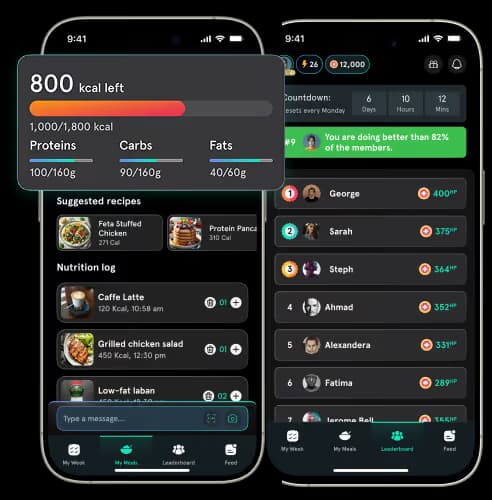
To stop a single missed workout from spiraling into weeks of inactivity, execute an immediate post-lapse protocol within 24 hours. Contain the disruption by replacing rigid volume targets with a 15-minute reset session at 60% 1RM and applying cognitive restructuring to eliminate all-or-nothing thinking before momentum collapses.
Why Does a Single Missed Workout Cause Weeks of Inactivity?
A single missed squat session or a 5 kg reduction in target load immediately triggers cognitive friction in dedicated lifters. The brain converts this isolated performance deviation into a perceived drop in self-efficacy, shattering the internal rule structure that keeps habit loops intact. Once that boundary breaks, the perceived obligation to execute future sessions disappears.
Marlatt and Gordon's relapse prevention framework, documented in a 1992 clinical study in Annals of Behavioral Medicine, illustrates that attributional shifts drive behavioral collapse following an initial lapse. Lifters assign the cause of the missed session to internal, global traits like a lack of discipline rather than temporary external stressors. This shift in internal narrative turns a 24-hour disruption into a multi-week layoff.
When self-efficacy drops, negative affect spikes immediately. Lifters experience guilt, anxiety, and frustration when approaching the weight room for their next scheduled session. To escape this emotional discomfort, the brain avoids the stimulus entirely, turning an isolated missed workout into total exercise abandonment.
How Does All-or-Nothing Thinking Sabotage Gym Consistency?
Intermediate and advanced lifters frequently operate under a rigid, binary mental frame. A training session is evaluated as either a complete success—all 4 sets completed at 85% 1RM—or an absolute failure. There is no conceptual middle ground for a modified session or reduced volume.
This binary logic forces an irrational conclusion: if a session cannot meet 100% of its programmed load, it holds zero training value. Learning how open goals improve workout consistency under stress breaks this cognitive rigidity by setting functional performance floors rather than fragile perfection targets. Without a floor, any operational deviation causes total disengagement.
The transition from an acute lapse to a chronic relapse follows a precise, predictable trajectory. Day 1 starts with an unscripted miss, followed by Day 2 guilt. By Day 4, the cognitive friction of returning to an interrupted microcycle causes complete program drop-off lasting 3 weeks or longer.

How Do You Re-Frame a Missed Set or Workout?
When you miss a load target or skip a workout, force yourself to record objective variables like acute time constraints, sleep deficits, or elevated work stress instead of questioning your discipline. Cognitive restructuring replaces subjective emotional criticism with verifiable performance conditions.
An attributional retraining analysis in Health Education Research demonstrates that attributional retraining preserves self-efficacy and prevents behavioral drop-off following acute performance lapses. Re-framing a missed session as neutral performance data eliminates shame, preserves self-efficacy, and removes the emotional distress that causes complete exercise abandonment.
To log objective execution data rather than subjective emotional evaluations, track performance metrics accurately. Utilizing guided gym workouts with set-by-set logging of reps, weight and assisted-machine loads gives you concrete numbers to analyze, removing emotional bias from your training history. When load and volume are viewed objectively, a bad set is just a data point, not a moral default.
What Is a Minimum Effective Dose Reset Session?
To keep a missed workout from metastasizing into an extended layoff, deploy a 15-minute Minimum Effective Dose (MED) session within 24 hours. This protocol strips away non-essential volume to prioritize habit preservation over adaptation stimulus. Its sole function is to preserve behavioral momentum and close the cognitive lapse window within 24 hours.
An MED reset session lasts 15 minutes and consists of 1 primary compound movement. You execute 2 work sets at 60% 1RM, keeping target RPE at 6 or lower. This low-barrier protocol requires minimal activation energy, removing the psychological friction that leads to total gym avoidance.
Principles detailed in Nevin's principles of behavioral momentum in behavioral psychology prove that maintaining high-frequency, low-demand responses keeps behavioral pathways intact under stress. Completing an abbreviated session maintains your identity as a consistent athlete and prevents cognitive disconnect. You can also autoregulate resistance training with affective valence to select an MED load that feels manageable under acute mental fatigue.

How Should You Execute a 24-Hour Post-Lapse Protocol?
Execute your post-lapse sequence within 2 hours of missing a planned training window. Do not wait for the start of a new calendar week. Never attempt to stack missed volume onto your next scheduled workout, which drastically increases injury risk and generates excessive neurological fatigue.
- Acknowledge the lapse objectively without emotional evaluation within 2 hours of the missed window.
- Schedule a 15-minute MED reset session for the next calendar day.
- Reduce total session volume to 2 work sets at 60% 1RM for your primary compound movement.
- Execute pre-planned structural adjustments to secure your gym trip.
Long-term adherence relies heavily on systematic pre-planning for unexpected disruptions. Integrating coping planning to protect your exercise routine ensures you have pre-determined responses ready when work schedules or travel interfere with training.
Having an emergency workout routine stored in your primary training application guarantees immediate execution without decision fatigue. You can utilize build-your-own custom workouts saved to a personal library to keep a pre-formatted 15-minute MED session ready to deploy at a moment's notice.
How Do You Transition Back to Full Load After a Reset?
Once the 24-hour MED reset session is complete, the cognitive cycle of the lapse is successfully broken. You have bounded the goal violation effect and maintained your underlying habit loop. The next scheduled training session returns directly to standard programmed loads and prescribed set volume.
If a disruption extends beyond a single session into several consecutive weeks, an MED reset is no longer sufficient. Long-term layoffs require a structured rebuilding phase, such as a 3-week retraining protocol after a layoff, to safely restore work capacity without soft tissue damage.
A 2024 exercise physiology paper in Frontiers in Sports and Active Living highlights that programmed progression models must dynamically adjust to real-world interruptions to maintain long-term compliance. Automatic progression management eliminates guesswork when re-entering structured training blocks.
Frequently Asked Questions
What should I do if I miss two or three workouts in a row due to illness or travel?
For multi-session disruptions lasting 3 to 7 days, skip the single 15-minute reset session and execute an introductory re-entry workout. Drop total working sets by 40% while keeping programmed intensity at 70% 1RM. This manages acute muscle soreness and restores baseline work capacity before you return to full training volume.
How does the Goal Violation Effect differ from physical central fatigue?
Physical fatigue reduces neural drive and bar speed during a session, requiring acute load autoregulation. The Goal Violation Effect is cognitive, transforming a missed target into perceived personal failure. Physical fatigue requires immediate load reduction; the Goal Violation Effect requires cognitive restructuring to prevent an emotional drop in training adherence.
Should I add missed sets to my next scheduled session to make up lost volume?
Never stack missed sets onto subsequent workouts. Adding extra sets creates excessive neurological fatigue, elevates soft tissue injury risk, and compromises recovery across the remaining training block. Treat missed sets as unrecoverable data points. Maintain your scheduled set volume for the next session without compensating for past deviations.
How does habit instigation differ from habit execution after skipping a workout?
Habit instigation is the mental decision to travel to the gym, whereas execution is performing the lifts. Research indicates that instigation carries the highest psychological friction after a lapse. Focus entirely on executing the instigation phase—getting through the gym doors—rather than stressing over performance targets inside the training session.
Consistency is not maintained by perfect execution; it is built by shortening the recovery window after an unscripted miss. When training schedules collapse, ditch self-criticism, load a minimal session, and protect the habit loop at all costs. Deploying personalized training plans that adapt to you gives you the immediate structural support needed to adjust volume dynamically and maintain long-term momentum.