How Does Cross-Education Resistance Training Preserve Contralateral Strength?
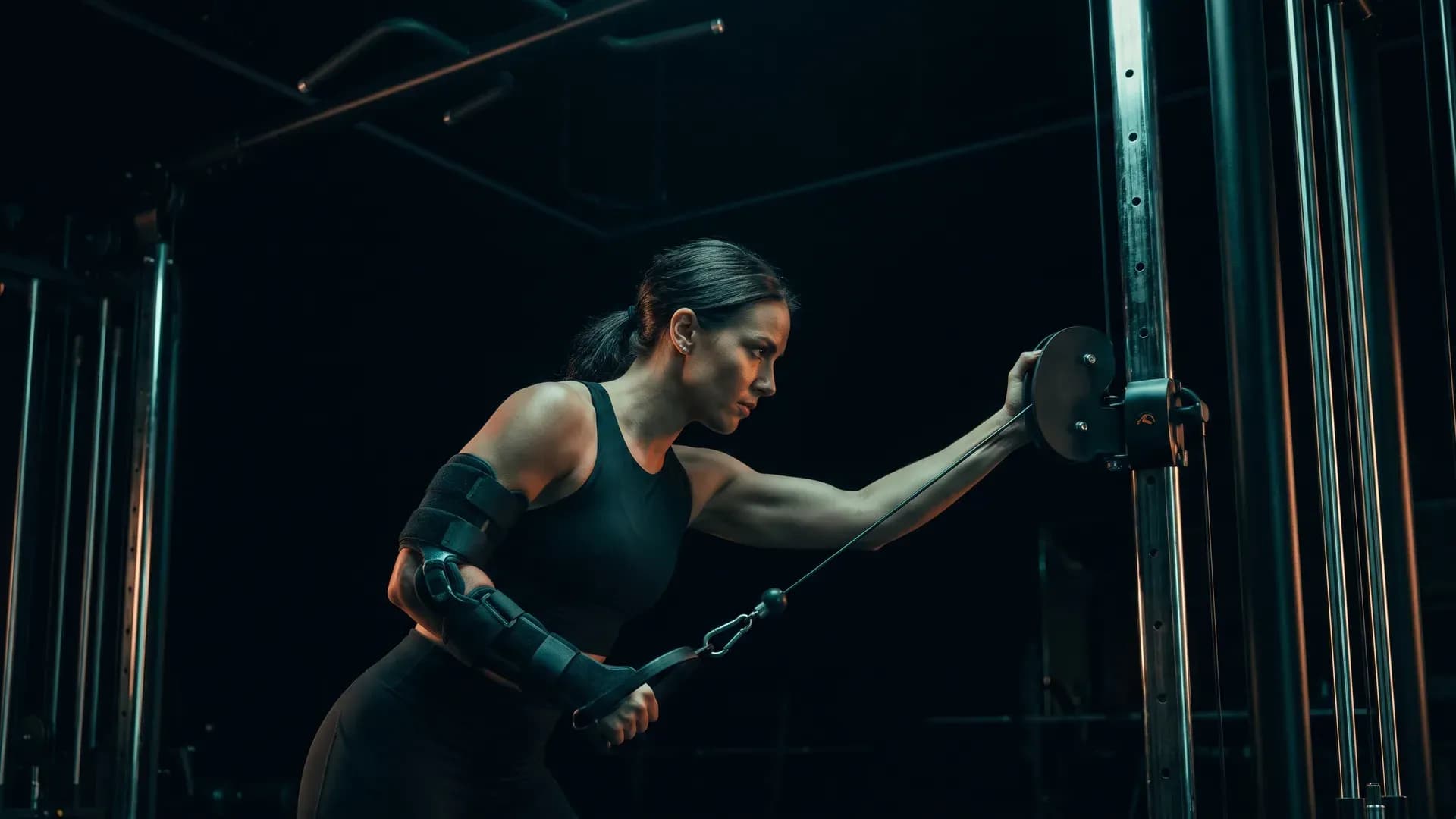
High-intensity unilateral loading triggers interhemispheric neural spillover from the trained motor cortex to the ipsilateral hemisphere across the corpus callosum. This pathway increases corticospinal excitability and decreases intracortical inhibition, preserving 8% to 16.4% of maximal voluntary force in the uninjured contralateral limb despite zero local mechanical tension.
Unilateral strength training drives adaptation in the untrained opposite limb through spillover neural pathways in the central nervous system. When executing heavy single-leg or single-arm resistance exercises, high-threshold neural drive originates in the primary motor cortex of the trained hemisphere.
A portion of this neural drive crosses the corpus callosum to the ipsilateral motor cortex via interhemispheric pathways. Spinal interneurons convey these signals to the uninjured limb's motor neuron pool. A 2017 neuroimaging synthesis in PMC established that high-intensity unilateral contractions maintain spinal motor neuron pool excitability in the inactive limb, preventing neural network degradation during joint casting.
Unloaded muscle tissue retains motoneuron firing capabilities through persistent transcallosal excitation. Cortical excitation prevents the acute 20% to 30% drop in voluntary activation that typically follows joint immobilization.
Single-limb contractions keep spinal alpha motor neurons responsive, shortening post-immobilization rebuilding phases. High mechanical loads alter structural properties like fascicle length, influencing eccentric vs concentric muscle architecture adaptations across both sides of the central nervous system.
Why Are High-Velocity Eccentric Contractions Most Effective for Contralateral Recovery?
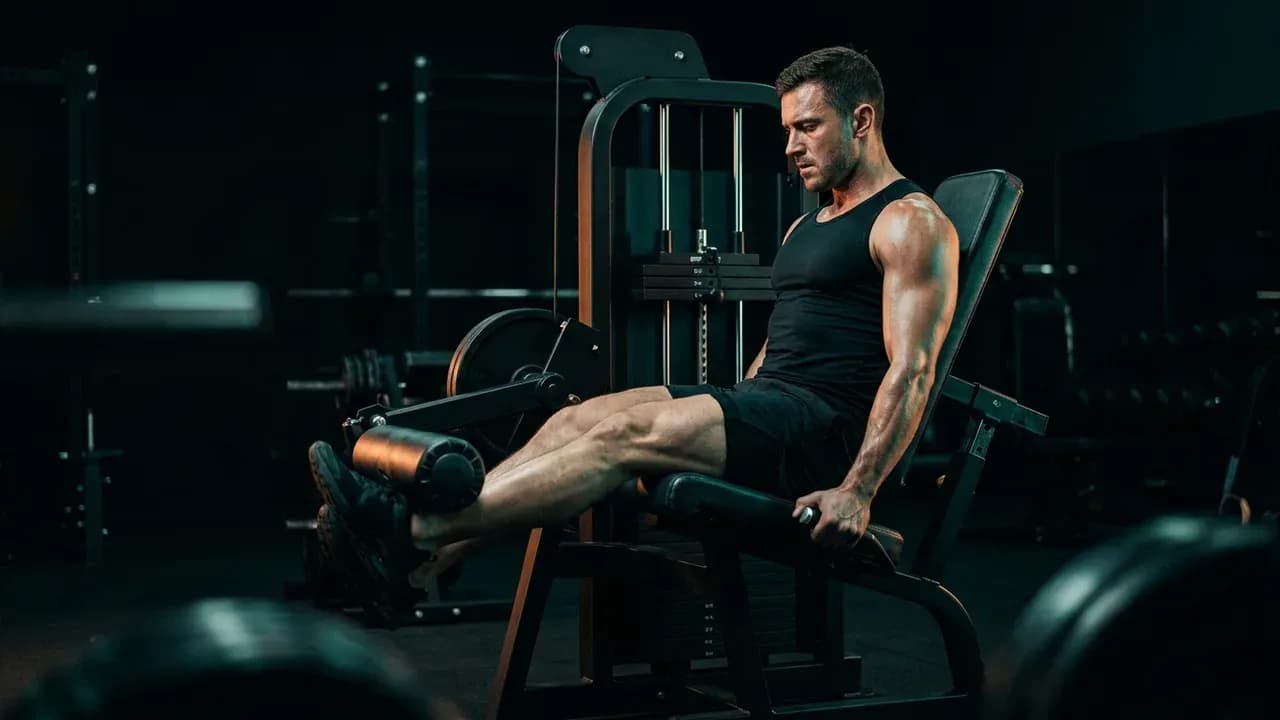
Forced lengthening under heavy loads triggers a neurophysiological response that concentric contractions cannot match. Eccentric actions preferentially recruit high-threshold motor units at lower metabolic costs while firing primary motor cortex neurons at higher instantaneous discharge rates.
During eccentric loading, the central nervous system downregulates presynaptic inhibition to handle forced lengthening under tension. A 2019 meta-analysis in Frontiers in Sports and Active Living revealed that unilateral eccentric training produced a 17.8% strength gain in the untrained contralateral limb, compared to 9.4% from concentric-only training protocols.
Fast angular velocities—exceeding 60 degrees per second—amplify this neural response further. Fast lengthening movements force the motor cortex to send high-frequency electrical volleys down corticospinal tracts. These high-frequency signals protect the immobilized limb against denervation-like motor deficits.
Integrating fast lengthening phases on the healthy limb provides the mechanical stimulus needed for optimal neurological spillover. Heavy lengthening loads on healthy limbs mirror the structural tension demands found in accentuated eccentric loading protocols.
Lower metabolic cost during eccentric work permits higher total training volume without overwhelming system recovery capabilities. High movement speeds also preserve motor unit synchronization, preventing spinal reflex depression during weeks of non-use.

What Training Parameters Maximize Cross-Education Resistance Training?
Maximizing neural transfer requires high mechanical tension on the uninjured limb. Sub-maximal, high-rep sets yield minimal cross-education because light loads do not demand significant corticospinal excitation.
To trigger meaningful strength preservation, train the healthy limb at intensities between 80% and 90% of its one-rep max. Determine your exact capacity using TrainMate's one-rep max calculator to set accurate target loads. Keep set volumes focused: 3 to 5 sets of 4 to 8 repetitions per session.
Rest intervals between sets must extend to 120-180 seconds. Short rest intervals accumulate local fatigue, which dampens central motor drive and reduces interhemispheric signaling. Managing non-local fatigue ensures maximum motor neuron recruitment during every working set, preventing performance drops outlined in non-local muscle fatigue exercise ordering.
Controlling proximity to failure prevents central nerve conduction speed from slowing down across multiple working sets. Maintaining target proximity to failure around 1 to 2 reps in reserve optimizes motor output without exhausting spinal interneurons.
Loading Modality | Motoneuron Discharge Rate | Corticospinal Silent Period | H-Reflex Amplitude Retention | Transcallosal Facilitation |
|---|---|---|---|---|
Fast Eccentric (>60 deg/sec) | 45–60 Hz | 110–125 ms | 88%–94% | High |
Heavy Isometric (100% MVIC) | 30–40 Hz | 135–150 ms | 75%–82% | Moderate |
Slow Concentric (<30 deg/sec) | 20–30 Hz | 150–170 ms | 60%–68% | Low |
Unloaded Immobilization | 8–12 Hz | 185–210 ms | 35%–45% | Suppressed |
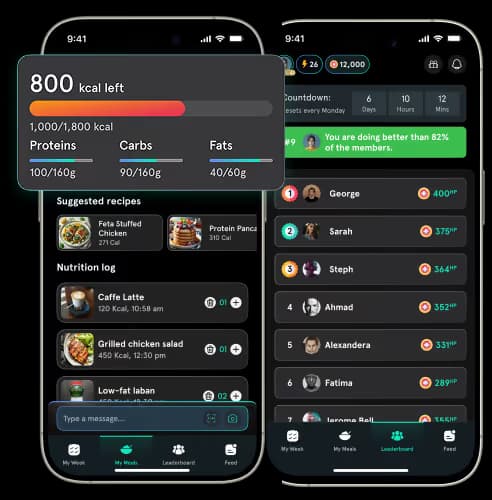
To log loading progressions during injury recovery, use guided gym workouts with set-by-set logging of reps, weight and assisted-machine loads. Set-level tracking ensures the healthy limb sustains high neural output.
How Much Strength Can Unilateral Training Preserve in an Immobilized Limb?
A casted limb loses between 20% and 30% of its maximal isometric strength within 3 to 4 weeks of complete immobilization. Implementing unilateral training on the opposite limb preserves 8% to 16.4% of baseline muscular strength across the immobilized joint.
In clinical trials, subjects who trained the non-immobilized limb retained up to 90% of their baseline strength after 4 weeks of limb casting. Unilateral training on the healthy side prevents the rapid degradation of motor unit synchronization that degrades force output during long lay-offs.
Attenuating strength loss also blunts muscle cross-sectional area loss. A protocol study in PubMed showed that high-intensity eccentric cross-education reduced quadriceps muscle atrophy in the casted limb by 3% to 5% compared to non-training controls.
Preserving spinal motoneuron excitability directly offsets immobilized muscle wasting. Corticospinal paths stay responsive, keeping motor unit firing rates intact for immediate reactivation once formal physical therapy begins.
Managing exercise selection around post-operative restrictions requires structured movement options. Setting up customized programs works smoothly through personalized onboarding that accounts for injuries and sensitive joints.
How Should You Program Cross-Education Resistance Training During Injury Recovery?
Systemic fatigue management dictates how long high-threshold electrical signals can be delivered without depressing central nervous system output. Single-limb maximum effort tasks tax central neural pools disproportionately compared to standard bilateral training.
Structure training sessions 3 to 5 times per week on non-consecutive days. Focus on heavy single-limb exercises corresponding to the immobilized muscle group on the injured side. If your left knee is immobilized post-surgery, execute heavy single-leg leg presses and knee extensions on the right leg.
According to a clinical review by Get Back to Sport, cross-education benefits peak when training protocols start within 3 to 7 days of acute injury or post-surgical immobilization. Early neural stimulation limits the severe initial drop in motor cortex excitability.
Execute each eccentric repetition with a controlled 3-to-4 second dynamic eccentric phase. Avoid taking sets to absolute failure; stopping 1 to 2 reps short of failure maintains electrical output without causing central fatigue.
Managing autoregulation and tracking velocity loss keeps neural output high across training blocks. Monitoring set decay through velocity loss threshold resistance training guarantees that sets terminate before spinal drive degrades.
Structuring training during recovery is made simpler with personalized training plans that adapt to you. Adjusting session volume based on systemic fatigue preserves motor cortex output without delaying peripheral recovery.
Frequently Asked Questions
How does the bilateral deficit impact single-limb load selection in cross-education protocols?
The bilateral deficit allows an individual to produce more force single-leg or single-arm than 50% of their bilateral capacity. When programming cross-education, select loads based on true single-limb maxes rather than halved bilateral estimates. Peak unilateral motor unit recruitment maximizes transcallosal signaling to the casted limb.
Does cross-education training alter tendon stiffness on the uninjured vs immobilized limb?
Cross-education preserves neural drive and motor unit recruitment, but it does not transmit mechanical strain across the corpus callosum. Consequently, tendon stiffness in the immobilized limb declines despite strength retention. Hypertrophy and tendon remodeling require direct mechanical tension, which returns only during active rehabilitation post-immobilization.
Can cross-education protocols be applied if the uninjured limb has a pre-existing joint issue?
Yes, provided joint mechanics allow heavy loading without exacerbating inflammation. If high dynamic loads cause joint distress, utilize 100% maximal voluntary isometric contractions (MVIC) at fixed joint angles on the uninjured limb. Isometric holds generate high corticospinal drive, maintaining 8.1% contralateral strength transfer safely.
How does motor task complexity influence the magnitude of cross-education neural transfer?
Complex motor skills requiring greater cortical motor mapping yield stronger interhemispheric excitation than simple isolation movements. Multijoint unilateral exercises, such as single-leg leg presses or step-downs, engage larger motor cortex territory. Increased cortical area activation enhances transcallosal drive, improving strength retention in the immobilized limb.
Maintaining force production during forced lay-offs requires disciplined single-limb intensity and precise volume management. Offloading neural programming to adaptive software ensures loading parameters remain strictly within effective thresholds throughout rehabilitation. TrainMate tracks unilateral work, manages systemic recovery, and adjusts target loads so uninjured limbs drive maximum contralateral strength retention.