What is supramaximal accentuated eccentric loading?
Supramaximal accentuated eccentric loading (AEL) is an advanced strength protocol where the lowering phase of a lift is loaded above 100% of concentric 1RM using mechanical weight releasers, before dropping the extra load at the bottom turn to complete the concentric phase with submaximal weight (75% to 80% 1RM).
Skeletal muscle produces 20% to 50% more force during eccentric contraction than during concentric contraction. Standard resistance training loads a barbell based strictly on concentric strength limits. This leaves the muscle understimulated during the lowering phase of compound movements.
Supramaximal AEL corrects this force mismatch. By loading mechanical weight releasers to 105%–120% of concentric 1RM, lifters overload the deceleration phase. As the barbell touches the bottom turnaround, the releaser stems hit the floor and unhook, leaving 75%–80% 1RM on the bar for the concentric stroke.
How does accentuated eccentric loading increase concentric velocity and 1RM?
Lowering a supramaximal load forces instantaneous motor unit recruitment. The central nervous system activates high-threshold type IIx muscle fibers before the upward movement begins.
The primary mechanism driving faster bar speed after a supramaximal descent is post-activation performance enhancement (PAPE). A 2018 systematic review in the Journal of Functional Morphology and Kinesiology showed that AEL increases acute rate of force development and concentric velocity by increasing passive structural stiffness within muscle spindles and titin filaments.
When the excess overload drops at the bottom transition, elevated motor unit firing rates persist into the concentric phase. The remaining submaximal bar load accelerates faster than it would under uniform loading conditions.
Managing dynamic mechanical load changes requires logging set parameters accurately. Athletes rely on guided gym workouts with set-by-set logging of reps, weight and assisted-machine loads to execute precise load drops across working sets. Tracking these velocity shifts alongside loading changes is detailed further in our Velocity Loss Threshold Resistance Training Guide.

What load percentages drive optimal accentuated eccentric loading strength gains?
Prescribing precise percentage splits determines whether AEL induces potentiated force outputs or central nervous system exhaustion. The eccentric overload must surpass concentric maximum capacity, while the remaining concentric load must allow rapid rate of force development.
Calculate base loading targets using a validated One-Rep Max Calculator before attaching weight releasers. Program these precise parameters for primary barbell lifts:
- Eccentric overload: 105% to 120% of concentric 1RM.
- Concentric load: 75% to 80% of concentric 1RM.
- Eccentric tempo: 3 to 4 seconds controlled descent.
- Volume: 3 to 5 sets of 1 to 3 repetitions.
- Rest intervals: 180 to 300 seconds between working sets.
Eccentric overloads below 105% 1RM fail to stretch titin structures enough to trigger significant PAPE responses. Overloads exceeding 120% 1RM compromise descent mechanics, prolong the transition time, and waste elastic recoil energy as thermal dissipation.
How do weight releasers prevent recovery deficits during supramaximal loading?
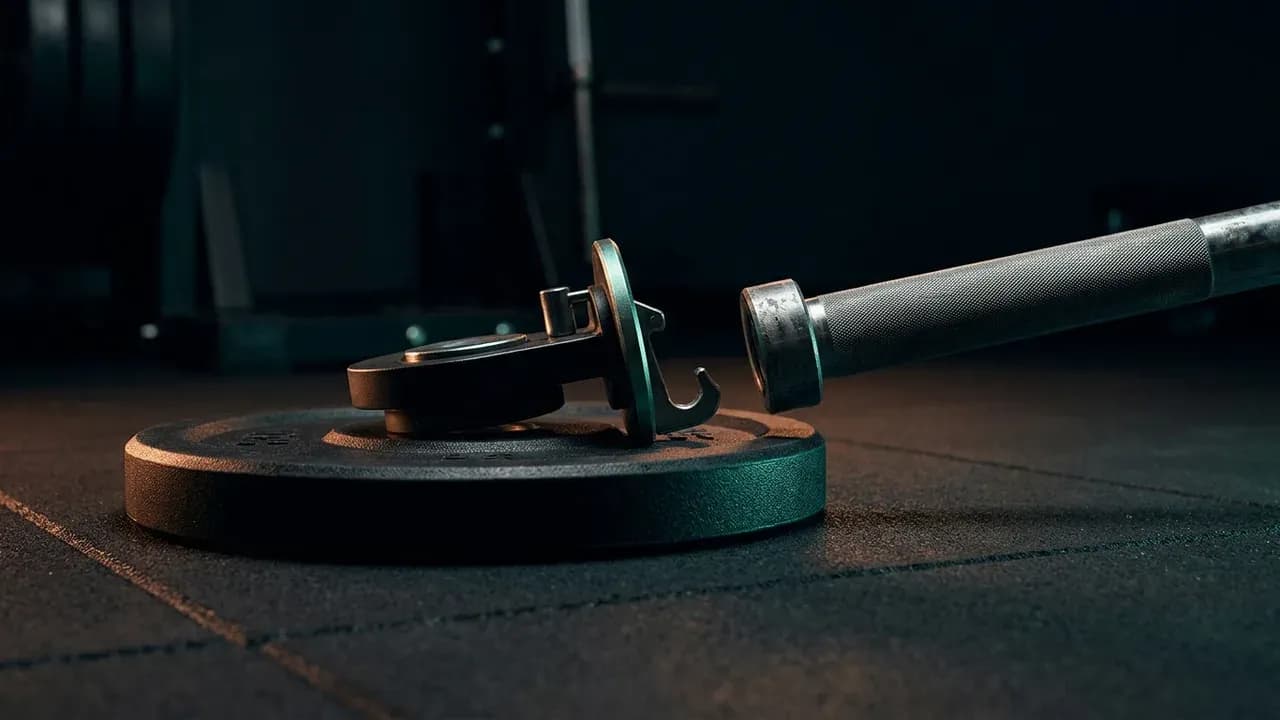
Weight releasers prevent recovery deficits by instantly detaching the supramaximal load at the bottom turn, eliminating concentric fatigue while preserving high-threshold neural activation. Lowering and lifting 105% of 1RM concentrically without assistance causes severe structural tissue damage and multi-day central nervous system fatigue.
Mechanical releasers eliminate this systemic drain. The extra load unhooks automatically as the bar reaches depth, leaving only submaximal resistance for the concentric push.
A 2024 experimental study in PubMed confirmed that restricting supramaximal tension strictly to the eccentric phase maintains post-exercise velocity output without triggering excessive markers of muscle damage or prolonging systemic fatigue.
Because concentric fatigue remains low, lifters maintain high training frequencies without overriding recovery bounds or requiring an immediate Autoregulated Deload Protocol: 4 Steps to Clear Fatigue. Long-term adaptation remains predictable when using strength insights that track how each lift improves over time.
How do you program a 3-week accentuated eccentric loading microcycle?
Integrating supramaximal AEL requires a focused 3-week microcycle during a realization phase before testing 1RM max strength. Perform AEL once per week on a primary compound exercise at the start of the workout when neural drive is highest.
In Week 1, load the back squat with 105% 1RM eccentric overload on the weight releasers and 75% 1RM on the bar. Complete 3 sets of 2 repetitions with a 3-second descent and 240 seconds rest between sets. Follow this main movement with 3 sets of 5 repetitions on Romanian deadlifts at 70% 1RM and 3 sets of 8 repetitions per leg on Bulgarian split squats.
In Week 2, increase the eccentric load to 110% 1RM while holding the concentric bar load at 75% 1RM. Execute 4 sets of 2 repetitions with a 3-to-4-second descent. Pair this main movement with 3 sets of 5 repetitions on heavy barbell hip thrusts at 75% 1RM and 3 sets of 10 repetitions on standing leg curls, managing proximity to failure according to our guide on Proximity to Failure: Set RIR for Strength vs Hypertrophy.
In Week 3, peak the eccentric overload at 115% 1RM while keeping the concentric bar load at 80% 1RM. Perform 3 sets of 1 single repetition with a strict 4-second descent. Complete the session with 3 sets of 12 repetitions on back extensions and 3 sets of 15 repetitions on standing calf raises before running a 1-week deload.
How do you calibrate weight releasers on dynamic squat days?
Calibrate weight releasers during a submaximal session before attempting supramaximal loads. Set the barbell load to 50% 1RM and attach 15% 1RM on the releasers to verify floor contact and release angles without high neural stress.
Adjust the height stems so both releasers hit the floor simultaneously at your exact depth. If one stem releases early, the sudden asymmetric load shift creates lateral shearing forces on the lumbar spine.
Once calibrated, execute a practice set focusing on maintaining tight core bracing and uniform speed during the descent. Clean mechanics during calibration guarantee maximal force transfer during live supramaximal working sets.
Frequently Asked Questions
How do you modify weight releasers for bench press safety?
Bench press AEL requires spotters on both sides of the bar despite using mechanical releasers. Adjust stem lengths so the releaser bases hit rubber floor mats at lower-chest touch point. Keep wrist alignment neutral during descent; asymmetrical release on upper-body pressing causes severe shoulder torque.
What setup changes fix asymmetrical weight releaser detachment?
Asymmetrical detachment stems from uneven floor mats, unequal stem pin adjustments, or lateral bar tilting. Calibrate release heights using a level on empty bar setups. Ensure stance width and foot alignment remain symmetrical, as shifting hips laterally during descent forces one releaser to trigger early.
Should accentuated eccentric loading be used during hypertrophy mesocycles?
Avoid supramaximal AEL during hypertrophy phases focused on high structural volume. Overloading eccentric phases above 100% 1RM taxes central fatigue rapidly without delivering superior sarcoplasmic or myofibrillar hypertrophy compared to standard submaximal sets. Reserve AEL strictly for maximum strength and peak velocity phases.
How does descent speed alter neural adaptations during supramaximal eccentric sets?
Lowering faster than 3 seconds reduces cross-bridge attachment time and lowers titin kinase activity, reducing PAPE benefits. Lowering slower than 5 seconds creates excessive metabolic fatigue and alters bottom-position elastic energy conversion. Target a strict 3-to-4-second tempo for maximal neural output without structural damage.
Executing precise eccentric overloading requires structured programming that adjusts as your recovery capacity shifts. Utilizing personalized training plans that adapt to you keeps your eccentric load splits, velocity targets, and volume limits aligned with your strength progression.