Biarticular muscle hypertrophy is maximized by fixing the proximal joint position to stretch the muscle across its origin during resistance training. This prevents active insufficiency—where simultaneous double-joint shortening collapses actin-myosin overlap—and restores peak mechanical tension, driving up to an 80% higher hypertrophic response in targeted heads like the rectus femoris and triceps long head.
What Causes Active Insufficiency in Biarticular Muscles?
Simultaneous shortening across two joints reduces cross-bridge binding sites within muscle sarcomeres below the threshold required for peak force generation. When filament overlap passes optimal operating length, active tension capacity drops precipitously.
The rectus femoris illustrates this dynamic during multi-joint lower body training. As a biarticular quad head, it originates on the anterior inferior iliac spine of the pelvis and inserts on the tibial tuberosity via the patellar tendon. During a barbell back squat, hip extension shortens the proximal origin while knee extension lengthens the distal insertion.
This opposing joint action keeps the rectus femoris at a near-static total fascicle length throughout the movement range. The muscle acts primarily as a dynamic stabilizer rather than a primary force generator. Without substantial length changes under load, the tissue fails to experience high mechanical tension under stretch. Maximizing growth requires fixing the proximal joint to place the origin under sustained stretch during distal joint excursion.
Why Do Squats and Pressing Movements Fail to Grow Biarticular Heads?
Compound multi-joint exercises underload biarticular muscle heads due to active tension loss at proximal attachments. In heavy flat bench pressing, the shoulder flexes while the elbow extends.
The long head of the triceps originates on the infraglenoid tubercle of the scapula and inserts on the olecranon process of the ulna. Shoulder flexion stretches the long head at its origin, but concurrent elbow extension shortens it at its insertion. As a result, total fascicle length changes very little throughout the press.
Mono-articular synergists like the lateral and medial triceps heads perform almost all of the mechanical work during multi-joint pressing. A 2019 study published in the European Journal of Applied Physiology confirmed that multi-joint compound pressing yields measurable hypertrophy in mono-articular triceps heads while leaving the biarticular long head underdeveloped.
Isolating biarticular heads requires single-joint movements that lock the proximal joint in a position of high stretch. Cross-referencing muscle targets inside an Exercise Library helps coaches select single-joint variations that prevent active insufficiency.
How Does Leg Extension Hip Flexion Angle Alter Rectus Femoris Growth?
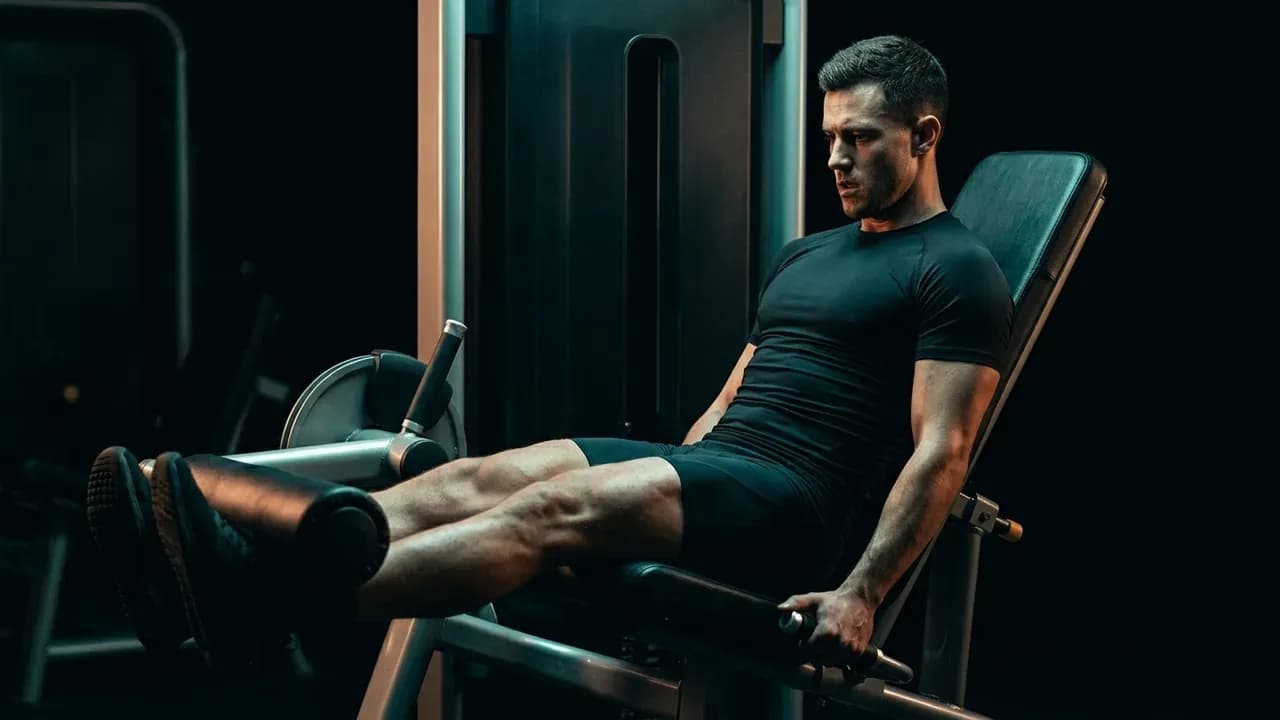
Reclining the leg extension seat backrest to 40° hip flexion yields an 18.2% increase in rectus femoris volume over 12 weeks, compared to 10.1% in standard 90° upright positioning. Passive stretch across the hip origin increases baseline titin tension before distal knee extension even begins.
In a 2023 systematic review in PMC, seated leg extensions performed with a reclined hip angle produced nearly double the hypertrophic growth in the biarticular rectus femoris without altering vastus lateralis or vastus medialis adaptation. Growth in single-joint quad heads remained identical between conditions at roughly 7.5% to 8.2%, proving that proximal joint geometry selectively alters biarticular target tissue.
Biarticular Target Head | Proximal Origin | Optimal Fixed Joint Angle | Sarcomere Operating Length | Regional Growth Bias |
|---|---|---|---|---|
Rectus Femoris | Anterior Inferior Iliac Spine | 40° Hip Flexion | 3.2–3.5 µm (Lengthened) | Distal & Mid-Belly |
Triceps Long Head | Infraglenoid Tubercle | 120°–180° Shoulder Flexion | 3.3–3.6 µm (Lengthened) | Proximal & Mid-Belly |
Biceps Long Head | Supraglenoid Tubercle | 15°–30° Shoulder Extension | 3.1–3.4 µm (Lengthened) | Distal Region |
Gastrocnemius (Medial/Lateral) | Femoral Condyles | 0° Knee Extension | 3.0–3.3 µm (Lengthened) | Mid-Belly |
Training biarticular muscles in lengthened states triggers local mechanical strain and intracellular titin tension. Incorporating lengthened positions aligns directly with strategies detailed in loaded inter-set stretching hypertrophy guidelines.
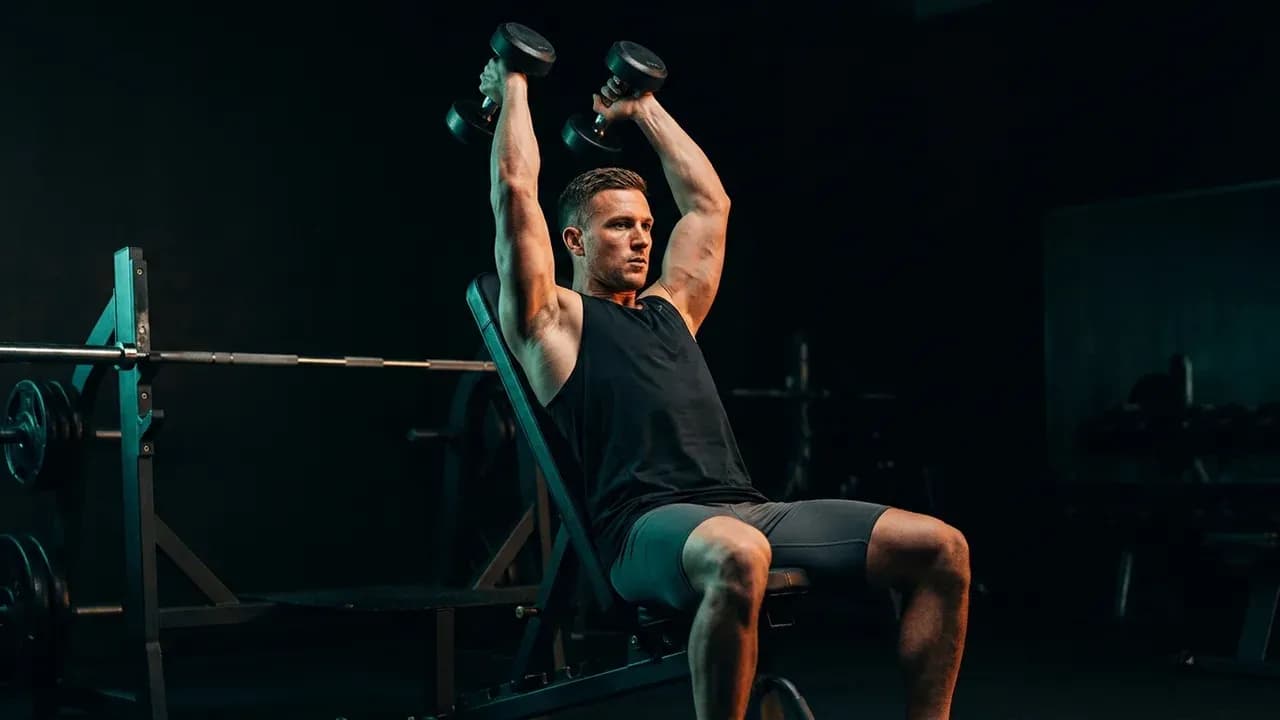
Are Overhead Triceps Extensions Superior to Cable Pushdowns?
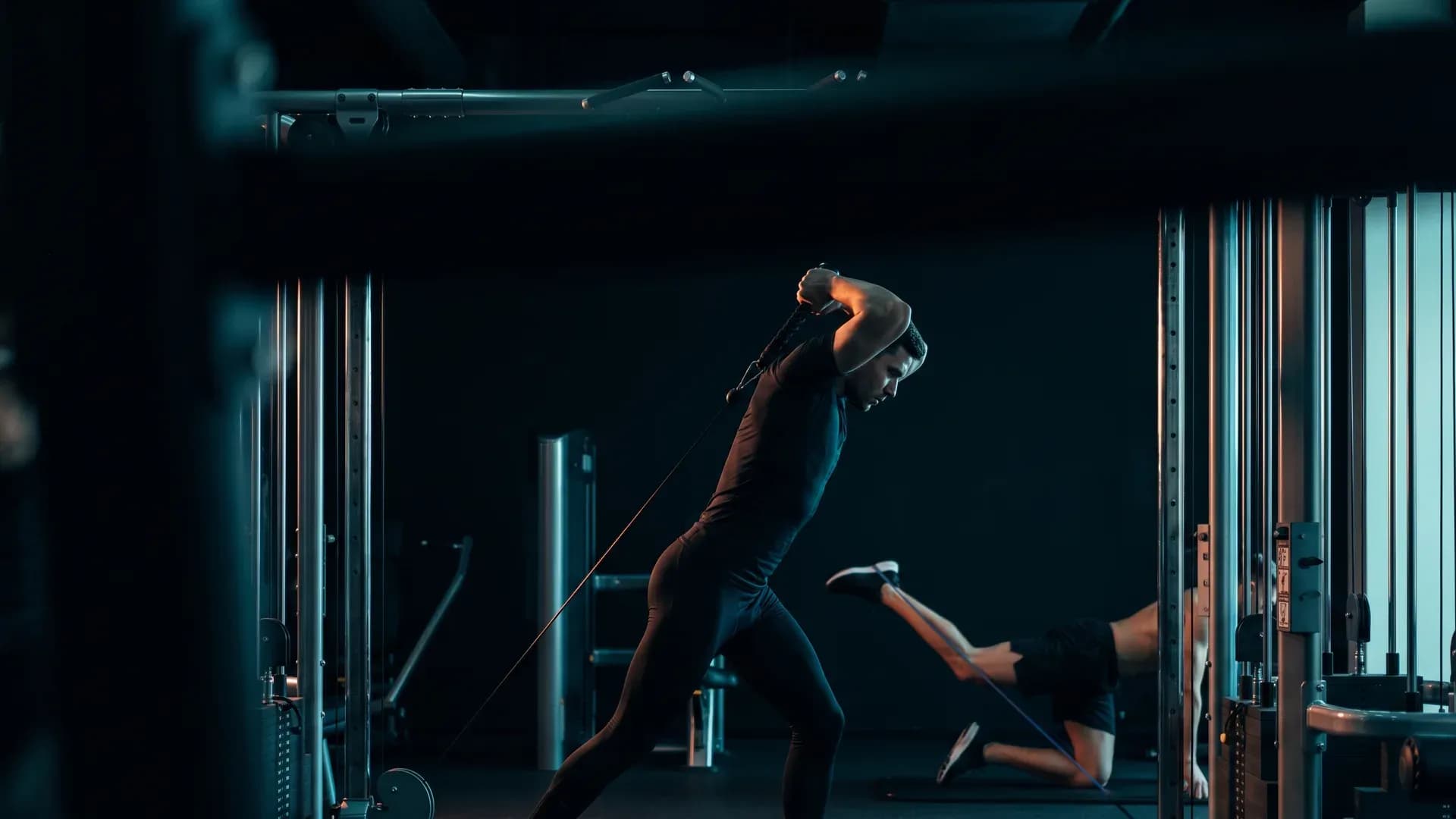
Overhead extensions raise the humerus to 120°–180° of shoulder flexion, placing the long head of the triceps into passive stretch across the glenohumeral joint. Standard cable pushdowns fix the humerus at 0° shoulder flexion, leaving the long head in a shortened position throughout the set.
Exposing muscle fibers to loaded stretch promotes heightened mechanical tension and titin-mediated sarcomerogenesis. A 12-week trial comparing overhead cable extensions to neutral pushdowns demonstrated a 1.4-fold greater increase in triceps long head cross-sectional area for the overhead group.
Maintaining high mechanical tension across extended muscle lengths requires calculating working volume within established per-session set limits. Managing set density while maintaining proper proximity to failure for strength vs hypertrophy ensures maximum local mechanical stimulation without overloading connective tissue.
How Do You Program Joint Angle Variations into a Hypertrophy Routine?
Isolating biarticular muscles requires strategic selection of proximal joint angles across weekly training blocks. For quad development, program 40° reclined leg extensions after compound squatting movements. For triceps long head growth, select overhead incline dumbbell extensions or high-cable overhead extensions over standard pushdowns.
Schedule 3 to 4 working sets per exercise using an 8 to 12 repetition range. Maintain absolute control over the eccentric phase, utilizing a 2 to 3 second descent to preserve stretch tension across the muscle origin. A 2024 review in Journal of Sports Sciences notes that targeted lengthened positions require steady velocity control to minimize torque spikes near terminal range.
Managing exercise order is critical when pairing heavy compound lifts with lengthened biarticular variations. Reviewing non-local muscle fatigue exercise ordering concepts prevents early biarticular exhaustion from compromising compound output.
Tracking loading parameters across specialized machine setups requires systematic record-keeping. Athletes can utilize guided gym workouts with set-by-set logging of reps, weight and assisted-machine loads across all single-joint variations. If standard gym equipment lacks fixed incline settings, lifters can create build-your-own custom workouts saved to a personal library to log exact backrest notch settings and pin placements across mesocycles.
When designing multi-week programming, progressive loading on lengthened isolation exercises must be carefully titrated against systemic fatigue. Lifters can structure these periodized blocks with personalized training plans that adapt to you, ensuring single-joint volume increases without exceeding recovery capacities.
Targeted joint angle manipulation must be balanced with total fatigue management. Lengthened isolation movements induce higher muscle damage per set than shortened variations, requiring deliberate recovery allocation between sessions.
When programming biarticular isolation work, avoid placing heavy lengthened extensions immediately prior to maximum effort compound lifting. Perform heavy compound work first while central nervous system drive is high, then follow with 3 to 4 sets of lengthened biarticular isolation to fully exhaust target fibers without destabilizing joint tracking during compound execution.
Frequently Asked Questions
How do you train biarticular muscles if reclined leg extension machines are unavailable?
If a leg extension machine lacks an adjustable backrest, simulate proximal hip extension stretch by setting up a cable cuff isolation or lying prone on a flat bench with a cable resistance path. Alternatively, lean the torso backward at 30° to 40° on a standard leg extension machine while keeping the lumbar spine supported with a foam pad.
Does hip impingement alter setup angles during reclined rectus femoris training?
Athletes with anterior hip impingement should avoid aggressive hip extension past 0° neutral to prevent labral compression. A hip angle between 20° and 30° reclined provides sufficient rectus femoris stretch without provoking anterior hip pinch during distal extension.
Why does gastrocnemius growth require straight-leg calf raises rather than seated calf raises?
The gastrocnemius is a biarticular calf muscle originating on the femoral condyles. Seated calf raises flex the knee to 90°, putting the gastrocnemius into active insufficiency and shifting load onto the mono-articular soleus. Straight-leg calf raises fix the knee at 0° extension, stretching the origin and driving upper calf hypertrophy.
How should rest intervals be structured for lengthened biarticular isolation sets?
Allow 2 to 3 minutes of rest between sets of lengthened biarticular exercises like overhead extensions or reclined leg extensions. Lengthened positions generate higher local strain and transient microtrauma, requiring full phosphocreatine resynthesis to sustain force output across consecutive sets. Refer to guidelines on inter-set rest intervals for hypertrophy for full volume optimization.
Can biarticular isolation exercises cause excessive muscle damage compared to compound lifts?
Training biarticular muscles at long muscle lengths causes high mechanical strain on titin and sarcolemma structures, resulting in delayed onset muscle soreness. Keep initial volume low—2 to 3 sets per session—when introducing newly stretched angles to allow connective tissue adaptation before increasing volume.
Maximizing biarticular muscle growth requires precise proximal joint alignment to eliminate active insufficiency and maintain high mechanical strain. Systematically tracking seat angles, loads, and fatigue markers across training phases ensures consistent hypertrophic progression. Athletes can use TrainMate to log technical setups, balance volume distribution, and adapt programming based on recovery trends over time.