Rest 2 to 3 minutes between sets for multi-joint compound lifts and 60 to 90 seconds for single-joint isolation exercises to maximize muscle hypertrophy. Extending rest preserves neuromuscular force output and phosphocreatine stores. This enables higher overall volume load and maintains high-threshold motor unit recruitment across consecutive working sets.
Why Longer Rest Drives More Hypertrophy
Mechanical tension drives muscular adaptation. Generating peak tension requires full recruitment and high firing rates of high-threshold motor units.
Short rest intervals of 30 to 60 seconds trap metabolic byproducts inside working muscle tissue. As hydrogen ions accumulate, intracellular pH drops below 6.5, directly inhibiting cross-bridge cycling speed and actin-myosin binding affinity.
In resistance-trained men resting 3 minutes versus 1 minute over an 8-week protocol, a 2016 study in the Journal of Strength and Conditioning Research recorded a 7.0% increase in anterior thigh thickness for long rest compared to 3.4% for short rest. Bench press 1RM strength increased by 12.7% in the 3-minute group versus 4.1% in the 1-minute group.
Phosphocreatine (PCr) resynthesis requires time. Intramuscular PCr stores replenish to roughly 70% at 60 seconds, but require 180 seconds to reach 95% recovery. Cutting rest short forces reliance on anaerobic glycolysis, raising inorganic phosphate levels which impair sarcoplasmic calcium release.
Meta-analytic findings from a review in Sports Medicine - Open confirm that resting 2 to 5 minutes consistently produces greater muscle growth than resting under 60 seconds when total set volume is matched.
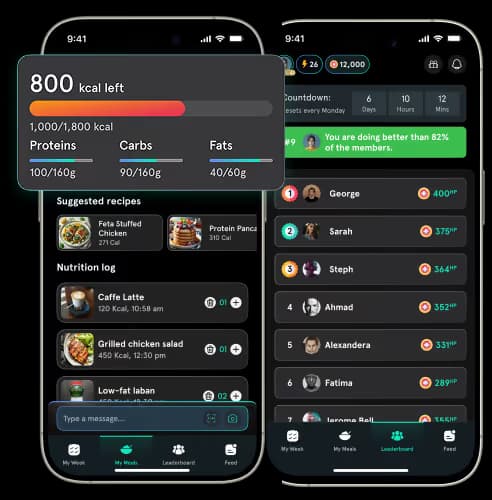
Log your rest intervals and load retention using guided gym workouts with set-by-set logging of reps, weight and assisted-machine loads to ensure mechanical tension does not decay mid-workout. You can also manage intra-set fatigue without expanding total workout length by using cluster sets to manage fatigue while lifting heavy. Advanced athletes targeting extended time-under-tension can combine long rest periods with loaded inter-set stretching for hypertrophy to augment mechanical strain without sacrificing rep output.

How Does Short Rest Reduce Volume Load and Neuromuscular Drive?
Truncating inter-set recovery collapses total volume load by causing steep performance drop-offs on subsequent working sets. When rest is insufficient, force production degrades exponentially rather than linearly.
A lifter squatting 100 kg at an 8-rep max load completes 8, 8, and 7 reps across 3 sets with 180 seconds of rest, yielding 2,300 kg of volume load. Restricting recovery to 60 seconds drops performance to 8, 5, and 3 reps, yielding 1,600 kg—a 30.4% loss in total mechanical work completed.
Short rest triggers acute central nervous system fatigue alongside peripheral muscle exhaustion. Group III and IV unmyelinated muscle afferents detect metabolic accumulation and send inhibitory feedback to the spinal cord.
This feedback reduces voluntary motor drive from the motor cortex. High-threshold motor units—the specific type II fibers with the greatest hypertrophy potential—drop out before experiencing maximal mechanical tension.
To track baseline capacity before calculating set fatigue, estimate your absolute strength using our One-Rep Max Calculator. Managing target proximity to failure is equally essential, as detailed in our guide on setting repetitions in reserve for hypertrophy.
When velocity loss exceeds 20% on compound sets, overall force output suffers. Reviewing velocity loss threshold guidelines helps determine exact stopping points before systemic fatigue ruins subsequent set quality. Data on rest-pause protocols in compiled research on getfitcraft.com shows that while brief intra-set rest increases workout density, standard straight sets require full inter-set recovery to maintain load.

How Should Rest Duration Differ Between Compound and Isolation Lifts?
Multi-joint exercises like back squats, deadlifts, and bent-over rows recruit massive muscle mass. They impose high spinal axial loading and heavy cardiovascular strain.
Restoring central motor drive and systemic arterial blood pressure after heavy compound sets requires 2.5 to 4 minutes. Shortening rest on compound lifts transfers the limiting factor from targeted skeletal muscle to systemic dyspnea and neural central inhibition.
Single-joint exercises like cable lateral raises, biceps curls, or leg extensions generate localized metabolic strain without triggering global central fatigue. The smaller active muscle mass produces lower metabolic output, allowing full force recovery within 60 to 90 seconds.
If rep retention drops by more than 20% on isolation exercises across consecutive sets, extend rest to 120 seconds. Organize these target recovery windows by setting up build-your-own custom workouts saved to a personal library.
To prevent systemic exhaustion from accumulating early in a workout, adjust session structure using our guide on per-session set limits for hypertrophy.
Exercise Type | Muscle Mass Engaged | PCr Recovery at 60s | 3-Set Rep Retention (Resting 60s) | 3-Set Rep Retention (Resting 180s) | Recommended Rest Window |
|---|---|---|---|---|---|
Heavy Compound Lifts | High (Global) | ~70% | 50–60% | 85–95% | 180–240 seconds |
Moderate Compound Lifts | Moderate-High | ~75% | 60–70% | 85–90% | 120–180 seconds |
Single-Joint Isolation | Low (Localized) | ~85–90% | 75–85% | 90–95% | 60–90 seconds |
How Do You Program Inter-Set Rest Intervals for Maximum Growth?
Structuring recovery requires balancing session duration against force retention per set. Sacrificing rest time to condense training into a short window degrades stimulus quality.
Data from a 2023 meta-analysis in Sports Medicine on ResearchGate shows that high-density protocols like drop sets compress workout duration but provide equal or inferior growth per set compared to traditional straight sets with complete rest.
Programming 10 to 12 high-quality sets per session with 2.5 to 3 minutes of rest outperforms 20 rushed sets with 45-second rest periods. High-quality sets maximize motor unit recruitment while keeping systemic fatigue within manageable parameters.
Autoregulate rest periods based on neuromuscular readiness rather than strict clock watching. If breathing rate remains elevated or grip strength feels compromised, delay the next set by 30 to 60 seconds to ensure high force execution.
Frequently Asked Questions
How long should you rest between sets for muscle hypertrophy?
Rest 2 to 3 minutes for multi-joint compound exercises to restore central drive and phosphocreatine levels. Rest 60 to 90 seconds for single-joint isolation movements where systemic cardiovascular fatigue remains minimal. Matching rest interval duration to exercise-specific metabolic demand preserves overall force production across sequential working sets.
Is resting 3 minutes between sets too long for muscle growth?
No. Resting 3 minutes is optimal for heavy compound exercises. Research demonstrates that 3-minute rest periods double muscle thickness gains compared to 1-minute rest periods by maintaining higher total mechanical tension. Extended rest prevents early drop-offs in central voluntary motor drive and preserves total repetition output.
How do short rest periods affect total set volume?
Rest periods under 60 seconds trigger rapid metabolic byproduct accumulation and neural fatigue, cutting overall volume load by 30% to 50% across consecutive sets. Forced reductions in load or repetitions lower overall mechanical tension, blunting the anabolic signal delivered to target high-threshold muscle fibers.
Should compound exercises have longer rest intervals than isolation exercises?
Yes. Multi-joint compound exercises involve substantial muscle mass, spinal axial loading, and systemic cardiovascular strain, requiring 2.5 to 4 minutes for central nervous system recovery. Isolation exercises involve smaller muscle groups and localized metabolic strain, allowing complete neuromuscular recovery within 60 to 90 seconds.
Preserving force output across every working set requires tracking inter-set rest with the same precision as load and rep volume. Structuring recovery intervals based on exercise complexity prevents early performance decay and sustains peak mechanical tension. TrainMate provides recovery insights and set-by-set tracking to remove guesswork from rest interval programming.