Only 19% of women meet the recommended two weekly strength training sessions, largely due to gym intimidation. Using free weights for fat loss shifts your body from simply burning energy during a workout to burning calories around the clock. You do not need a complicated machine circuit or perfect genetics to see physical changes. Three pairs of dumbbells and a quiet corner of the gym provide everything required to build metabolism-boosting muscle.
This guide eliminates the confusion of the free weight section. You will learn a simple, three-movement routine that builds total-body strength without requiring you to navigate crowded benches or complex equipment.
Key Takeaways
- Free weights increase your resting metabolic rate for up to 72 hours after your session.
- A 3-move dumbbell routine builds full-body strength while keeping you in one quiet spot.
- Muscle tissue burns three times more calories at rest than fat tissue, accelerating fat loss.
- Compound dumbbell exercises engage stabilizer muscles, burning more energy than seated machines.
Table of Contents
- The Science of Lifting Weights to Lose Belly Fat
- Understanding Dumbbells for Weight Loss: Calorie Burn Explained
- Balancing Nutrition with Your Free Weight Routine
- Overcoming Gym Anxiety in the Free Weight Area
- Your Beginner Free Weight Workout: The 3-Move Routine
- Structuring Your Beginner Strength Training Program
- The Role of Recovery in Fat Loss
- Practical Tool: Your Pre-Gym Confidence Checklist
- Frequently Asked Questions
- Next Steps for Your Fitness Journey
The Science of Lifting Weights to Lose Belly Fat
Cardiovascular exercise burns calories while your heart rate remains elevated, but resistance training permanently alters your daily energy expenditure. Muscle tissue requires constant biological energy simply to exist on your frame. Adding lean mass raises your basal metabolic rate, which dictates how much energy you burn sitting at your desk or sleeping. Many beginners attempt lifting weights to lose belly fat by doing hundreds of crunches, but targeted fat reduction is physiologically impossible.
A 2021 study published in the FASEB Journal demonstrated that heavy compound resistance training reduces visceral fat by 14% over 12 weeks, independent of aerobic exercise. Data from the Centers for Disease Control and Prevention in 2022 confirms that consistent strength training improves insulin sensitivity by 24% in adult females. Furthermore, the National Institutes of Health reports that preserving muscle mass during weight loss prevents the metabolic slowdown that causes rebound weight gain.
Key Insight: Muscle tissue burns roughly 6 calories per pound per day at rest, compared to 2 calories for fat tissue, making strength training your metabolic engine.
Understanding Dumbbells for Weight Loss: Calorie Burn Explained
The real magic of using dumbbells for weight loss happens after you leave the gym. This phenomenon is called Excess Post-exercise Oxygen Consumption (EPOC). When you perform heavy compound movements, you create micro-tears in your muscle fibers and deplete your body's oxygen stores.
Your body must expend massive amounts of energy to repair this tissue and restore oxygen levels to baseline. The Journal of Sports Sciences published research in 2019 showing that a 45-minute free weight session elevates metabolic rate by an average of 7% for up to 72 hours. A single treadmill run simply stops burning calories the moment you step off the belt.
Dumbbells also force you to balance the weight independently. Unlike machines that stabilize the load for you, dumbbells recruit dozens of tiny stabilizer muscles throughout your core and shoulders. This increased muscle recruitment burns significantly more calories per repetition than using a fixed-path chest press or leg extension machine.
Balancing Nutrition with Your Free Weight Routine
Your beginner strength training program acts as the spark, but nutrition acts as the fuel. Lifting weights while consuming a diet high in processed foods will severely limit your fat loss potential. To lose fat while building muscle, you must maintain a slight caloric deficit while prioritizing protein intake.
Aim to consume 0.8 to 1 gram of protein per pound of your target body weight. This macronutrient provides the building blocks required to repair the micro-tears created during your dumbbell sessions. Chicken breast, Greek yogurt, tofu, and lean beef offer excellent sources of highly bioavailable protein. Managing a high-protein diet without breaking the bank requires strategy. Review our guide on Eating Healthy on a Budget: Practical Tips for Everyday Life to stock your kitchen efficiently.
Timing your meals also impacts your gym performance. Eating a small meal containing fast-digesting carbohydrates and a moderate amount of protein roughly 60 minutes before you lift provides immediate energy. Following your workout, consuming protein within a two-hour window maximizes the muscle protein synthesis response, accelerating your recovery before your next gym visit.
For specific recipes that support your new routine, explore our 7 Best High Protein Meal Prep Ideas for Fat Loss to ensure your muscles receive the necessary amino acids to rebuild stronger.
Overcoming Gym Anxiety in the Free Weight Area
The dumbbell rack often feels like the most intimidating zone in any commercial fitness facility. Finding a quiet corner eliminates the pressure of performing in front of advanced lifters. Grab the dumbbells you need, find an empty stretch of turf or an unused group fitness studio, and complete your entire session there. You do not need to share benches or navigate crowded mirrors.
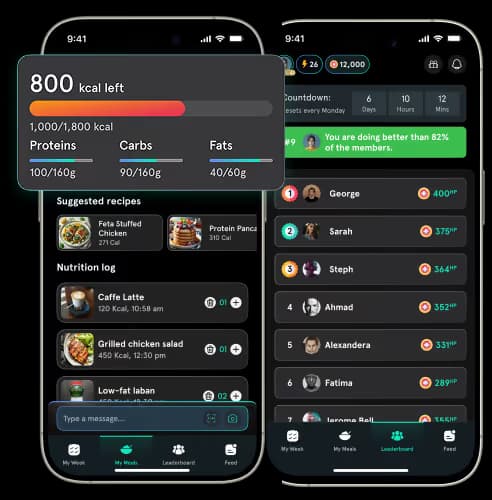
Preparation acts as the ultimate antidote to gym anxiety. Walking into the facility with a precise, written plan prevents the hesitant wandering that causes many beginners to retreat to the cardio section. Trainmate's 'Beginner Free Weight' plan solves this immediately. The app provides step-by-step form videos and tells you exactly what to do next, turning your phone into a private coach. Knowing your exact next move eliminates the fear of judgment.
Maintaining a consistent schedule builds confidence through environmental familiarity. Knowing the gym layout, the staff, and the quietest hours creates a sense of belonging. Review our guide on How to Stay Consistent with Working Out via Habit Stacking to lock in your new gym routine without relying solely on motivation.
Your Beginner Free Weight Workout: The 3-Move Routine
You only need three movements to stimulate the major muscle groups responsible for the highest caloric burn. This beginner free weight workout utilizes compound exercises, meaning they require multiple joints and muscle groups to work simultaneously. Compound movements elevate your heart rate, providing cardiovascular benefits alongside strength development. Focus entirely on execution and balance before worrying about the weight on the dumbbells.
1. The Goblet Squat
The goblet squat targets your quadriceps, glutes, and core while reinforcing upright posture. Hold a single dumbbell vertically against your chest, keeping your elbows tucked tight against your ribs. Lower your hips down and back until your thighs sit parallel to the floor, then push through your entire foot to stand. Maintain a braced core throughout the entire range of motion to protect your lower back.
A common mistake involves letting your heels lift off the ground at the bottom of the movement. This shifts dangerous tension onto your knee joints. If your heels rise, place a small weight plate under them to compensate for ankle mobility restrictions until your flexibility improves.
2. The Dumbbell Floor Press
Performing a chest press from the floor removes the need for a bench and provides a physical stopping point that protects your shoulder capsules. Lie on your back with your knees bent and feet flat on the floor. Hold two dumbbells directly over your chest, slowly lower your elbows at a 45-degree angle until they rest gently on the ground, and press the weights back up. This movement targets the pectorals, anterior deltoids, and triceps.
Many beginners flare their elbows out at a 90-degree angle, parallel to their shoulders. This places excessive stress on the rotator cuff. Keep your elbows tucked closer to your ribcage to ensure the chest muscles perform the majority of the work.
3. The Dumbbell Romanian Deadlift (RDL)
The RDL builds strength in your hamstrings and glutes, which make up the largest muscle group in your body and demand the most calories. Stand with feet hip-width apart holding two dumbbells in front of your thighs. Push your hips straight back toward the wall behind you, keeping your knees only slightly bent, until you feel a deep stretch in your hamstrings. Squeeze your glutes forcefully to return to a standing position.
Avoid rounding your lower back to reach further down your legs. The range of motion ends the exact moment your hips stop moving backward. Lowering the dumbbells past this point simply shifts the load from your hamstrings onto your lumbar spine.
Structuring Your Beginner Strength Training Program
Volume and intensity dictate the success of your beginner strength training program. Perform 3 sets of 8 to 10 repetitions for each of the three exercises. Rest for 90 seconds between sets to allow your muscles enough time to replenish their ATP stores for the next effort. Rushing your rest periods turns the session into poor-quality cardio, diminishing the strength adaptations necessary for true muscle growth.
Start with a weight that feels moderately challenging but allows you to finish your last repetition with perfect form. As the weight begins to feel easy, you must apply the principle of progressive overload by selecting slightly heavier dumbbells. If you train in your living room on alternate days, explore The Ultimate Guide to Progressive Overload at Home to ensure you keep challenging your muscles with limited equipment.
You should complete this exact routine two to three times per week. Leave at least 48 hours of rest between sessions. Muscle tissue repairs and grows during rest periods, not during the physical workout itself.
The Role of Recovery in Fat Loss
Lifting weights provides the stimulus, but sleep and nutrition dictate the physical result. Cortisol, a stress hormone that promotes abdominal fat storage, elevates when you chronically under-recover from intense exercise. Prioritizing rest prevents this hormonal cascade.
The American Academy of Sleep Medicine states that adults need 7 to 9 hours of sleep to support muscular recovery and metabolic regulation. Deep sleep triggers the release of human growth hormone, which actively repairs muscle tears and mobilizes fat stores. Read How to Optimize Sleep for Muscle Recovery to build an evening routine that maximizes your time in bed.
Practical Tool: Your Pre-Gym Confidence Checklist
- Pack your gym bag the night before with a water bottle, towel, and flat-soled shoes.
- Review the three exercise form videos on your phone before walking through the gym doors.
- Locate a 5-by-5 foot empty space away from high-traffic pathways.
- Select two pairs of dumbbells (one lighter, one heavier) and bring them to your designated space.
- Execute a 5-minute dynamic warm-up to transition your mind into the workout.
Frequently Asked Questions
Will using free weights make me bulky?
No, using dumbbells for weight loss will not make you bulky. Women naturally produce about one-tenth the testosterone of men, making massive muscle gain extremely difficult. Lifting weights simply builds dense, lean tissue. This creates the firm, athletic appearance most beginners are trying to achieve while simultaneously burning visceral body fat.
How heavy should my dumbbells be to start?
Select a weight that allows you to complete 8 repetitions with perfect form, but makes the 9th repetition feel difficult. For a goblet squat, most beginners start with a 10 to 15-pound dumbbell. For floor presses and RDLs, two 8 to 10-pound dumbbells serve as a safe and effective starting point.
How long does a free weight session take?
The 3-move beginner free weight workout takes exactly 25 minutes to complete if you adhere to the 90-second rest periods. Efficiency matters significantly more than duration. A focused 25-minute session of heavy compound movements yields far better metabolic results than spending 60 minutes randomly using different isolation machines.
Can I do this beginner workout at home?
Yes, this routine requires zero machines and translates perfectly to a home environment. You only need a few pairs of dumbbells and enough floor space to lie down comfortably. Home workouts eliminate gym anxiety entirely while delivering the exact same metabolic benefits as training in a commercial fitness facility.
Should I do cardio or weights first?
Always perform your strength training before cardiovascular exercise. Lifting free weights requires high neurological focus and peak glycogen stores. If you exhaust your muscles on the treadmill first, your lifting form will rapidly degrade. This sequence increases injury risk and drastically reduces the effectiveness of the resistance session.
How quickly will I see fat loss results?
Most beginners notice improved strength and posture within the first two weeks of consistent lifting. Noticeable body composition changes, such as fat loss and visible muscle definition, typically occur after 6 to 8 weeks. Your progress depends entirely on adhering to a calorie deficit and maintaining your strength training frequency.
Next Steps for Your Fitness Journey
Integrating free weights for fat loss fundamentally changes how your body processes energy. By mastering three basic movements in a quiet space, you bypass gym intimidation and build the foundation for lifelong metabolic health. The hardest part of any beginner strength training program is simply picking up the first dumbbell. Commit to two 25-minute sessions this week, focus entirely on your form, and watch your confidence grow.
Consistency requires removing as much friction as possible from your routine. You do not need to memorize rest times, track your repetitions on paper, or guess which weight to use next. Trainmate's workout logging and step tracking features manage the progression for you automatically. Open the Trainmate app, select the beginner dumbbell track, and let the step-by-step video guidance direct your next highly effective gym visit. Your only job is to show up and perform the movements.